
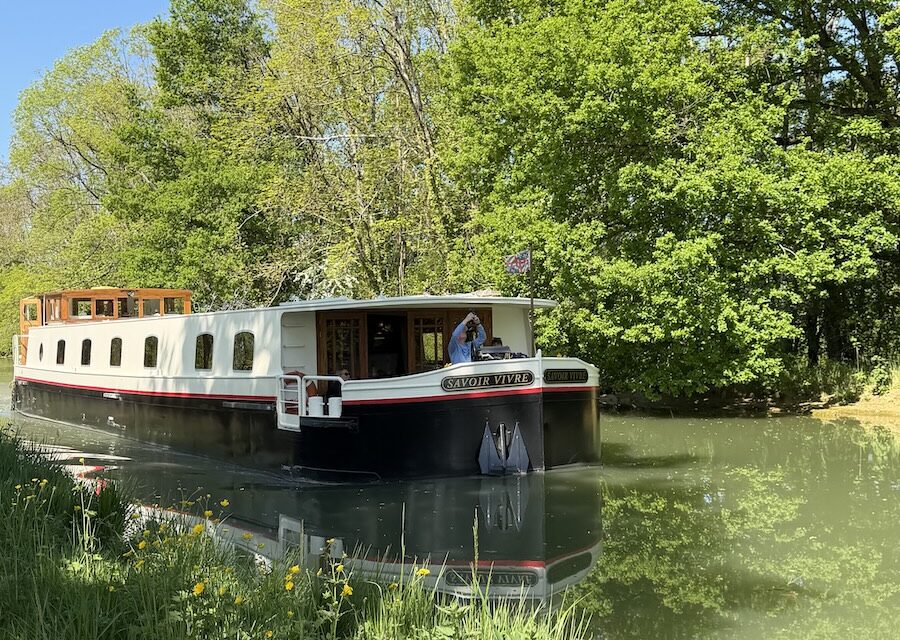
Savoir Vivre Barge Cruise
By Heidi Sarna
Pedaling along sun-dappled tow paths, with light and shadow dancing across the mossy-green waters of the adjacent Burgundy Canal (Canal de Bourgogne in French), was both a serene and an exhilarating way to spend each morning of our six-night barge cruise aboard the eight-passenger Savoir Vivre. Nothing pleases me more than cycling as often as possible on vacation.
We lucked out with perfect weather during our late April sailing — blue skies and temperatures in the 50s to low 70s. The morning cycling ritual was meditative, against a setting of chirping birds, fresh spring breezes, bright yellow buttercups, and elegant Queen Anne's Lace. Occasionally the calm was broken by shots fired by nearby farmers to scare away birds, or by traffic from roadways that infrequently ran alongside the canal. But, otherwise, it was only our tires on gravel and the low hum of Savoir Vivre’s engines, when it caught up to us (or us to it) at the next lock.
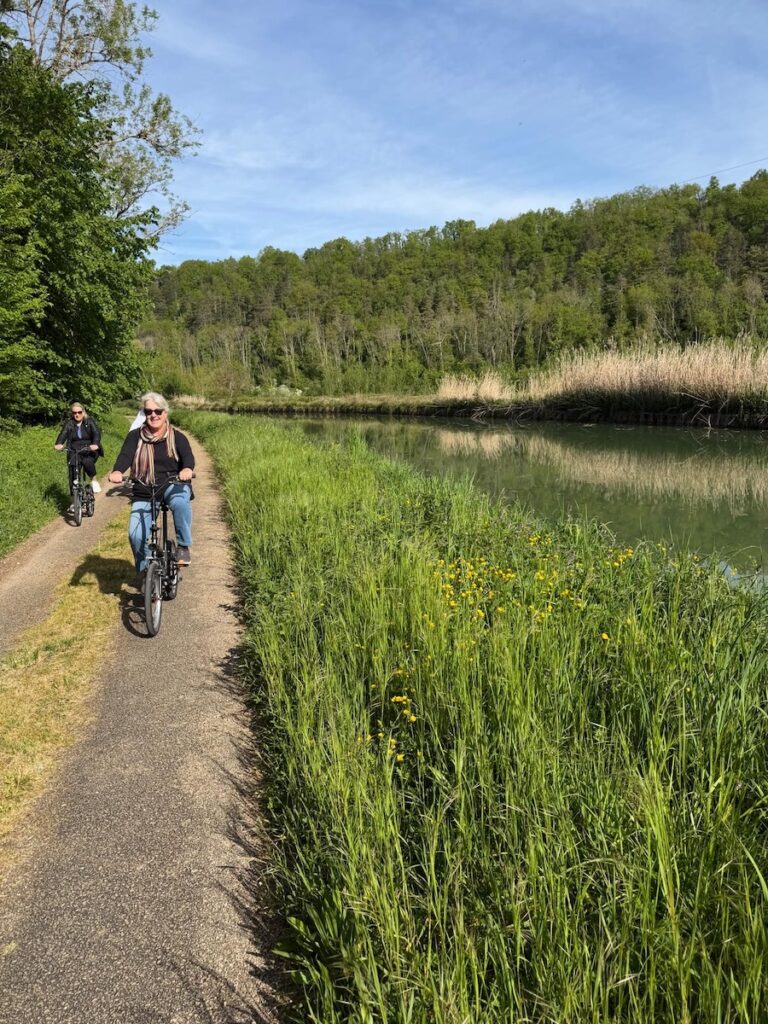
Bicycling through rural France varied from day to day — sometimes through a canopy of trees, other times the tow path opened to views of green fields, carpets of yellow rapeseed and hillsides dotted with centuries-old stone farmhouses and barns. Our morning rides covered five to eight miles across flat terrain; you don’t need to be super fit, just comfortable on a bicycle (and ok without a helmet, we weren’t offered any). Note, cycling is completely optional; you can choose to plant yourself on the deck and watch the world float by.
We cycled between the canal's many locks (able to get back on board the Savoir Vivre at any of them), which allow the canal to gain or lose elevation as it wends across the French countryside. These locks were essential infrastructure in the 19th and early 20th centuries when cargo barges relied on the canals to reach major seaports. The adjacent rivers, with their curves, variable depths, and rocky stretches, were often unnavigable for anything larger than a small skiff.
VIDEO: Below, you can see some of the beautiful riding we enjoyed every morning.
Cruise Summary
Before I get into all of the details about dining, cabins and touring, here's my quick overview sharing the main pros and cons of choosing a Savoir Vivre barge cruise.
5 Reasons To Choose the Savoir Vivre
- Cycling: My favorite part of the week; we cycled every day except the last one, pedaling along the canal’s beautiful and serene tow path. (Note, cycling is completely optional.)
- Un-touristy Itinerary. We only passed one other barge on the canal the entire week and most excursion sites were uncrowded (except in the bustling walled, medieval, wine-centered city of Beaune as it was a national holiday).
- Dinners On Shore: It was fun and interesting to have dinner each evening at a different restaurant to dine with the locals.
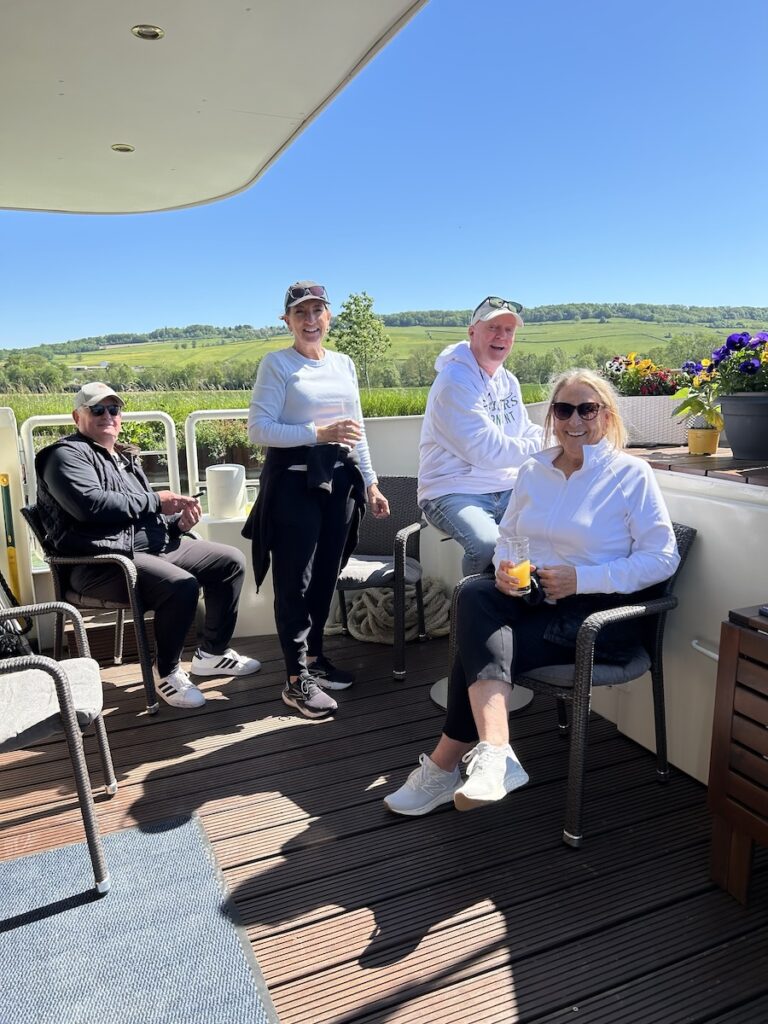
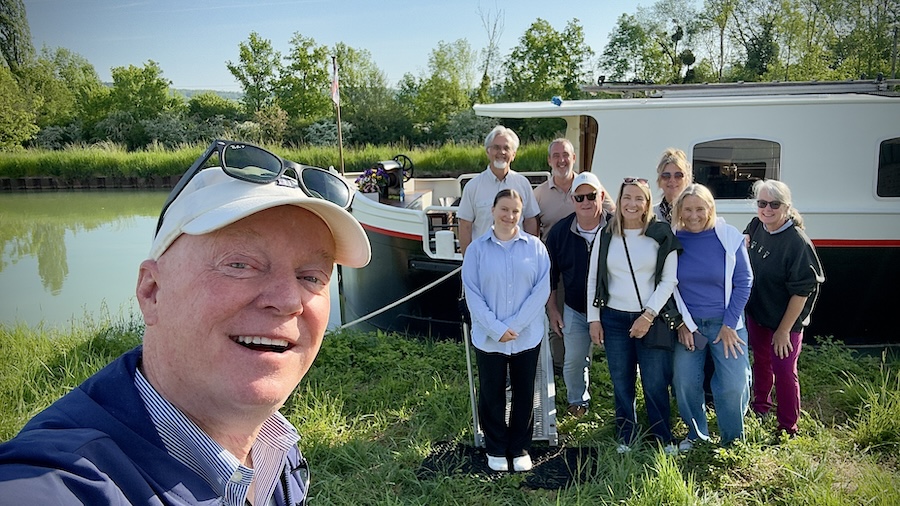
- Intimate Environment. This cruise proved perfect for bonding with new friends; Deb and I loved the two other couples on board (the women were sisters) and we got along smashingly. Our easy rapport was a huge part of what made this cruise so enjoyable.
- Lower Cost: Savoir Vivre costs a few thousand dollars less per person than many other barge cruises in France, starting at around $4,475 USD per person, including all meals onboard and off, drinks, guided excursions, cycling and transfer to/from the Savoir Vivre to/from the train station.
And Some Caveats
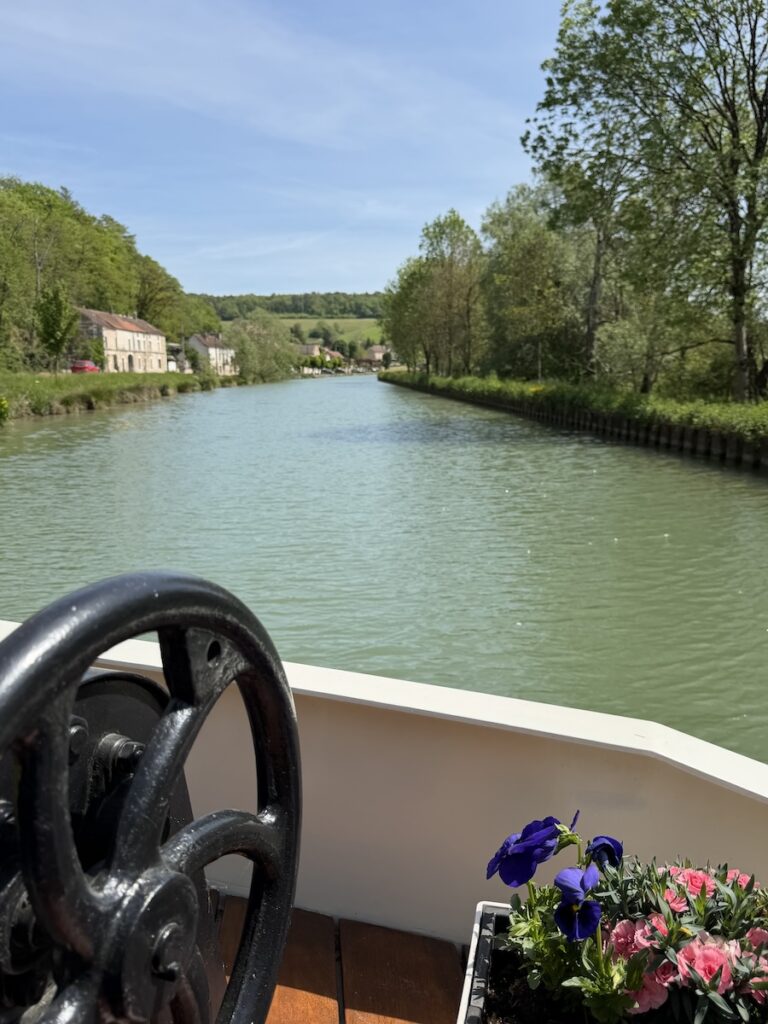
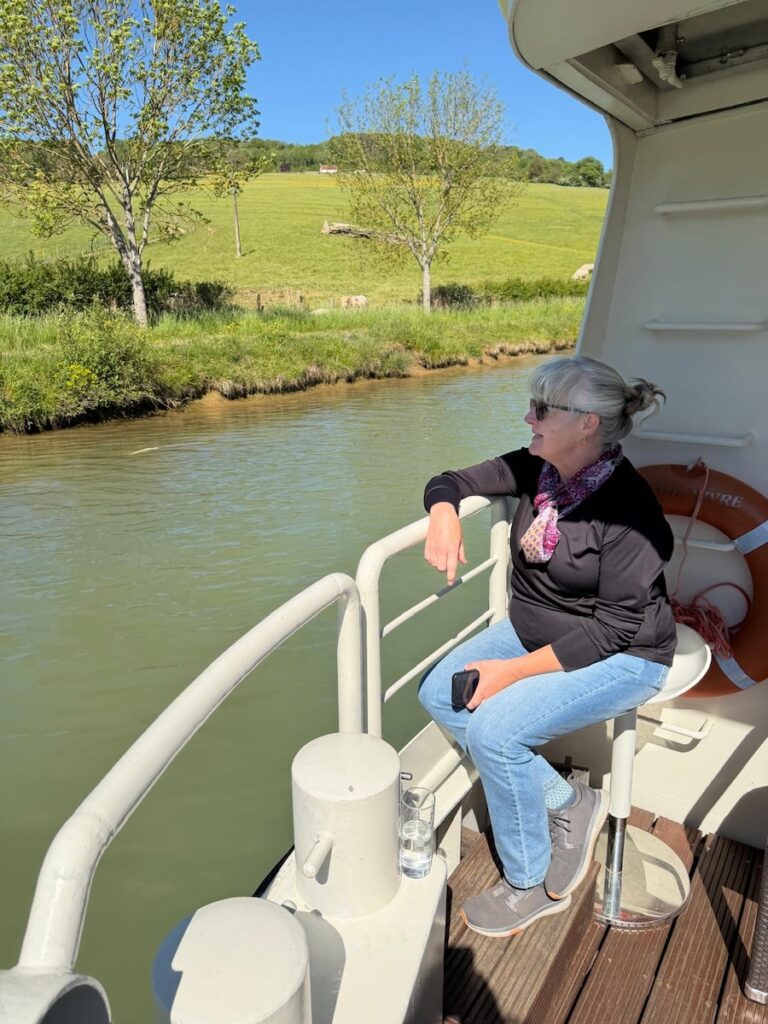
- Very small outdoor deck area. Given the design, unless you’re standing or sitting on one of the high stools, you can’t really see over the bow.
- Light touch on cabin cleaning. Rooms are made up each day (beds made, new towels), but some basics were missed on our cruise — our tiny bathroom trash bin wasn’t emptied even when asked (so my travel-mate, Debbie, did it herself!); a bit of hair (ours!) that collected atop the shower drain wasn’t swiped away all week; and the dried up flower on our bedside table was never removed.
- Breakfast and lunch on the boat were, in a word, meh — not what you might expect on a barge cruise in France, the culinary capital of the world. While I enjoyed the variety of fresh salads served at lunch, the quiches that were a lunch staple were bland and heated up in the microwave, just a foot away from the table where we ate — I thought things were a bit too casual at times. Similarly, a crew member would load the nearby dishwasher while we were still eating.
- Guide Richard was knowledgeable, friendly and earnest, but as a native French speaker, his English was heavily accented, and we probably missed a quarter of what he was saying.
- Intimate Environment: This one can be a pro or con — if you don’t gel with the other passengers (we did!), good luck!
Keep reading for more details!
RELATED READING: Here are reviews of 18 barge cruises I, and our quirky crew of contributing wirters, have sampled in the past few years. We're barge cruise experts!
The Appealing Daily Rhythm Of Our Savoir Vivre Barge Cruise
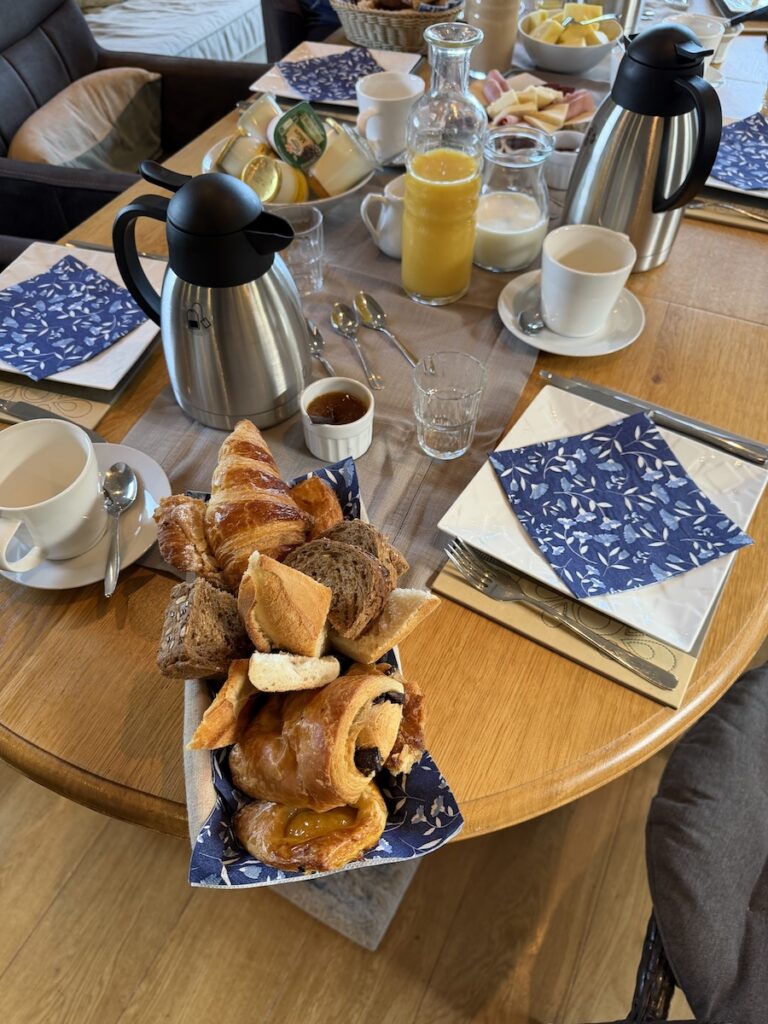
Buffet breakfast was laid out at 7:30 a.m. on the table of Savoir Vivre’s all-purpose indoor lounge — there is no outside option, as you’ll find on many other barges. Passengers would stream in gradually over the next hour for coffee and pastries, fruit, and other basic breakfast staples.
Around 9:30 or 10 a.m., when Savoir Vivre reached one of the 32 locks we'd pass through during the week, we'd step ashore and hop on one of the eight sturdy folding bikes stored in the forward hold, set up each morning by the captain and first mate — both named Richard, and quickly dubbed “the Richards.”
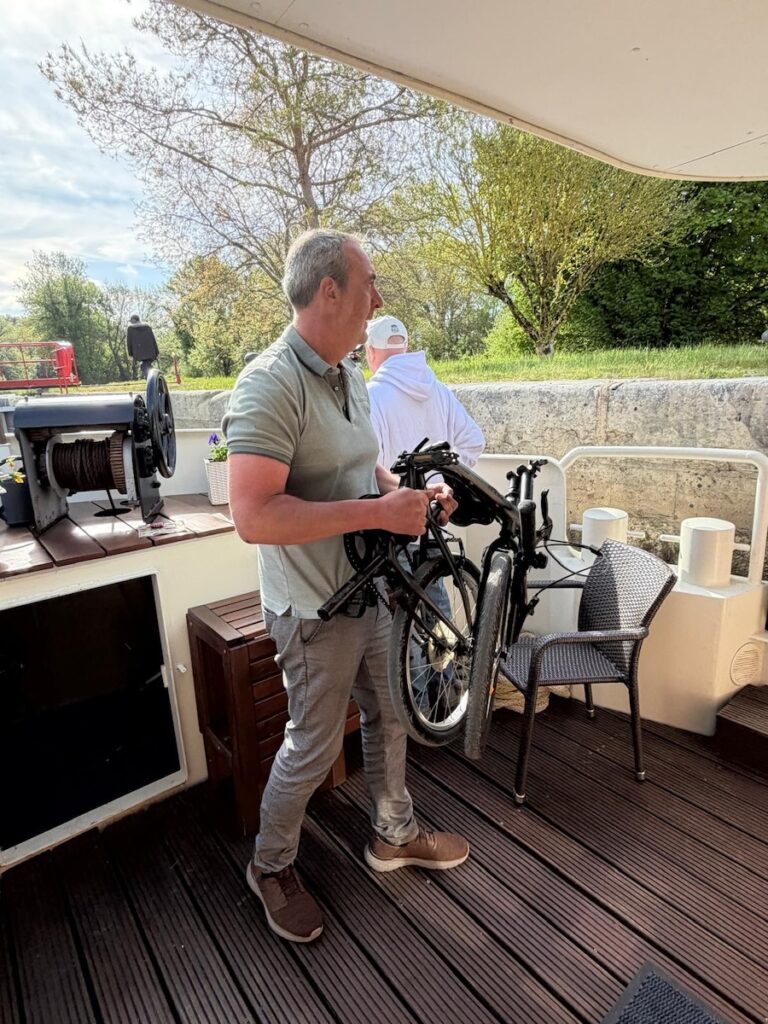
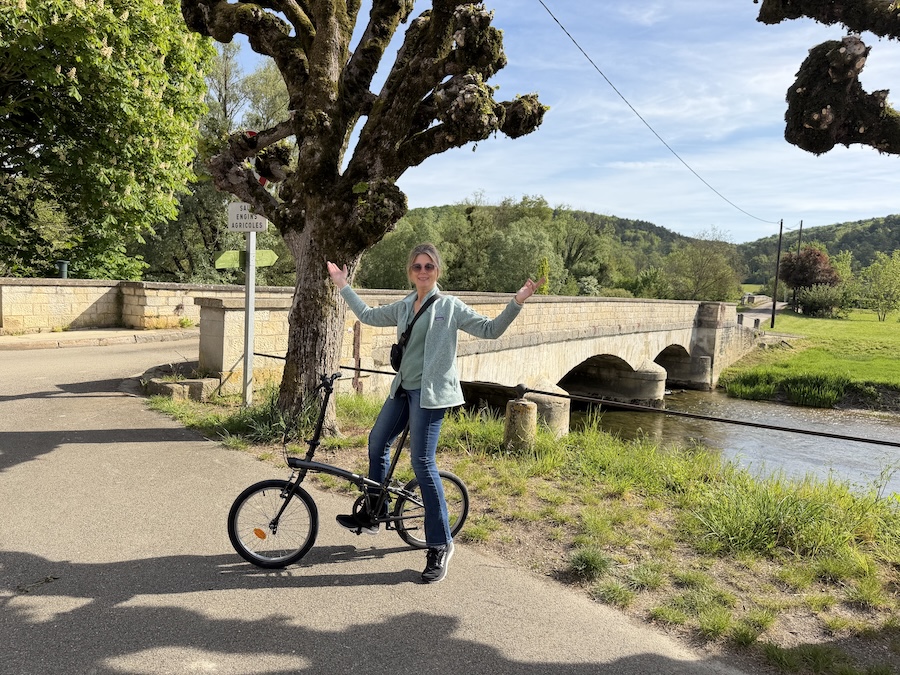
All six passengers on our cruise were in their late 50s or 60s, and we spent two splendid hours each day pedaling the flat gravel and asphalt towpaths that closely followed the canal, where horses, mules and strong-armed men once trod to pull cargo vessels through the water before the age of engine power.
We rarely encountered other cyclists or pedestrians — only the occasional canal-service vehicle rumbling past. Here and there, a fisherman sat quietly by the water minding his pole. We watched a group of retirees pull in a large carp.
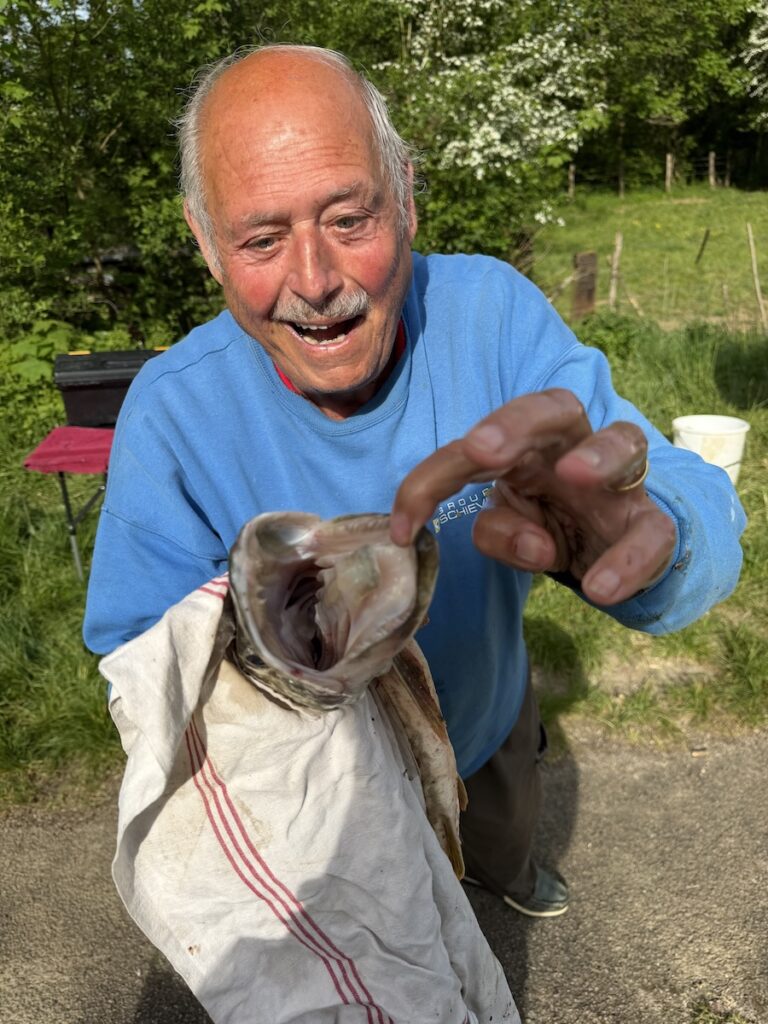
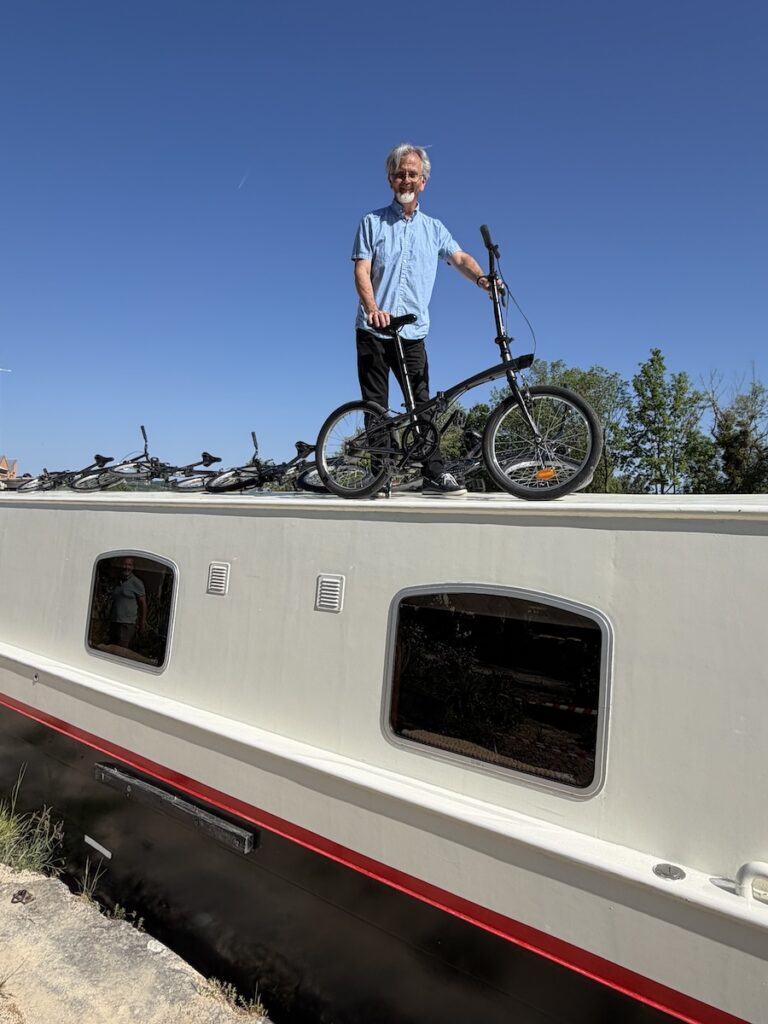
After a leisurely lunch on board — salads and quiche were brought in from local shops — it was time for the daily afternoon excursion. Guide Richard would drive us in a comfortable van to a vineyard, medieval village, monastery, or other nearby site, then lead us on a tour. (More on these below.)
A note on capacity: While Savoir Vivre accommodates up to eight passengers, six seemed to be the sweet spot. I think the van and the boat's cozy common areas would feel snug at full capacity.
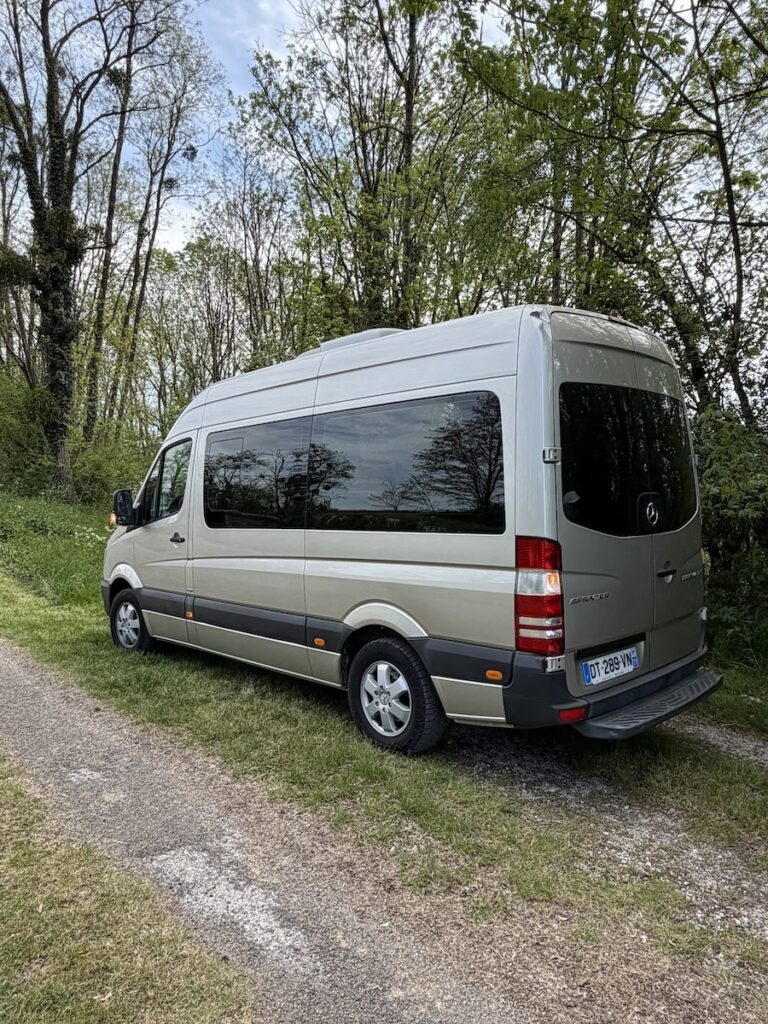
Back on board by 5:30 or 6 p.m., there was time for a nap or shower before passengers drifted to the lounge for happy hour — a drink or two served by Captain Richard or poured by a guest. In fact, it was Debbie who showed Richard how to make an Old Fashioned with Grand Marnier that became a staple during our week. Entertainment was simply CDs or passengers' phone playlists, which seemed to suit our small contingent fine. This was a contrast to more upscale barges: moored next to us one evening was the 12-passenger La Belle Epoque, which featured a live rag time band before dinner — close enough that we could enjoy it, too.
By 7 or 7:15 p.m. each evening, Captain Richard drove us to dinner at a restaurant 15 to 30 minutes away. They were intimate, local favorites. (See descriptions below.)
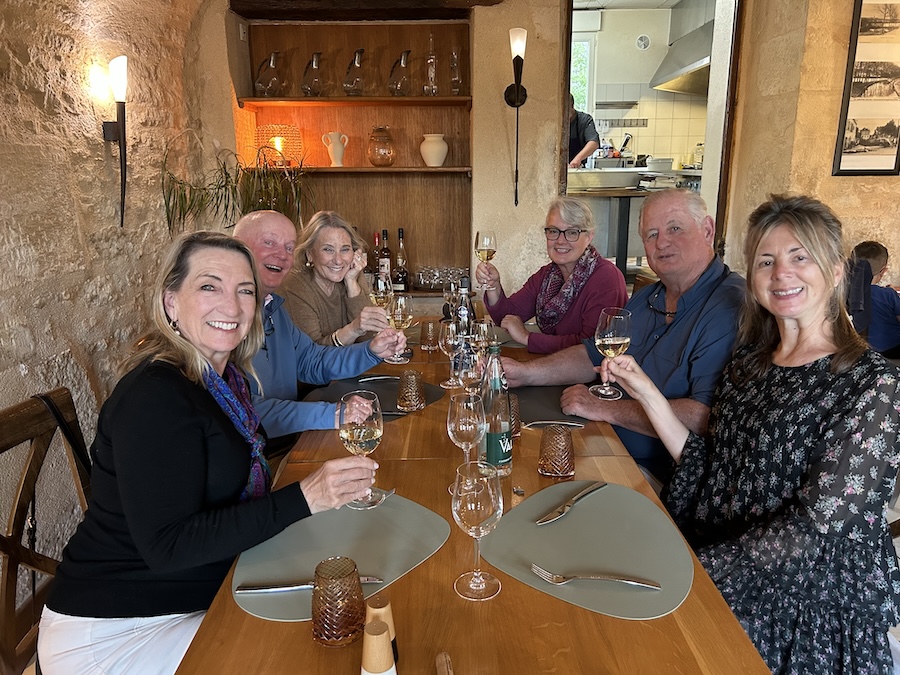
Back on board, some nights a few of us lingered over an after-dinner Baileys in the lounge. Most evenings, everyone was in their cabin and ready for sleep by 10 or 10:30 p.m.
The Savoir Vivre Barge Layout
Before I get to the itinerary details and tour highlights, here’s a brief overview of the Savoir Vivre itself.
The 80-foot-long barge was custom-made to cruise the canals of Burgundy (Bourgogne as it’s spelled in French) in 2008, with its width and length designed to fit into the canal’s lock chambers. It is not a restored former cargo barge like many hotel barges in France, such as the 12-pax Luciole that I cruised on a few summers ago.
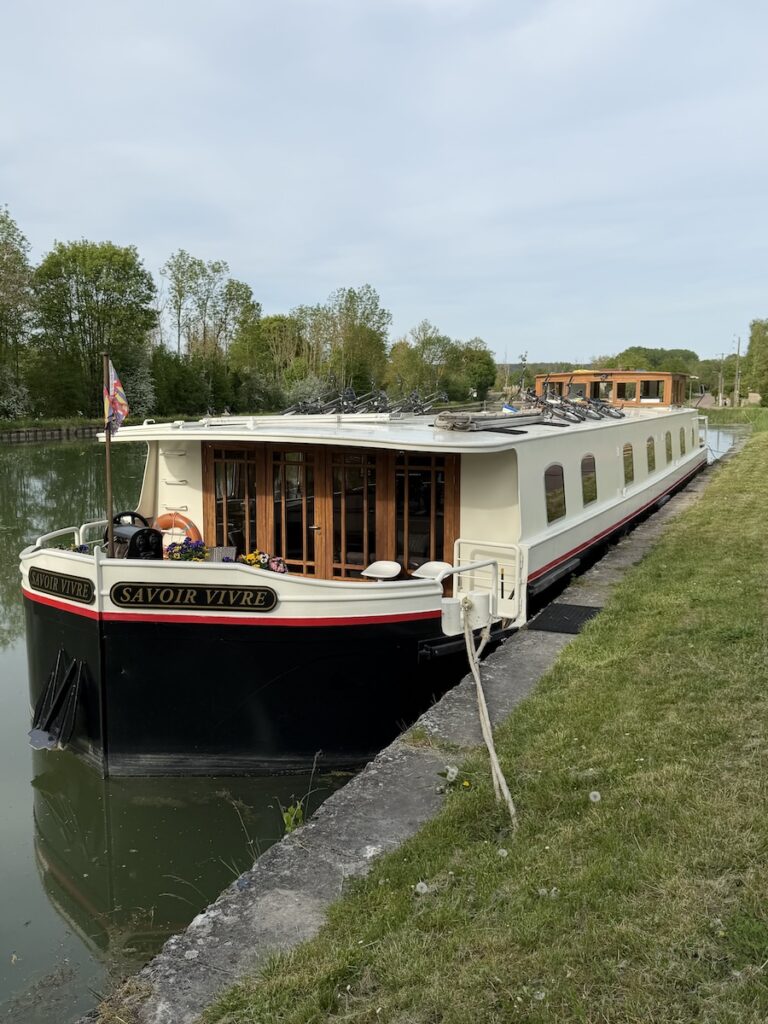
The Savoir Vivre is relatively low-frills and utilitarian, with all passenger cabins and public areas located on one deck. The exterior sports the classic long profile, paint job and bow design of the traditional former cargo barges.
VIIDEO: Below is a quick look at Savoir Vivre inside and out! (And there's a brief cabin video when you scroll a bit further.)
The All-Purpose Lounge & Dining Area
There is one interior common space — the lounge-dining area — with lots of natural light and pleasant enough ambience though, honestly, I found the décor a bit uninspired in terms of art, curios and throw pillows. A bit more effort in terms of color and design could create a more polished, upscale feel.
The room has a sofa and chairs, and a table that can be expanded and moved to the center of the small space for breakfast and lunch service. By design, there is not a galley (kitchen) on board, unlike most barge cruises; breakfast and lunch are brought on board from local eateries. The dining area has a wall of cabinets and some appliances, including a refrigerator where wine and drinks are stored; sink; dish washer; and microwave (used to heat up our lunch quiche and croque monsieur). Basic snacks like nuts and chips were brought out at happy hour. I spotted some Lindt chocolate bars in the fridge that I helped myself to a few times (why not French or Belgian chocolate?).
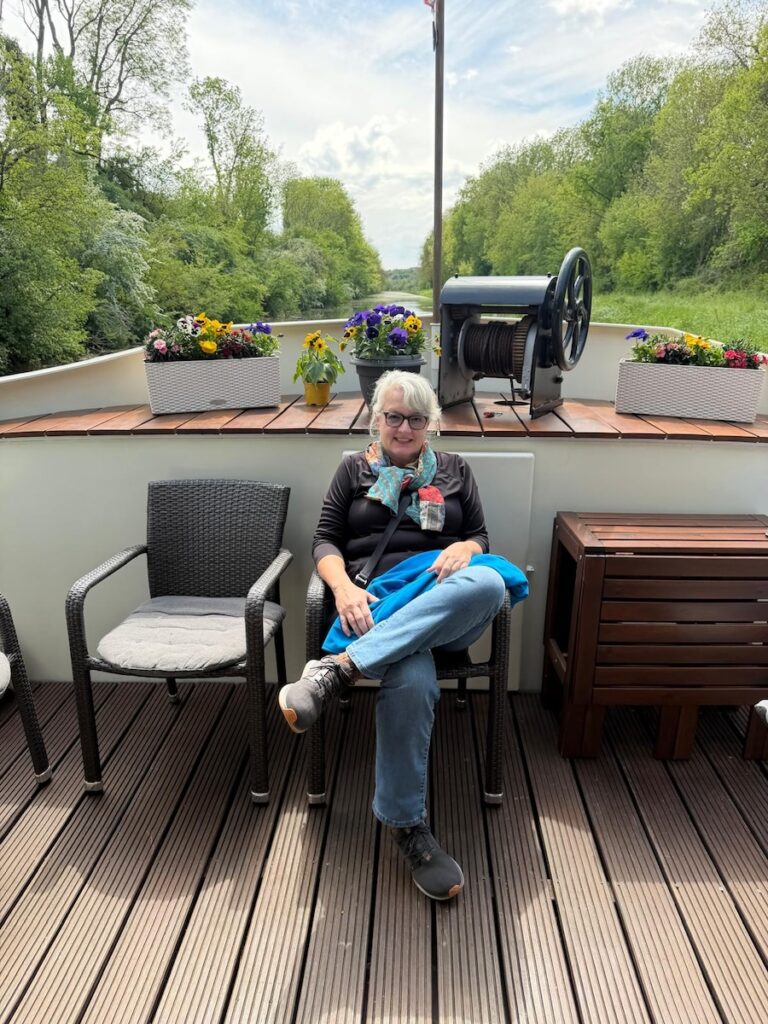
As for outdoor deck area, the space at the bow was framed nicely by the Savoir Vivre’s steel bones, some hardwood touches and flower boxes, but it was compact and set down inside the hull, so unless you were standing, views from a sitting position were obstructed. Now, there were two high stools, which were coveted, as the views were better.
Savoir Vivre’s outdoor deck space is smaller and lower (closer to the water) than all of the 20+ barge cruises we’ve reviewed on QuirkyCruise so far. Again, with a full ship of eight passengers, it would be tight.
(Note, there is a small patch of deck at the back of the barge that we were invited to use, but passengers had to walk through the wheelhouse to get there, which felt a bit like walking through the captain’s living space, so we only went back there once; you can see this in my video near the top of this review.)
Very laid-back, a Savoir Vivre barge cruise is casual and convivial, like paying $4,500 to stay at your friendly uncle's house for a week.
The Cozy Cabins Of Savoir Vivre
Four identical cabins accommodating two passengers each have double beds that also can be set up as twins (with two drawers beneath each). There is one side table, a large window (which most barge cruise boats do not have), full-length mirror, and a closet with shelves and some space for hanging clothes. Bathrooms are very compact but boast heated towel racks and a storage cabinet under the sink. The door to the glass-enclosed shower stall opens at an odd angle, which might be challenging for larger folks.
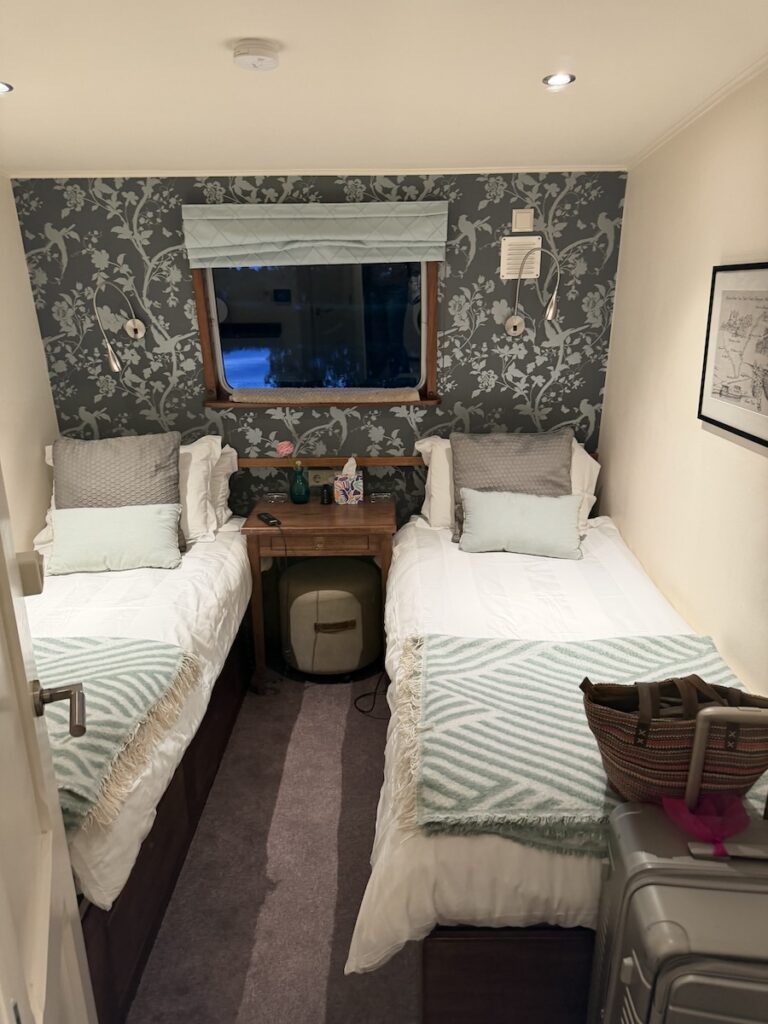
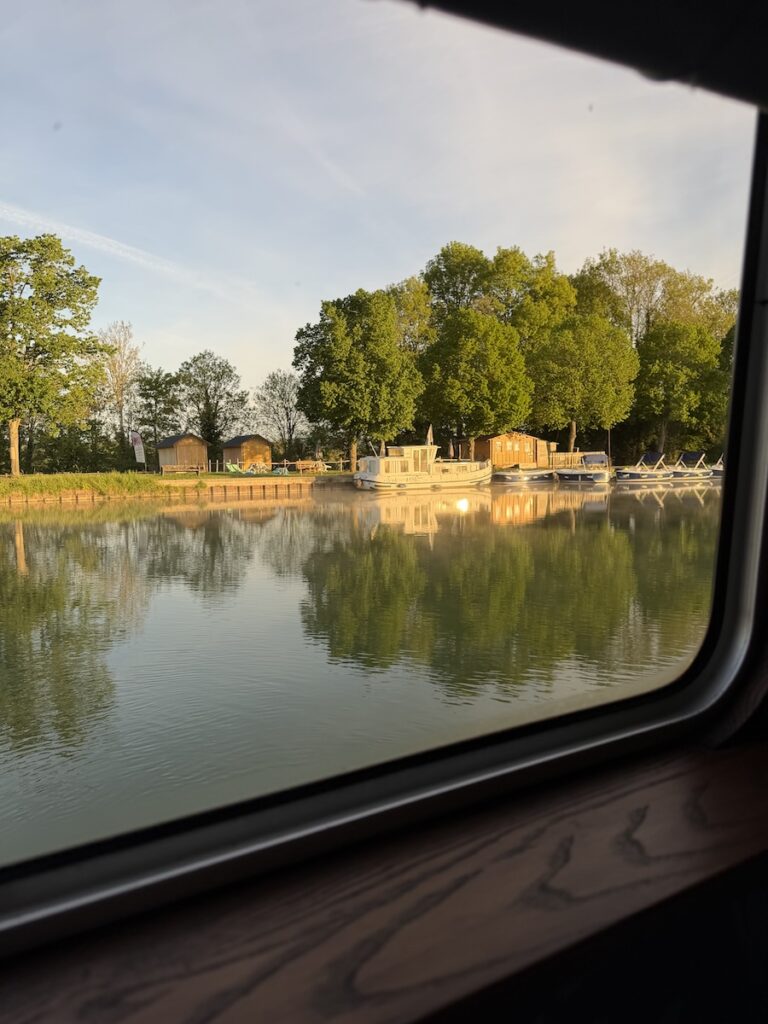
With only six passengers on my cruise, one cabin was used to store our empty suitcases, as there’s very little space to do so in the cabin. If all cabins are occupied, they could stow empty suitcases below deck, according to the crew.
VIDEO: Below is a quick tour of our little cabin, #1.
The Dining Scene — Different Than Most Barges
Unlike most barge cruises on the canals of France, where meals, including local French artisan cheeses, are a big part of the cruise experience, the Savoir Vivre has a different set-up.
By design, the boat has no galley, as mentioned earlier. Instead, each morning crew members go to a local shop or caterer to get breakfast and lunch items to serve on board. Dinner is on shore each evening.
Most of us appreciated having a breakfast focused on bread and croissants along with delicious creamy French butter, which my cruise-mate, Debbie, couldn’t get enough of it! There were baskets of croissants, pastries, and sliced baguettes, plus cereals, fruit, cheese and cold cuts, and carafes of coffee. The six of us did not miss the made-to-order eggs or other hot breakfasts offered on barges with galleys.
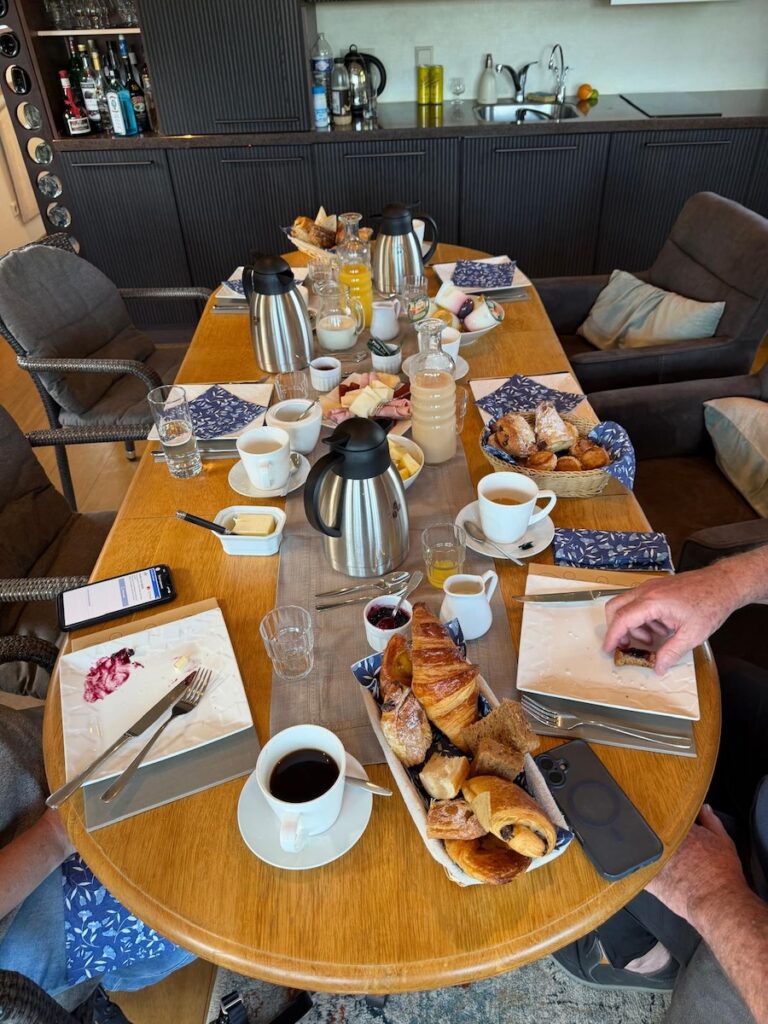
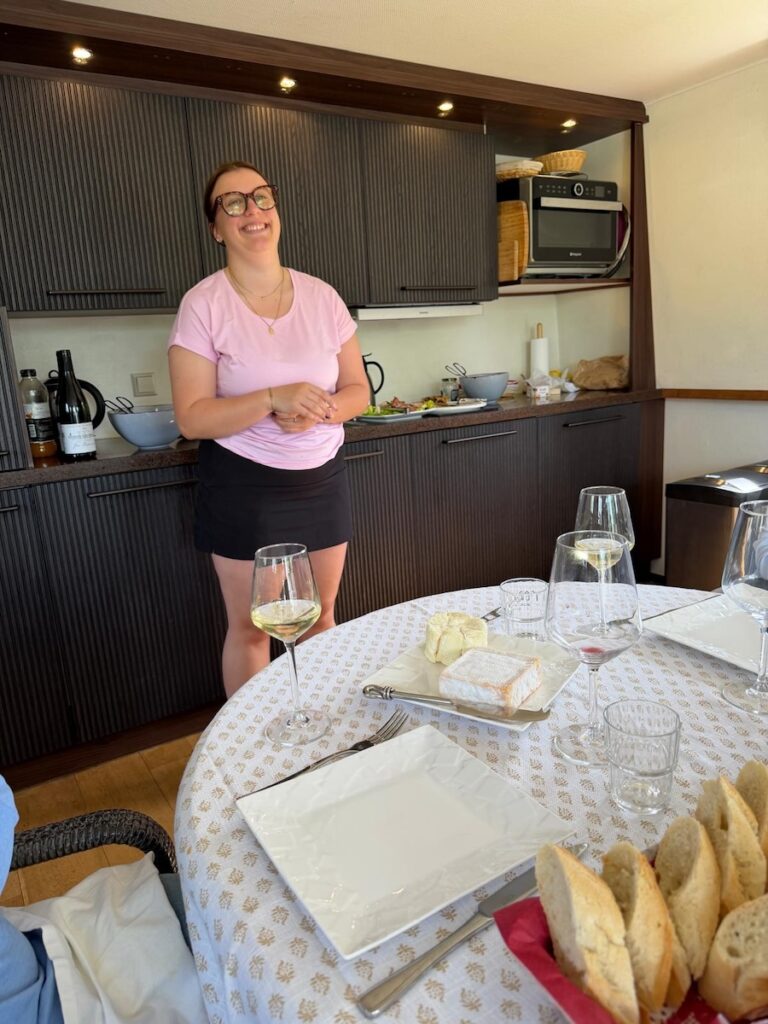
Lunches were served on board, typically comprising several salads plus a quiche or sandwich that were purchased in town at a local shop. Dessert at lunch was either a cheese course or a dessert. A red and a white wine were also offered (of course!), which we all enjoyed. When in France…!
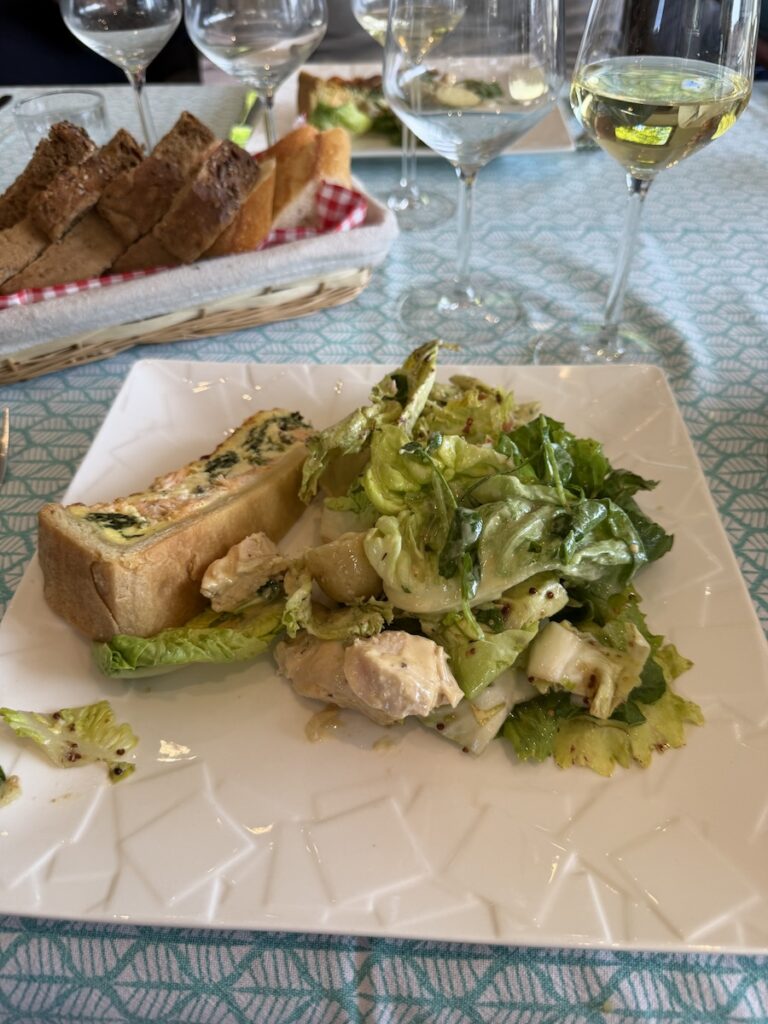
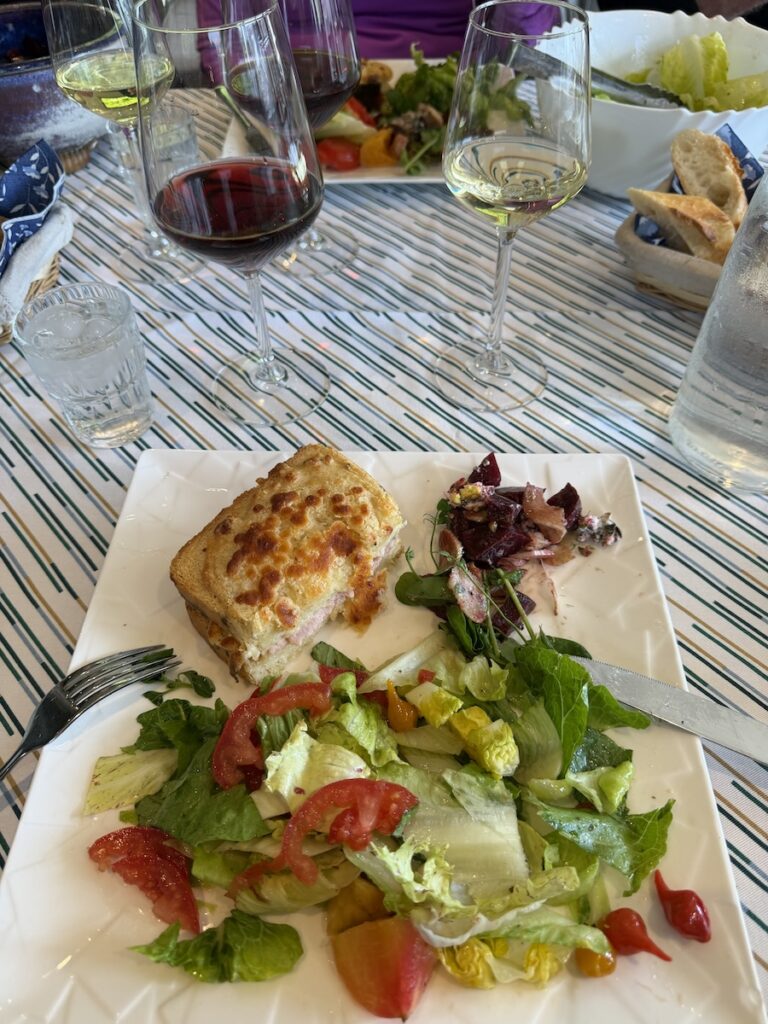
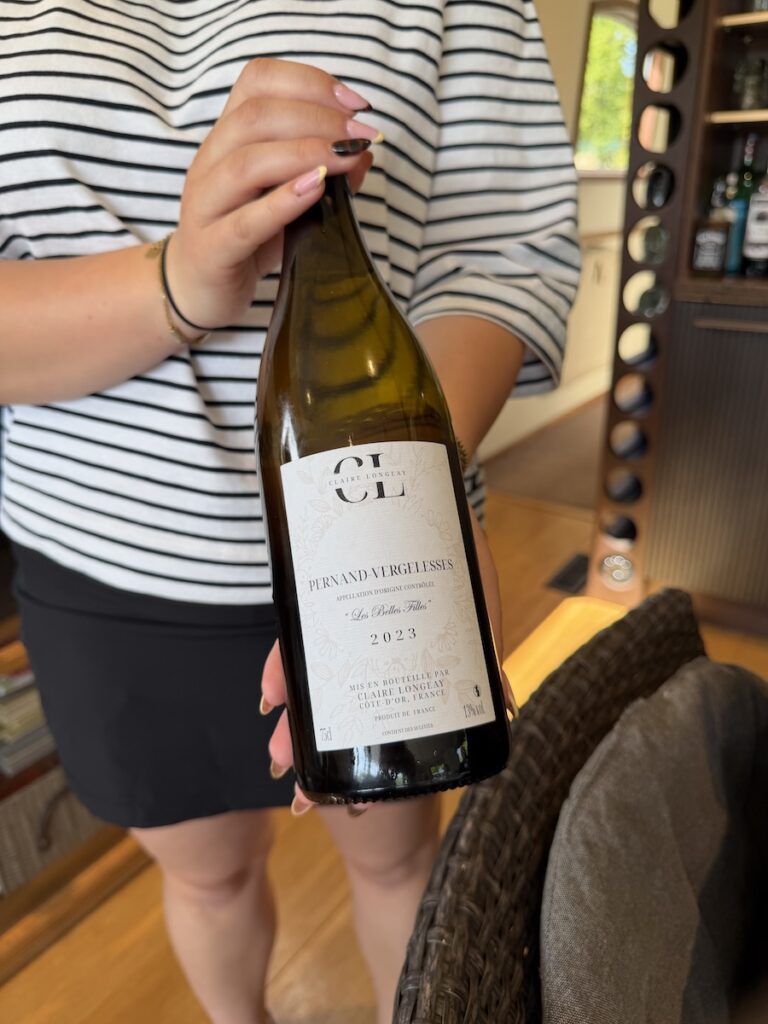
Dinners are at restaurants on shore, a different one each evening chosen by Captain Richard, who drives guests to and from the venues, typically 10 to 30 minutes each way. Wine is pre-ordered by Richard (in our case, for the six of us, there were two reds and two whites). Guests order dinner from the restaurant menu, with a choice of appetizer, main and dessert. All of this, including any gratuities, are covered in the Savoir Vivre cruise fares. Captain Richard dined with us two of the six nights and we enjoyed his company.
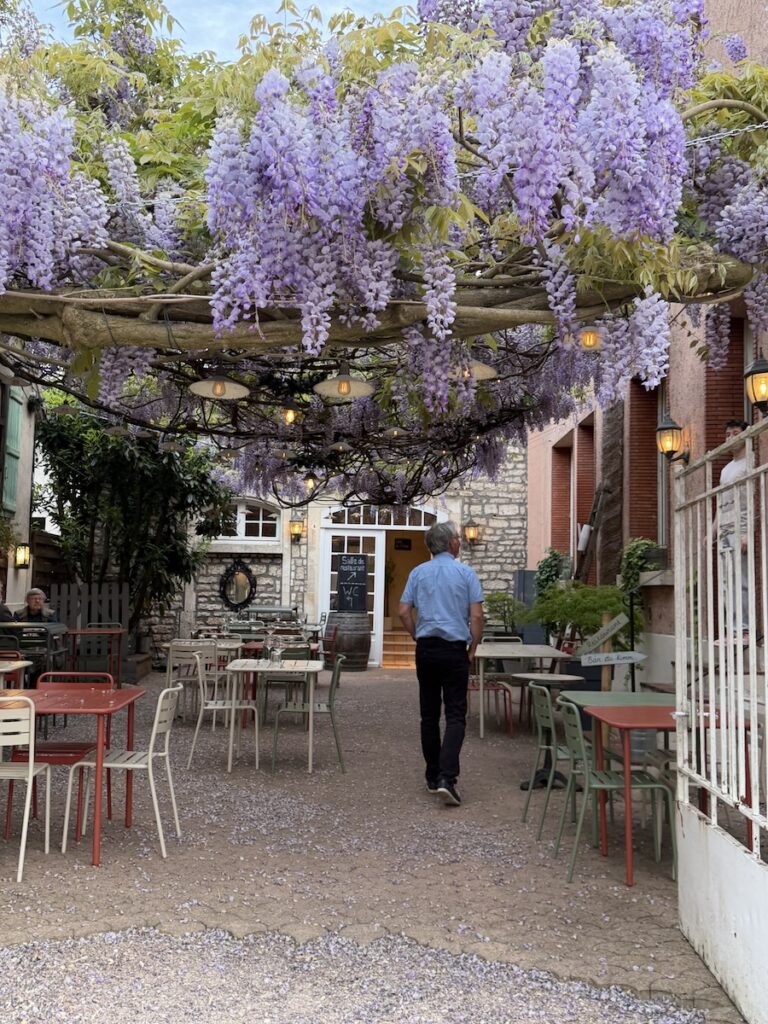
My favorites of the week were:
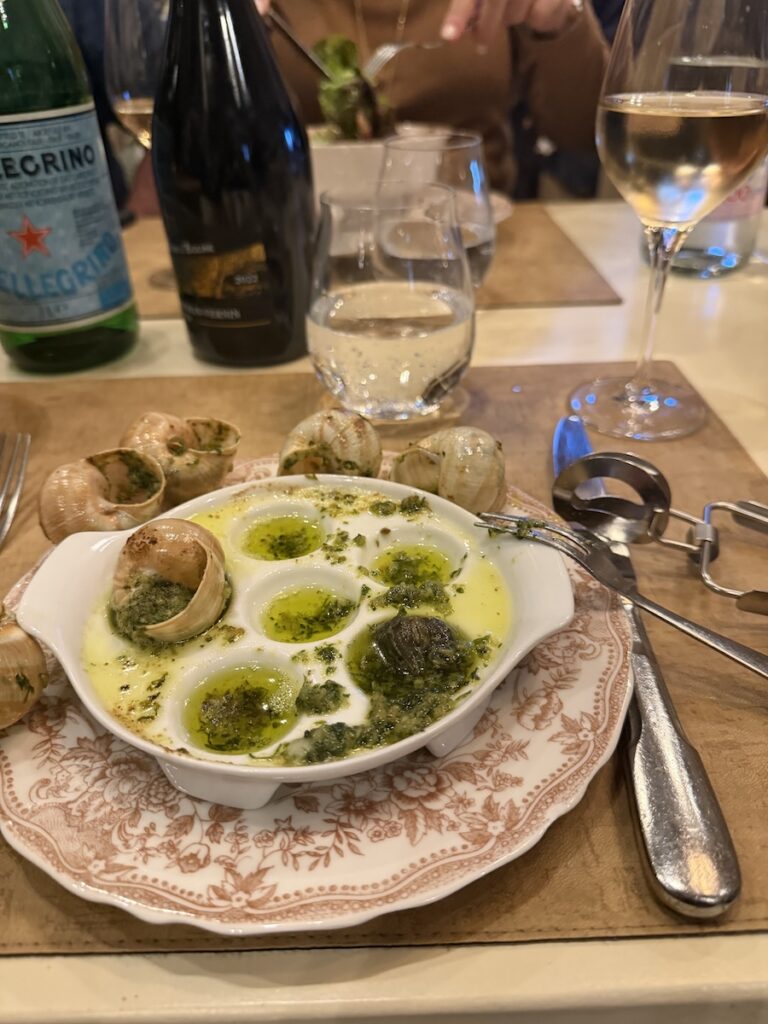
- The atmospheric old-world charm of Auberge de la Beursaudière, a beautiful restaurant and hotel set on the grounds of an old farmhouse in Nitry, where I enjoyed escargot (in the shells) followed by trout with a pea and mint sauce, and served with spring vegetables, and ending with a rich delicious dark chocolate mousse.
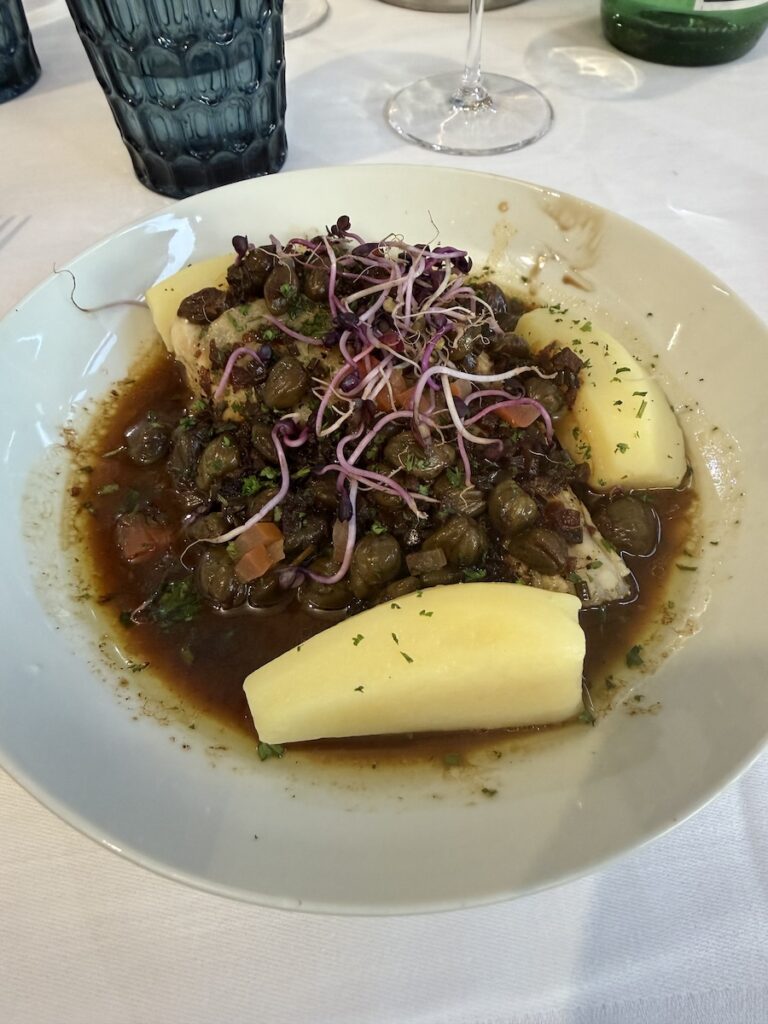
- At dinner at Le Marronnier in Ramayes I started with escargot again (why not!), then skate fish covered with capers, followed by decadent chocolate mousse (again!).
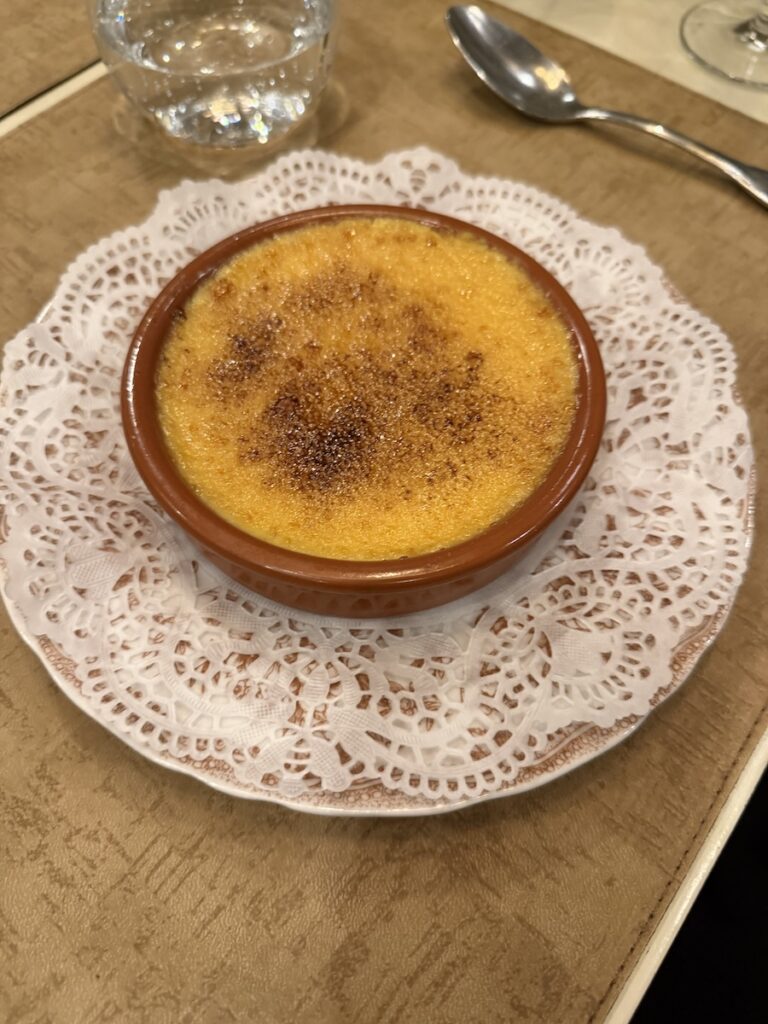
- Dinning at the charming La Mirabelle in Saint-Remy, run by a husband-and-wife team, yet again I savored a traditional escargot appetizer, finishing the three-course meal with a creamy crème brûlée.
The other couples on our cruise told us they chose Savoir Vivre in large part because of the onshore dining — they loved this aspect and it was a selling point for them.
I likewise enjoyed dining with the locals and seeing the interior of various restaurants, though it would have been nice to have received more information about why a certain restaurant was chosen and if there was any notable history about the building.
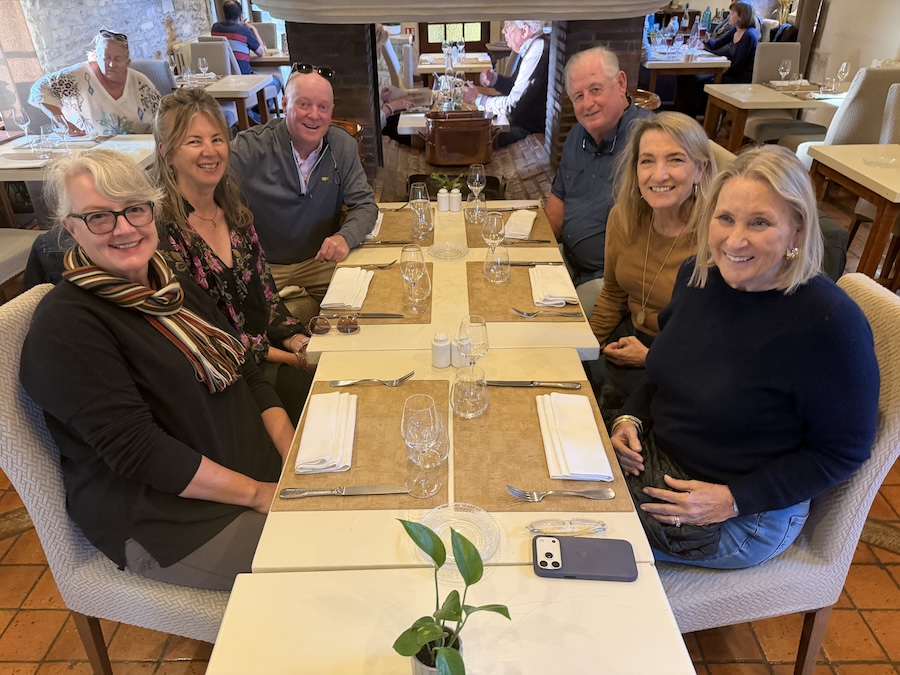
While I do appreciate that Savoir Vivre does things differently than most barges, overall, I must admit, personally, I prefer a barge with a galley and talented in-house chef who prepares delicious lunches and dinners on board the barge itself. On many barges, there is one night reserved for having dinner on shore, with the rest of the meals on board.
Map & Itinerary
Our Burgundy Canal cruise aboard the Savoir Vivre departed from Tanlay and cruised to Venarey-les-Laumes, covering a total of about 35 miles. The one-way sailing operates in both directions, passing through some 32 locks hand-dug in the 19th-century.
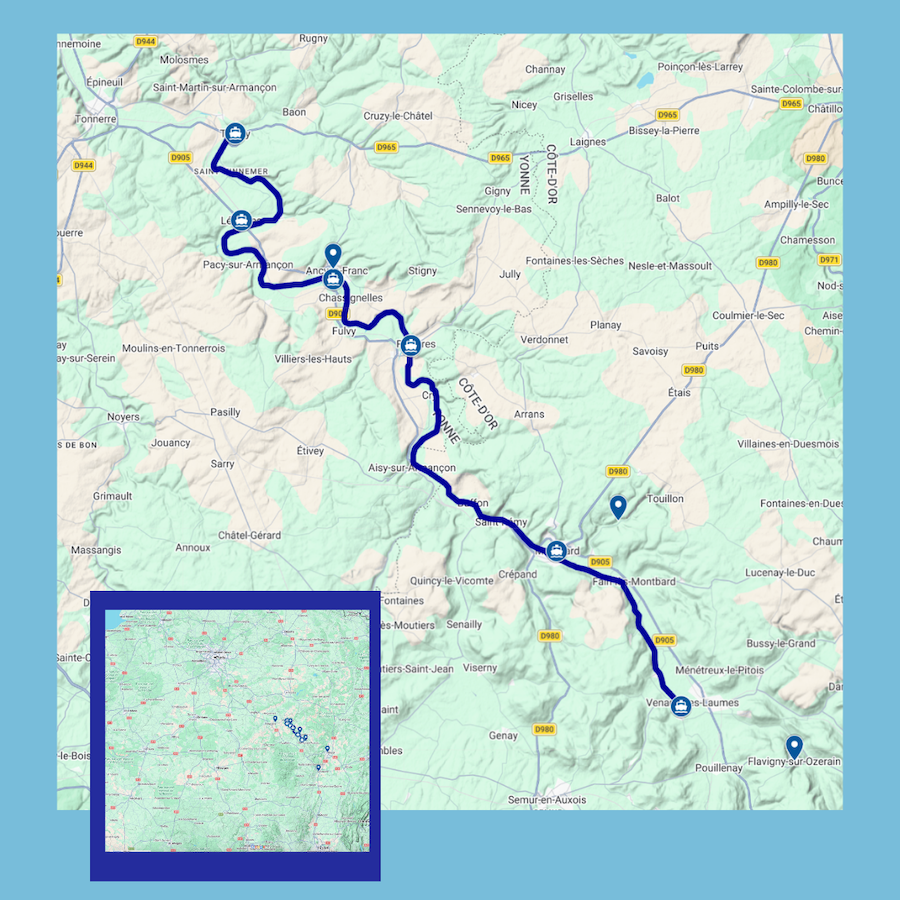
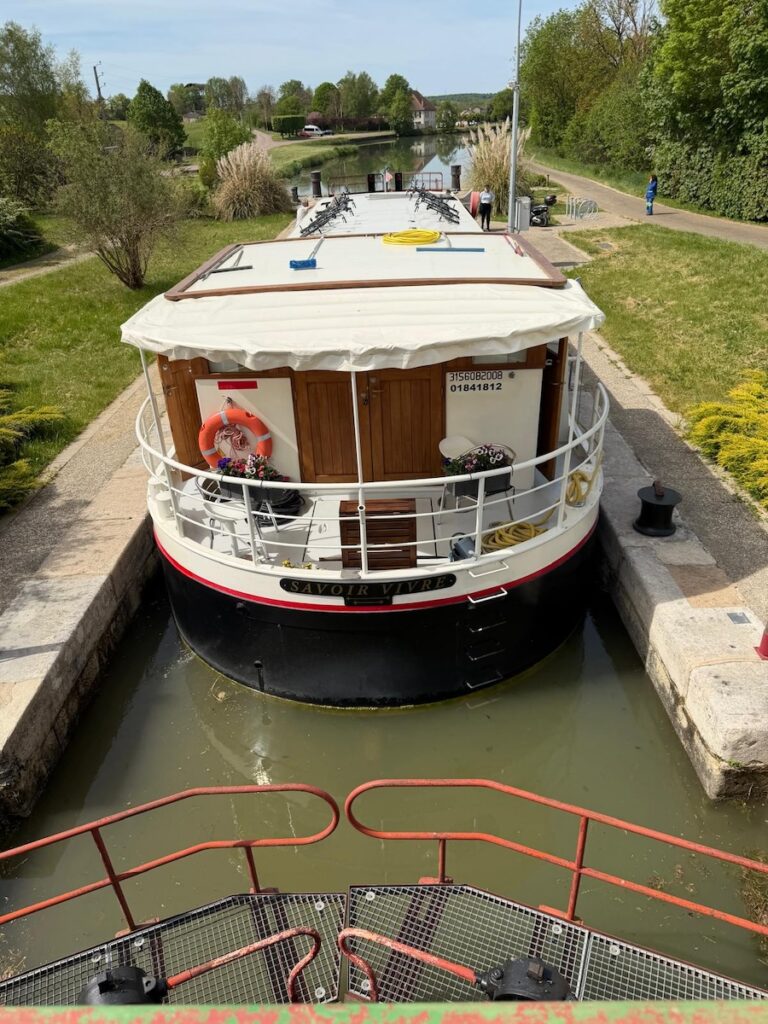
On our week, we were going “up,” gaining a total of about 200 feet of elevation over the six days.
Here’s a quick step-by-step explanation of how the locks work with basic time-tested technology:
- Barge enters a lock chamber.
- The gates close behind the barge (gates are already closed in front).
- The chamber is filled with canal water (by sluice gates opened in the lock doors) to get the chamber water level the same as the next section of canal (it takes just 10 or 15 minutes).
- Once the forward-going water levels match, that set of gates opens and, voila, you’re cruising back on the canal.
Note, when going “down” the canal, elevation-wise, we’d be entering the chamber and having the water being drained out of the sluice gates, to take the barge down to the next lower section of the canal.
Some of the locks on the Burgundy Canal are still hand-cranked open and closed (which passengers can help to do if so desired), while others are operated electronically with the push of a button. Either way, canal workers met us at each lock (often zipping between locks on a scooter), to assist in the opening and closing of the lock chambers. It was fun to witness the lock process and a few times guests could help push open the lock door via the manual lever.
VIDEO: Below, several of us passengers enjoyed assisting in opening the lock doors the old fashioned way. (Video: Doug Mills)
Tour Highlights On Our Savoir Vivre Barge Cruise
Canal cruises in France, like this one, offer daily half-day guided excursions to generally off-the-beaten track sites; you’re not touring famous museums and cathedrals in cities like Paris, Lyon or Dijon, you’re discovering vineyards and medieval villages in places you may never have heard of — a big plus for many travelers (including moi!) who choose a barge cruise.
Sunday — Tanlay (embark)
The port is about a 90-minute drive from Dijon, the meeting point where guests are picked up by Captain Richard and driven to the Savoir Vivre.
Monday — Lezinnes
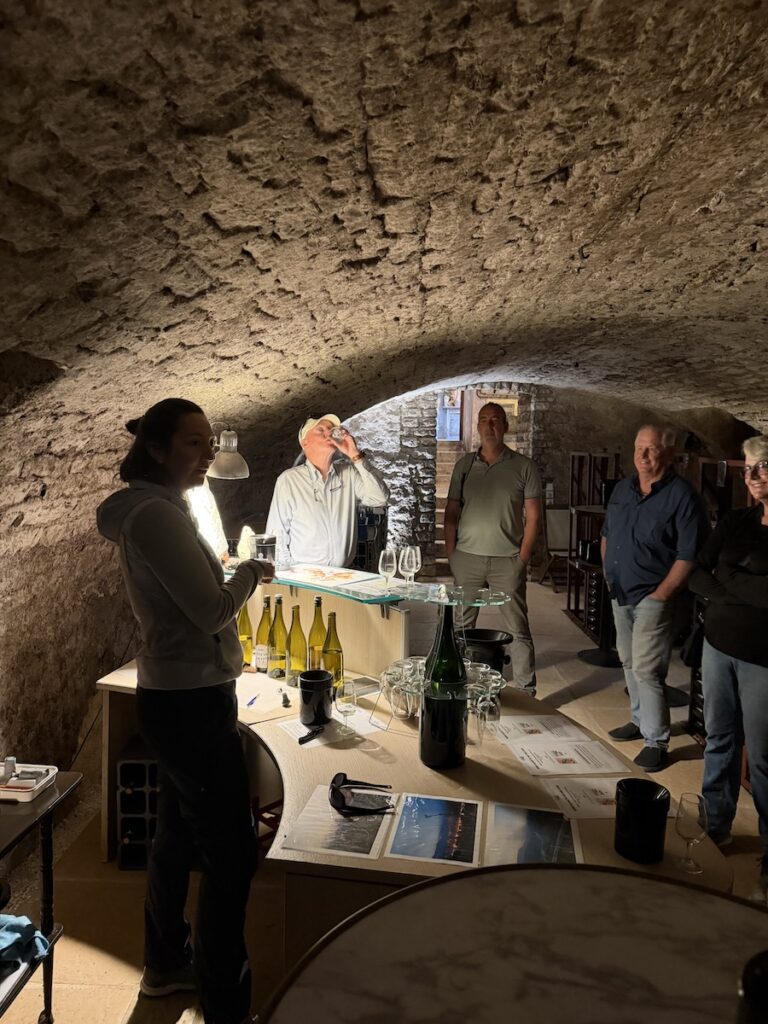
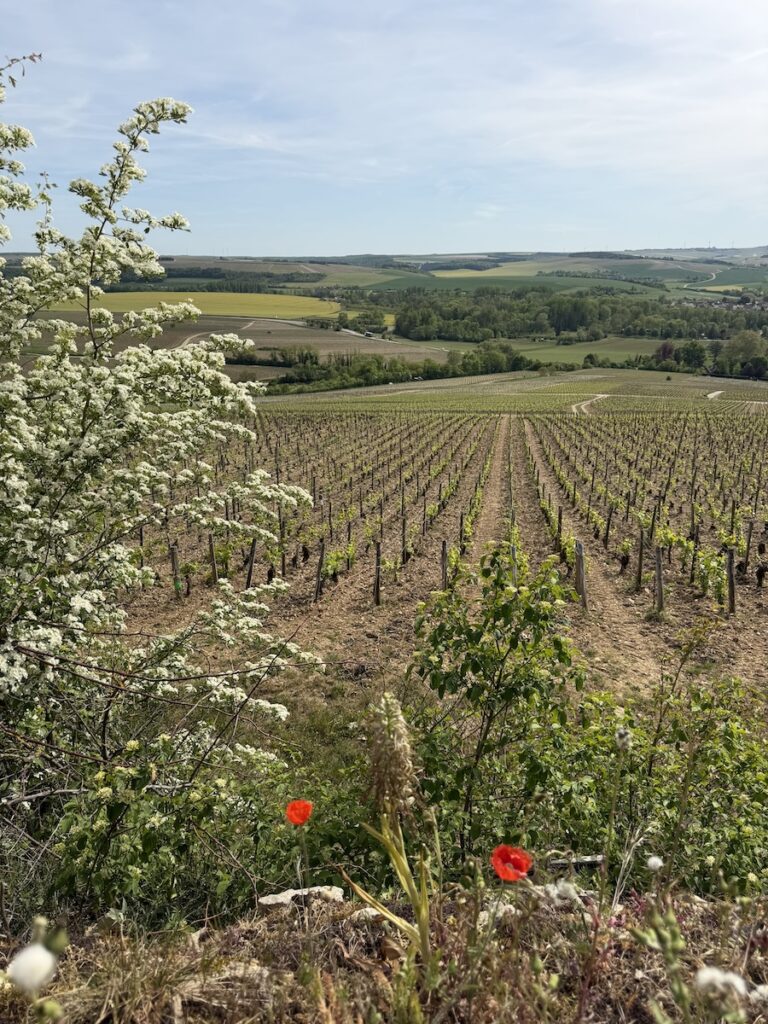
On our one wine tasting of the week, we enjoyed visiting the Theirry Laffay Filles, a small independent family-owned and operated Chablis grower 20 minutes from Savoir Vivre. Our private guide and sommelier was one of two sisters who run the vineyard with their parents (the mother is the bookkeeper, among other jobs). As she presented us with six different Chablis wines to taste (all made with Chardonnay grapes, of course!) she shared details about the wines they produce — some 40,000 bottles a year — and the work entailed to run a winery.
Tuesday — Ancy-le-France
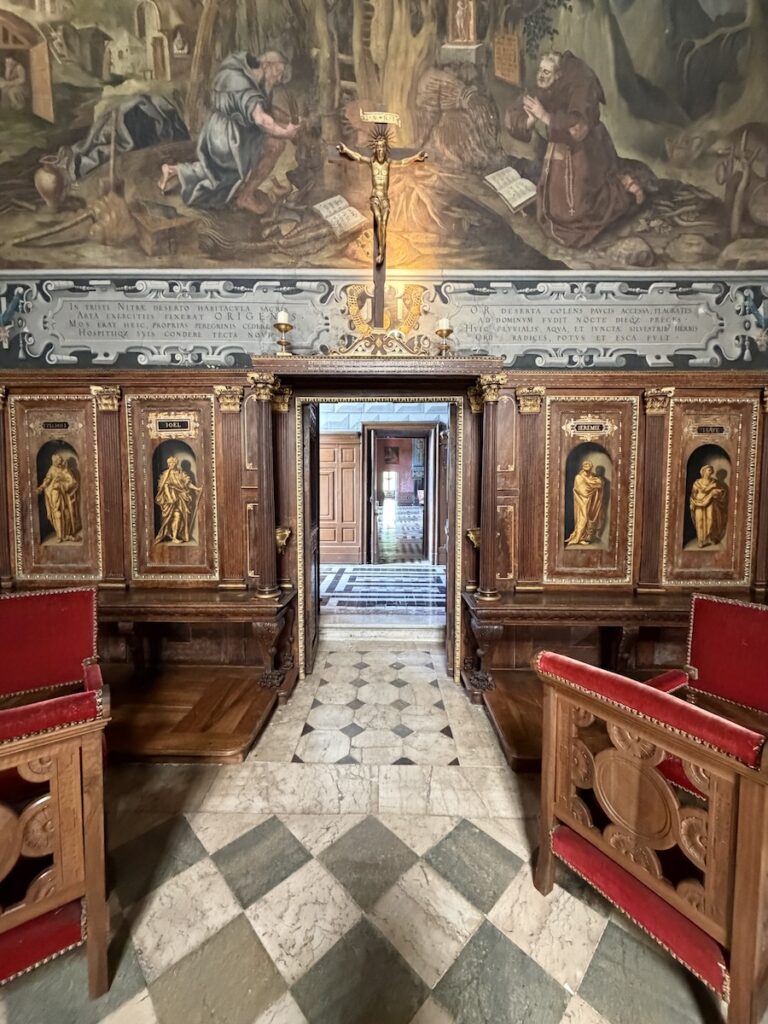
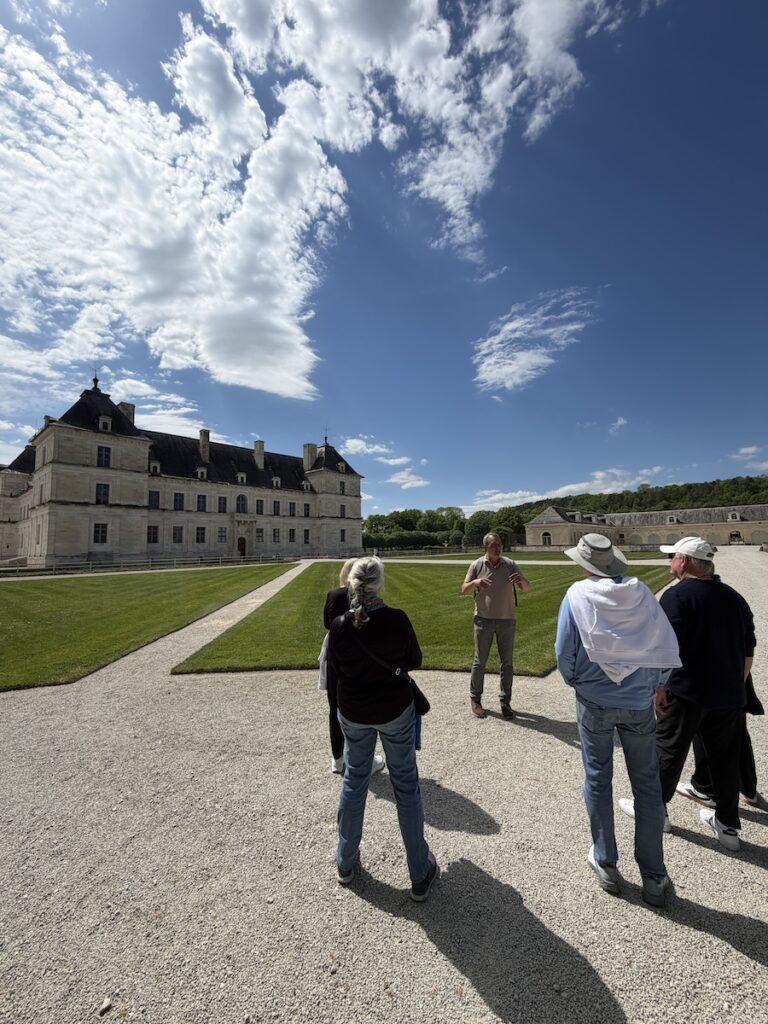
It was a short drive to Ancy-le-Franc to tour one of the few Renaissance-style chateaux in France, a large rambling estate with a somewhat hodgepodge maze of rooms and exhibits. Highlights were its 16th-century frescos and sprawling gardens.
Wednesday — Ravieres
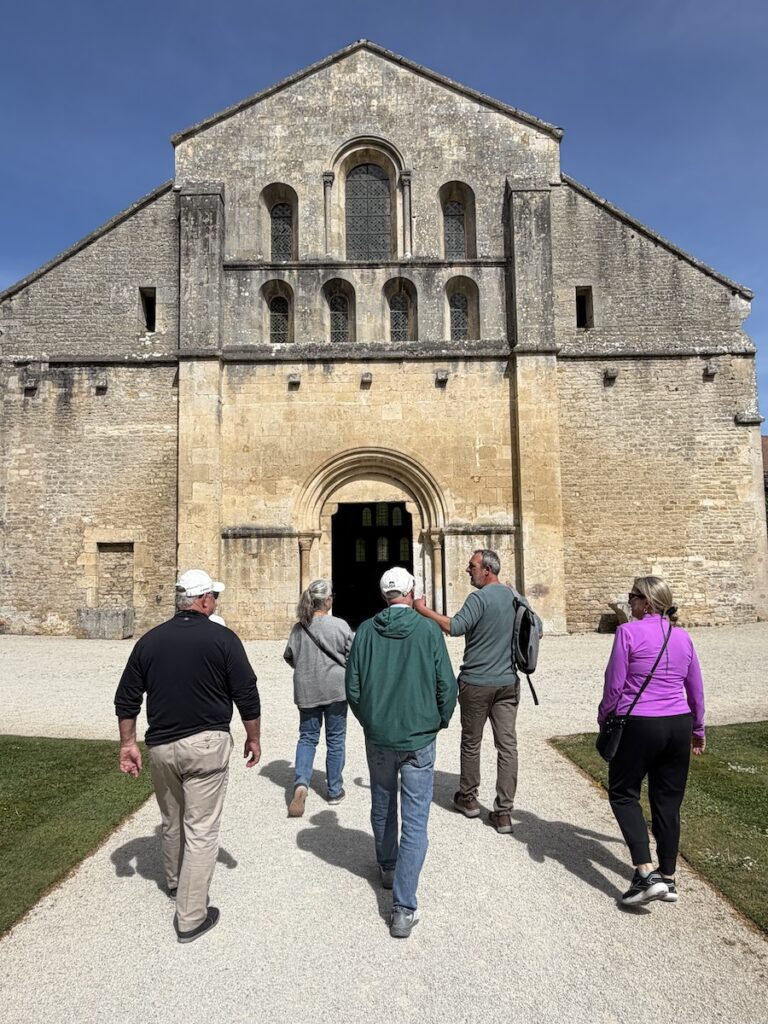
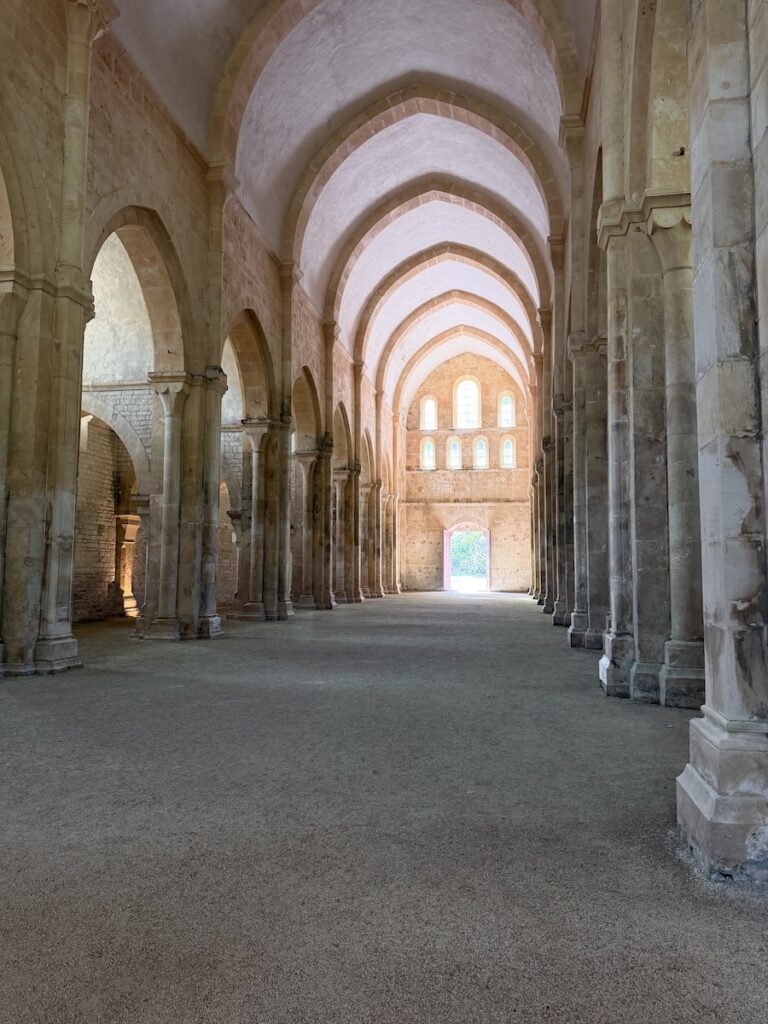
We drove to the Abbaye de Fontenay for a look around the lovely, serene grounds of a monastery founded in 1118 by St. Bernard. We marveled at how few tourists were there and felt lucky to have the place mostly to ourselves. Richard guided us around to learn a bit about its impressive but somber religious architecture associated with the Roman Catholic Cistercian Order of the day — restrained as to not distract from prayers and devotion.
Thursday — Montbard
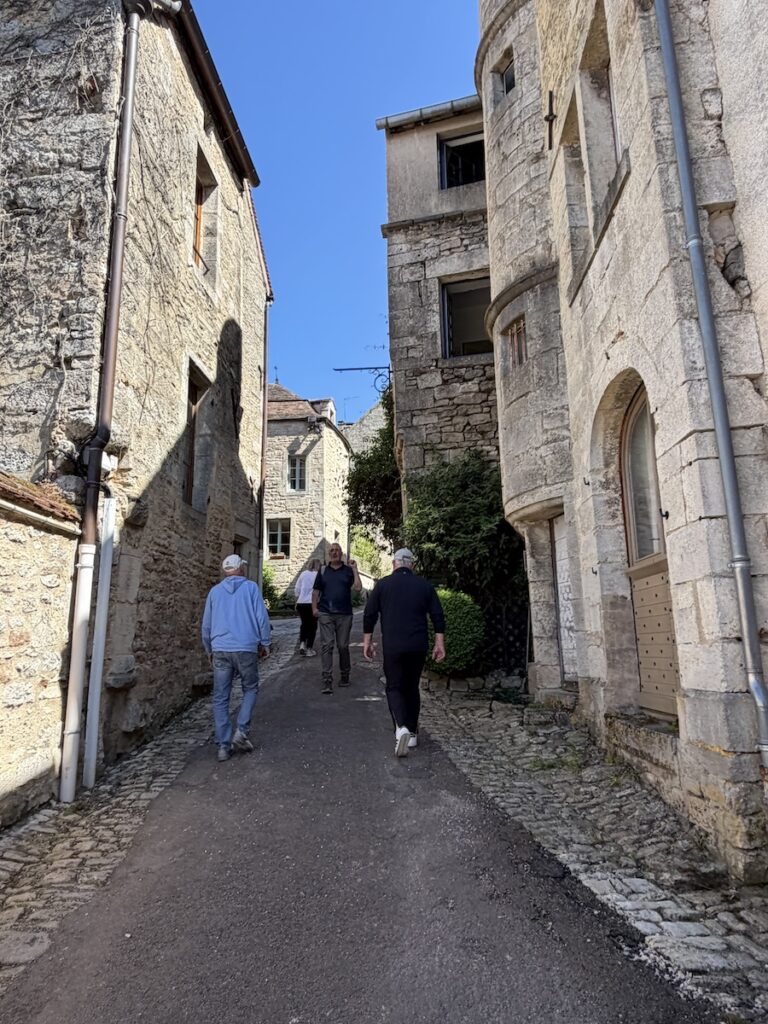
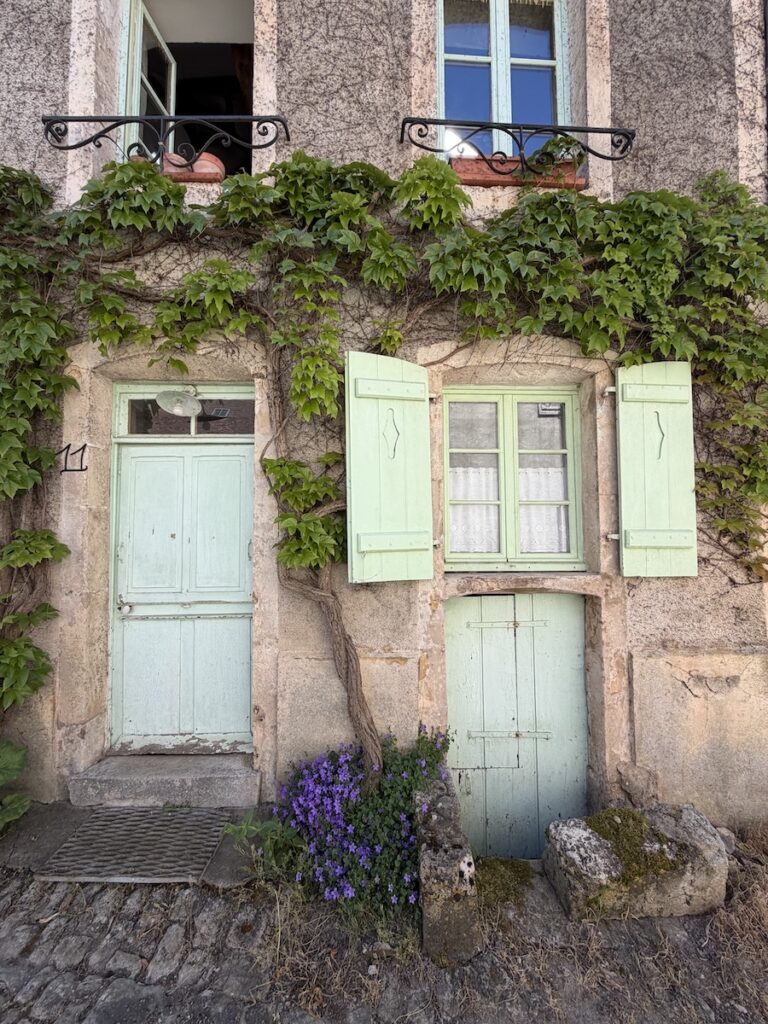
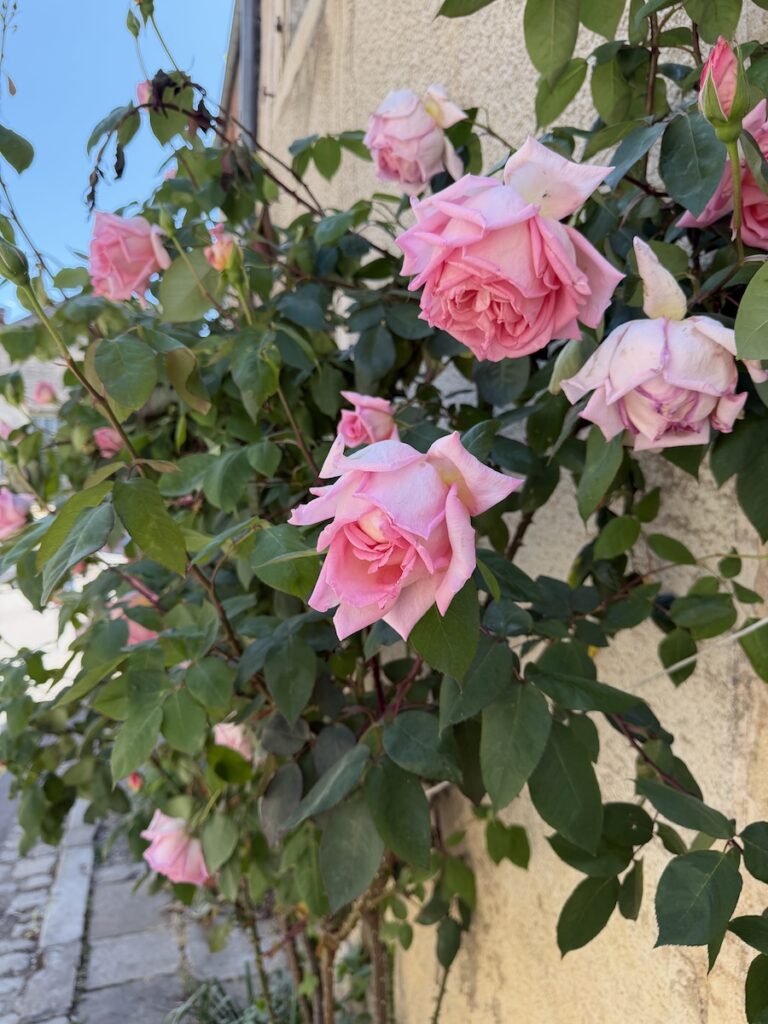
After lunch, it was just a 15-minute drive to Flavigny-sur-Ozerain, a beautiful hilltop medieval village. It’s not surprising it was the setting for the romantic film Chocolat some years ago, starring Juliette Binoche and Johnny Depp. After a walk around the maze of crooked cobblestone streets lined with crumbling buildings and wild rose bushes, the main event was a tour of the legendary Anis candy factory, located in a 16th-century Benedictine abbey.
The tour included going inside the working area of the factory to see how the sugar-coated anise seed candies are made and packaged in their signature oval tins. Most of us purchased the candies in the gift shop and enjoyed samples; this was the best shopping opportunity of the week.
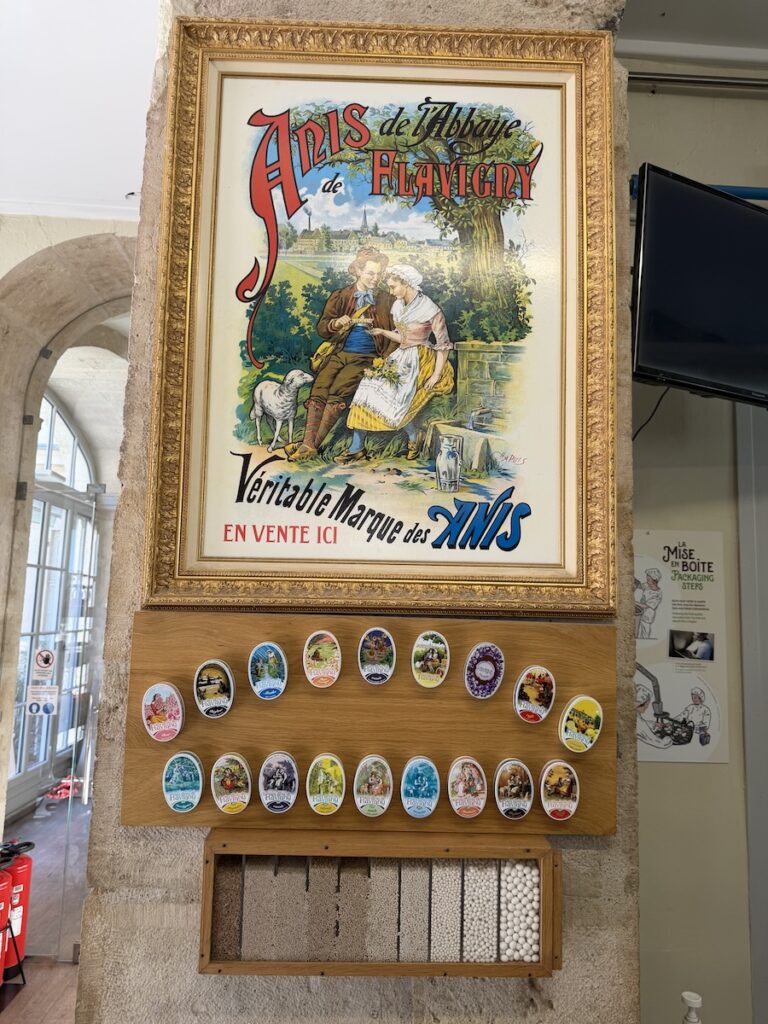
En route to Flavigny, Richard briefly showed us a Roman battle site, from 52 BC, when the Romans defeated the Gauls — wow!
Friday — Venarey-les-Laumes
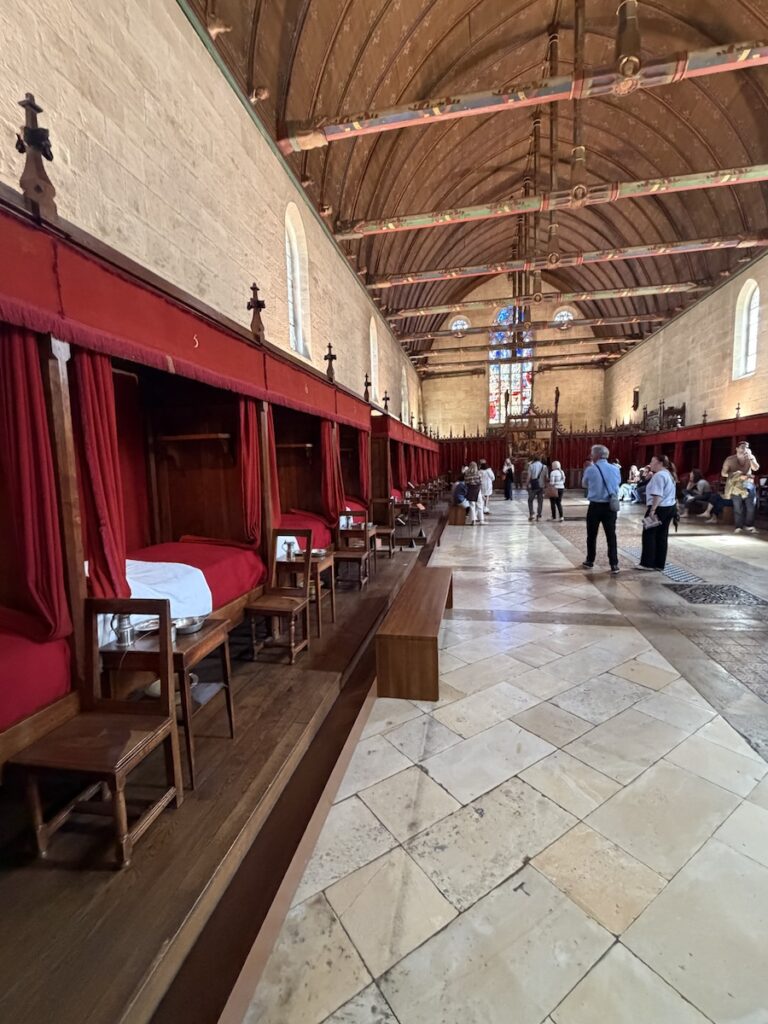
No time for cycling this morning, as this day is spent in the small historic city of Beaune, known as the wine capital of Burgundy, where millions of bottles are said to be stored in caves under the streets (though oddly we didn’t do any wine-related touring or activities). It was an hour’s drive away from the canal, mostly on highways. As it was a public holiday, the 15th-century “Hospice de Beaune” hospital we came to tour was teeming with other tourists. Luckily, Richard had procured tickets and got us through quickly so we could admire the ornate interiors with high ceilings, paintings and red velvet drapes. We learned that all of the hospital beds, while small, were intended for two patients so their combined body heat could keep them warmer!
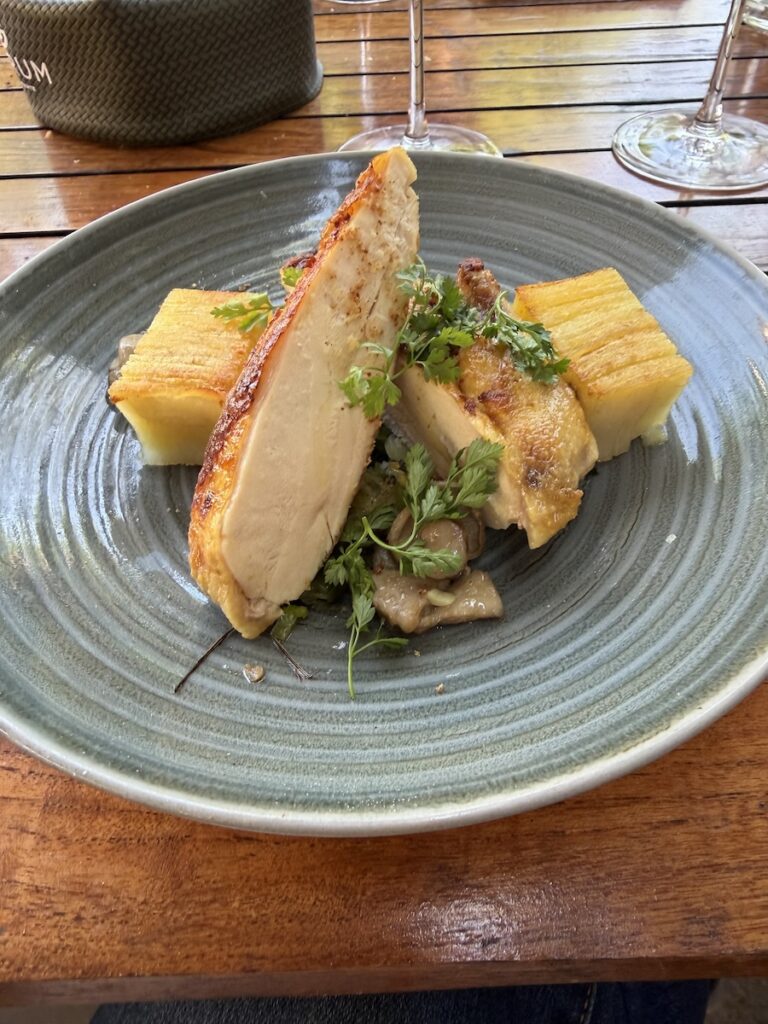
Before the tour, we lunched on the pleasant outdoor patio of the Garum Restaurant; all three crew joined us and it was not only fun but one of the best meals of the week, including delicious chicken, polenta and fries.
Saturday, Venerey-les-Laume (disembark)
Richard drove us to Dijon, where we all caught the train to Paris and beyond.
3 Days in Ghent, Belgium, After Our Savoir Vivre Barge Cruise
While other travelers may choose to stay on in Dijon, Paris or perhaps points in southern France (all fine ideas!), we headed north west to Belgium to spend three days in beautiful medieval Ghent .
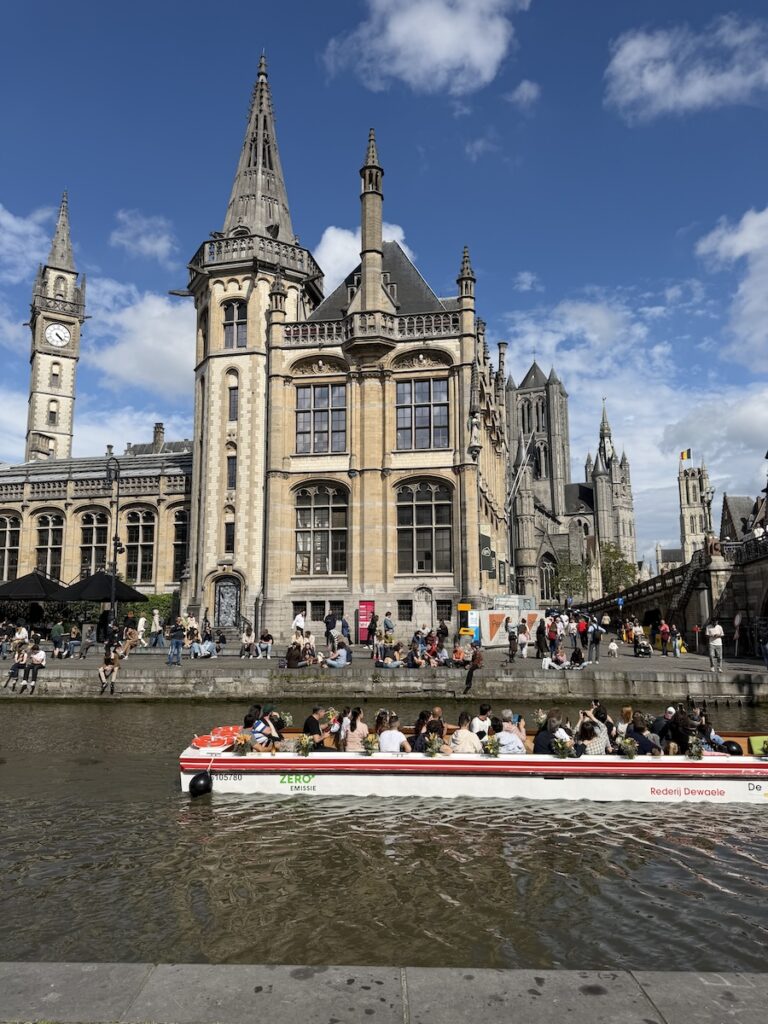
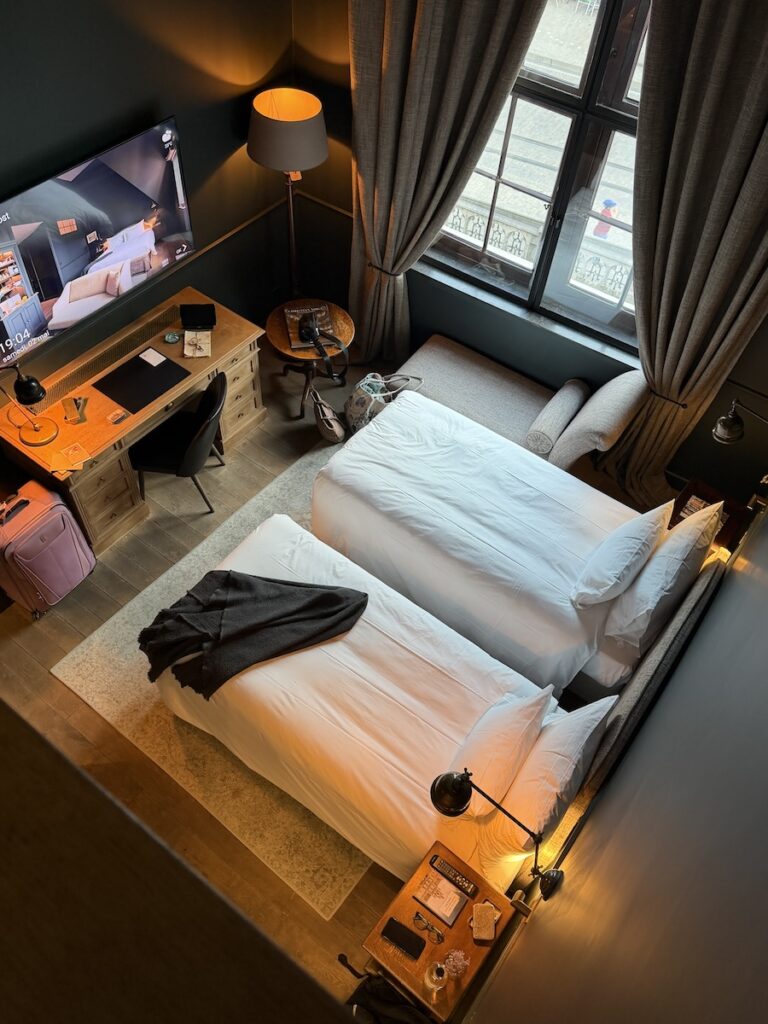
For our hotel, we choose the atmospheric and centrally located 1898 The Post, set in the neo-Gothic former post office. We had a large two-level room, with the sink and shower (but not toilet) up a flight of stairs on the second level, which was a bit odd.
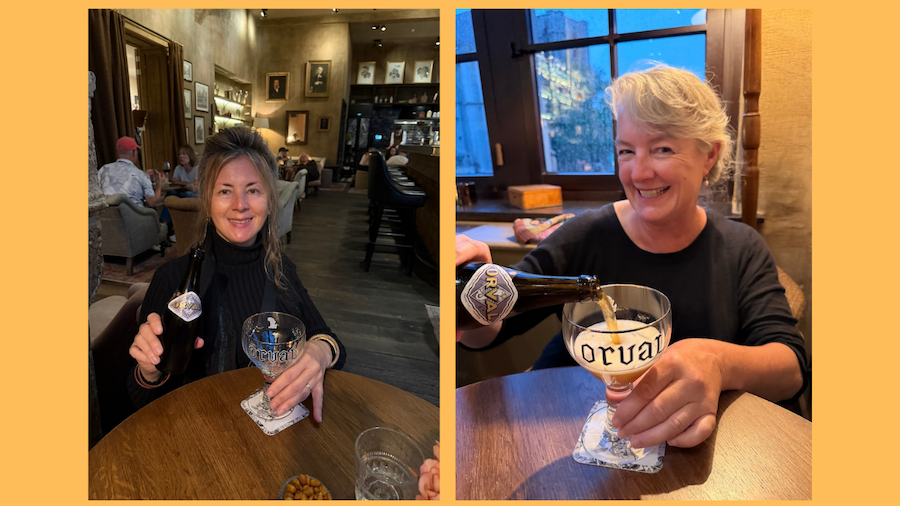
Belgian beer played a big part in our stay — our favorite was the Orval — including several in our hotel’s stylish bar with its shabby chic seating and art, and young model-like wait staff; it’s also the venue for buffet breakfast (not included in the rates).
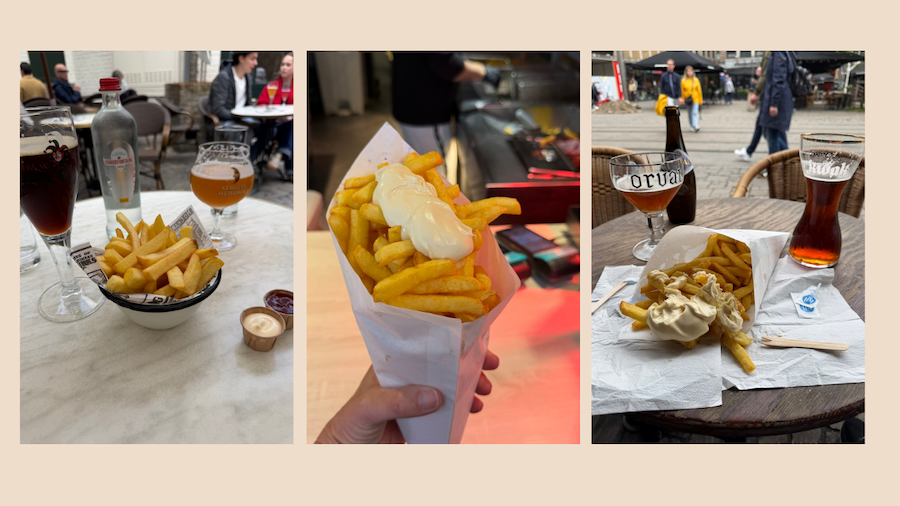
The famous fries or frites also took center stage during our Belgium sojourn, whenever possible! They're thick, double fried and a Belgian specialty, served with a variety of sauces, including mayo. Definitely do not call them French fries!!
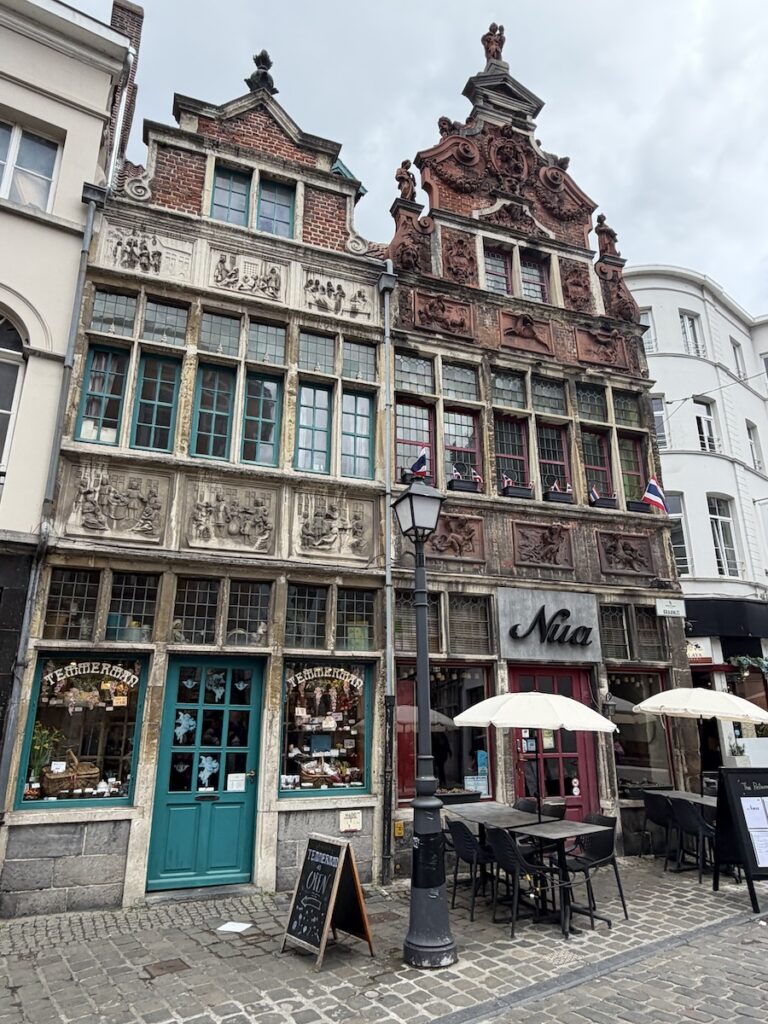
We did two walking tours in Ghent; a foodie tour (think frites and chocolates), and a tour focused on the dramatic architecture of the historic city center; we wanted to do a cycling tour but decided not to due to rain. Both tours were led by excellent guides who took tips as payment; there was no charge for the tour itself, which seems to be a very popular system in Belgium.
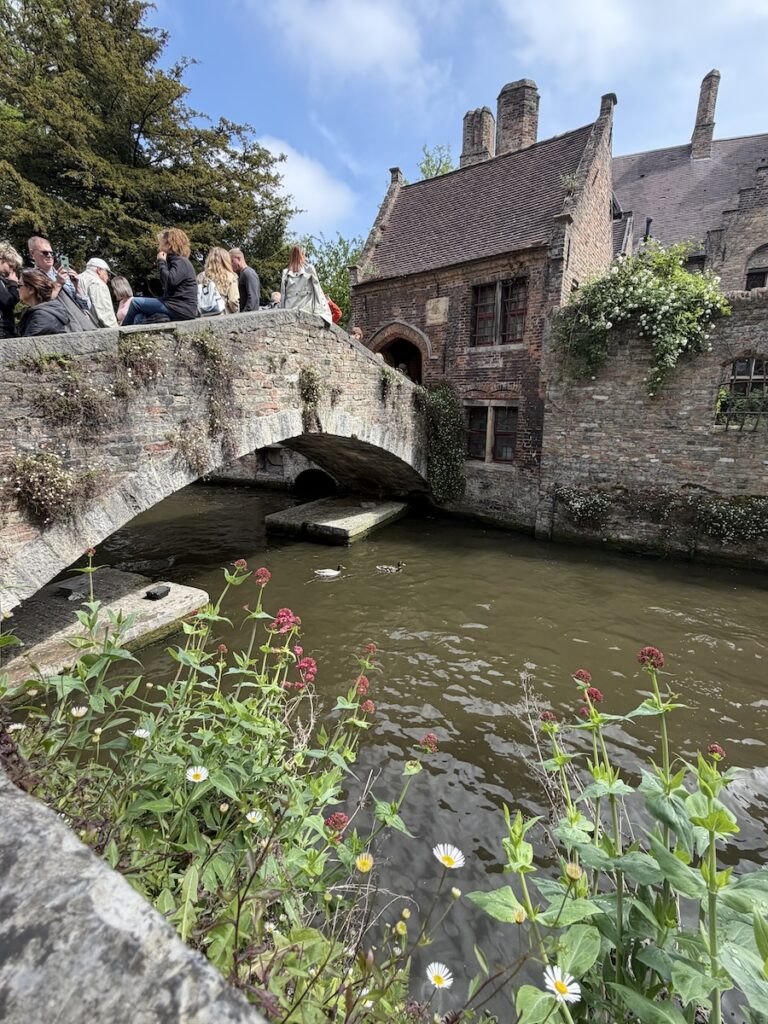
One day we took a 30-min train to Bruges to enjoy the fairytale city, along with many other tourists; we strolled along the many quays, lakes and canals, admiring the architecture, old city walls and storied history. In Bruges we also fit in another excellent walking tour from an animated and knowledgeable guide (who, like those in Ghent, expected a tip, but no up-front tour charge).
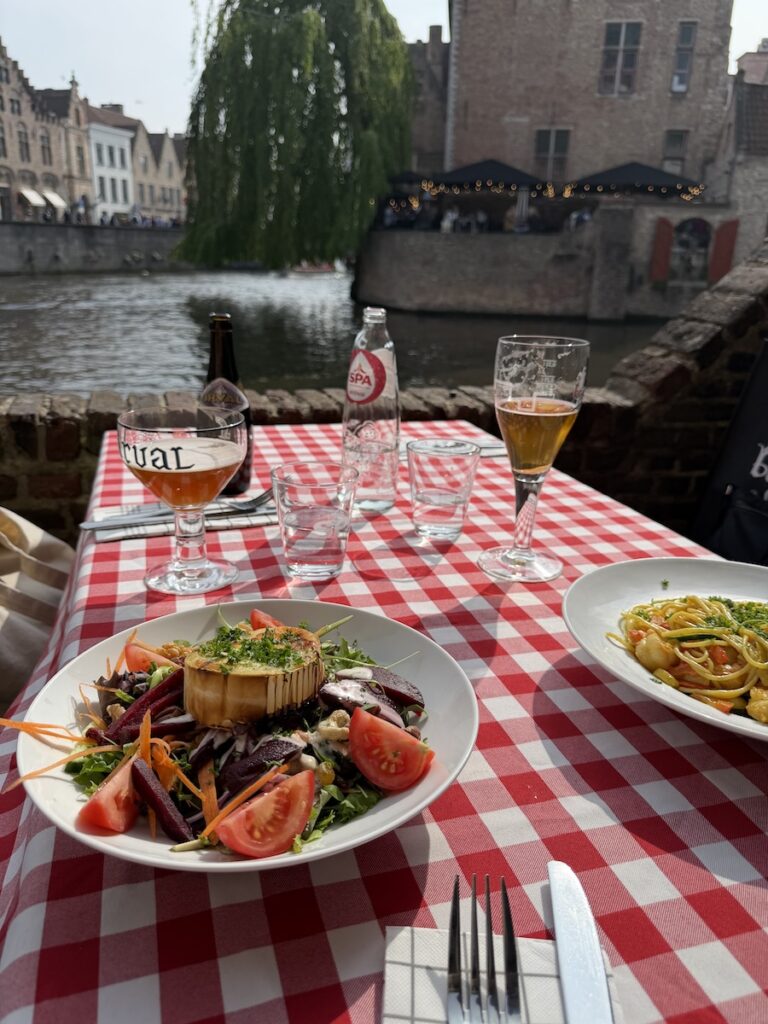
We ended our day with an early dinner at a restaurant along the Rozenhoedkaai quay (or Rosary in English); the food wasn’t memorable, but the setting sure was — al fresco dining on checkered tablecloths with up-close views of the water and boats.
Crew & Service Aboard Savoir Vivre
By design, Savoir Vivre offers a casual, friendly atmosphere, where crew members feel like your friends or, even, almost like passengers themselves. Captain Richard, who was also the general manager of the whole operation, was the main point of contact. A playful, pleasant man who somehow reminded me of one of the three musketeers, drove us to/from dinner most days and joined us twice for the meal. He had a quirky sense of humor and was a pleasure to joke with.
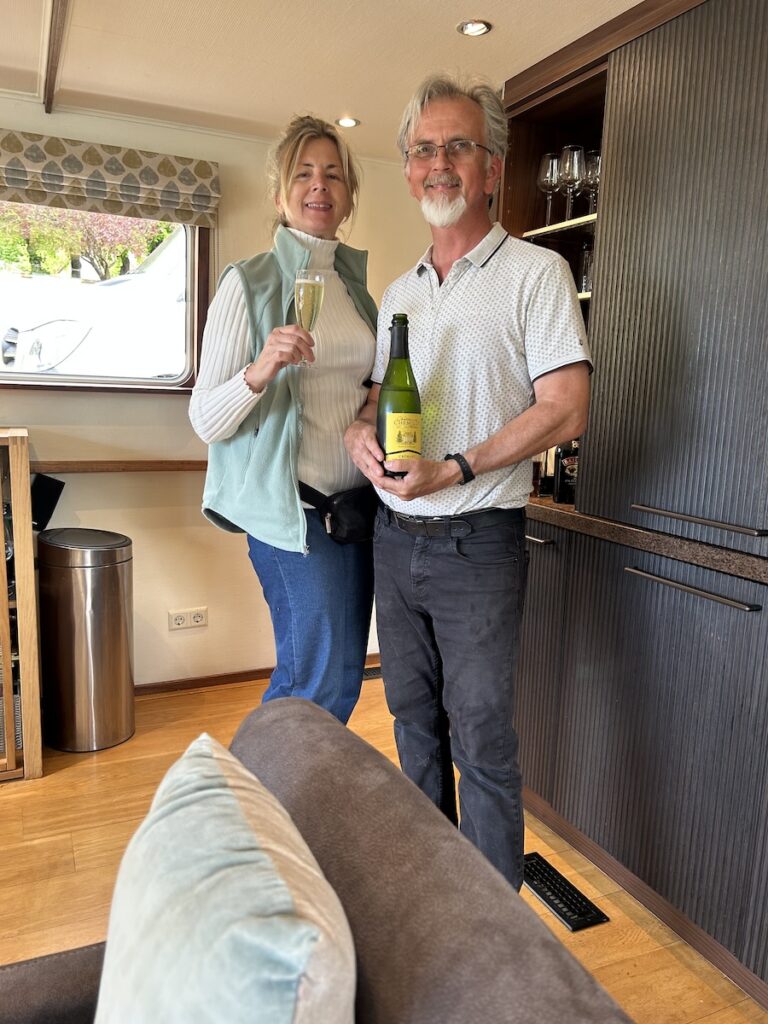
Overall, service is casual and not doting or sophisticated — wine isn’t served with a cloth napkin draped over the arm and an elaborate description. Our smiling and charming young hostess, Matilda, introduced wines at lunch with a short basic spiel about the flavor notes and vintage; at one lunch she giggled and admitted she didn’t know much about that day’s red.
Over the course of the week, we were served a cheese course a few times at lunch; in the same vein, it was a far less elaborate introduction than I’ve experienced on other barge cruises and the cheese itself was fine enough, but unremarkable — one day it was a Morbier that tasted like something I’ve had from Trader Joe’s back in the U.S. (don’t get me wrong, I love Trader Joe's!).
This contrasts with the cheese courses served on the Luciole and Magna Carta barge cruises I’ve recently sampled, which were not only described with passion and detail, but were delicious and rich — what I expect good French and English cheeses to be all about.
Cheese aside, I appreciated the warm easy-going rapport we all seemed to quickly form between crew and passengers alike, that was very welcoming and made for a truly relaxing and memorable holiday.
Interested In A Savoir Vivre Barge Cruise?
If you like the idea of a casual, friendly, relatively affordable barge cruise that feels like you’re vacationing at a friend’s house, with great optional cycling opportunities and dinners offered in local restaurants each evening (instead of onboard), then the Savoir Vivre is a great choice. It comes at a lower price point than most barge cruises in France that typically run a few thousand dollars more per person a week.
A six-night Savoir Vivre barge cruise starts at $4,475 USD per person, including all meals, wine at lunch and dinner, open bar, guided excursions, optional cycling and transfers from/to Dijon.
If you have any questions, drop me a line at [email protected]. I've done several barge cruises myself in the last few years and all told, my quirky crew of contributing writers have done dozens — we know (and love!) barges cruising!
If you'd like help booking a Savoir Vivre barge cruise, or any barge cruise, we can help. Show your interest in the form below and we'll connect with you soon!

Interested in a Barge Cruise in France?
Family-owned Barge Lady Cruises is an expert in barge cruising in France. The specialist travel agency was founded in 1985 and the Barge Lady team has sampled hundreds of barges over the years.
Barge Lady Cruises can help you choose the best canal barge cruise for your next dream vacation. Remember, barge cruises are super convenient; you won’t have to lift a finger! Pricing is all-inclusive, covering all meals, wine and spirits, guided excursions and entry fees, plus transfers to/from a central point (ie often Paris).
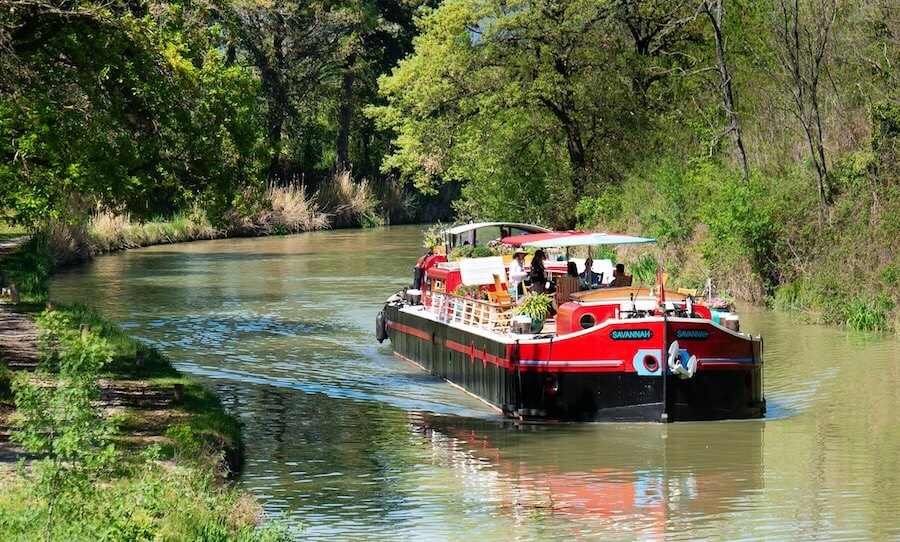
To show your interest in this 6-night barge cruise (or one of many others) offered by Barge Lady Cruises, please tell us a bit more about what you’re looking for and we’ll be happy to get back to you right away.
* Your personal information will be used solely for purposes of responding to your request.

Don’t miss a post about small-ship cruising, subscribe to QuirkyCruise.com for monthly updates & special offers!
© This article is protected by copyright, no part may be reproduced by any process without written permission from the author. All Rights Reserved. QuirkyCruise.com.











 HEIDI SARNA


