
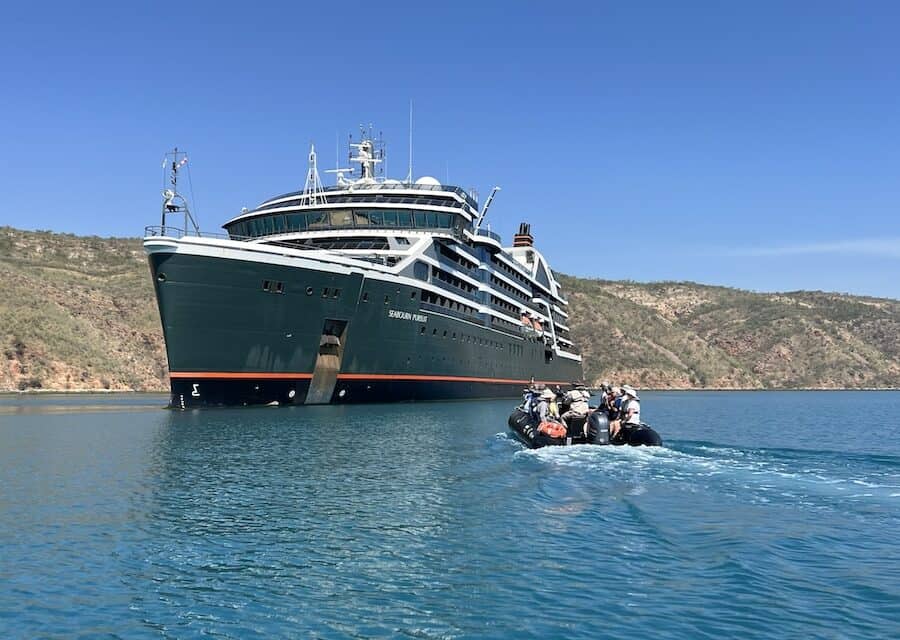
A Kimberley Coast Cruise With Seabourn
By Sue Bryant
Overview
Here's a quick look at why you should consider a Kimberley coast cruise,
5 Reasons To Explore The Kimberley With Seabourn
- A cruise is pretty well the only way to explore this remote region. You could do a road trip and camp, but an expedition ship is an effortless way to get close to the wildlife and the extraordinary Aboriginal rock art galleries.
- There are no shopping malls, no resorts, no golf courses, and no theme parks.
- The color, the light, and the sheer savage beauty of the place gives you an incredible sense of remoteness.
- Seabourn has a crack squad of expedition leaders; their knowledge is impressive, as are their organizational skills in getting 200 people into Zodiacs and ashore each day.
- There’s a certain frisson about being in a place where a lot of things could kill you, from giant crocs to snakes and jellyfish.
A Few Caveats
- You can’t go walkabout on your own; it’s simply not safe (crocs!) and besides, the ship needs permits from the Traditional Owners in each location to put and guide people ashore.
- There were fewer encounters with Indigenous people than I had expected; barely anybody lives here, and on most of the beach landings, we were alone.
- Brace yourself for some long Zodiac rides — the longest was three hours — with no bathroom breaks.
Read on for more details.
Why A Kimberley Coast Cruise?
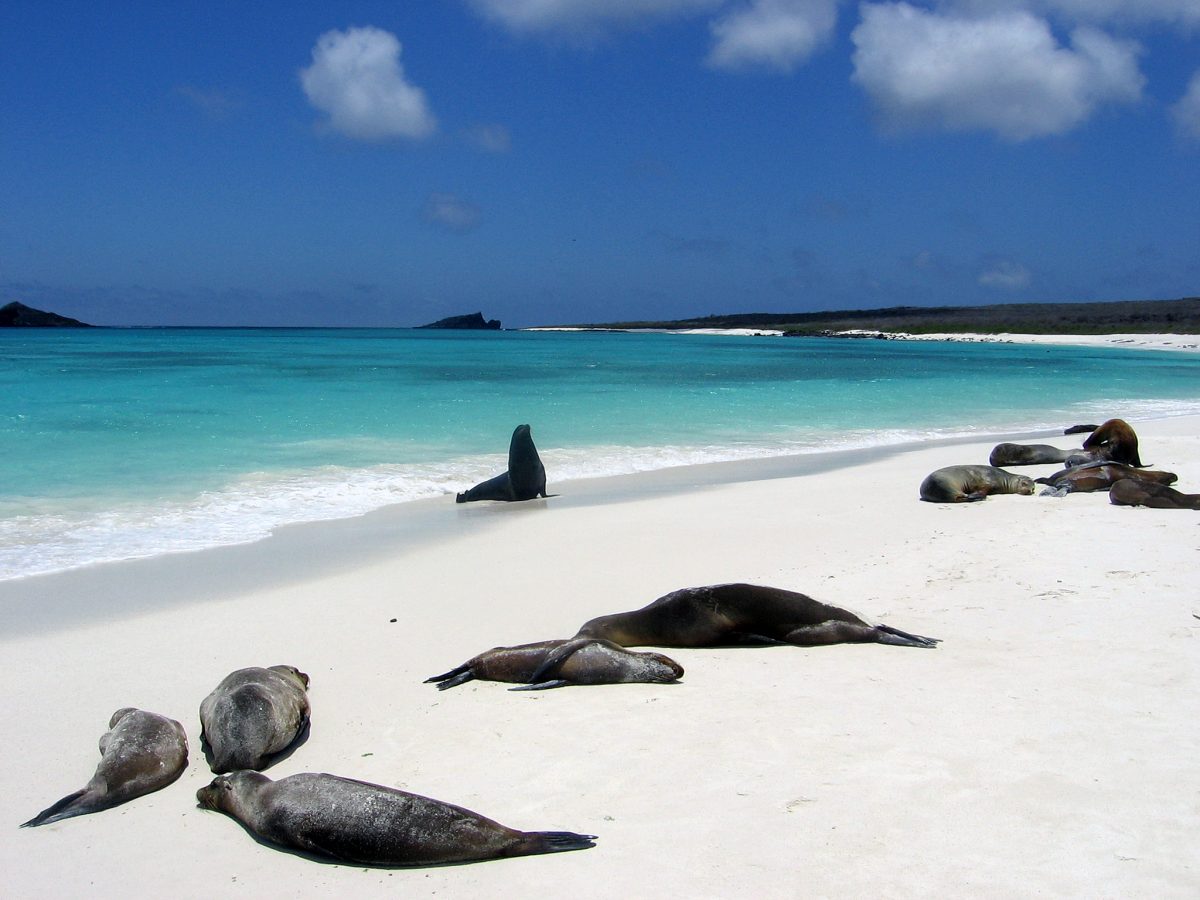
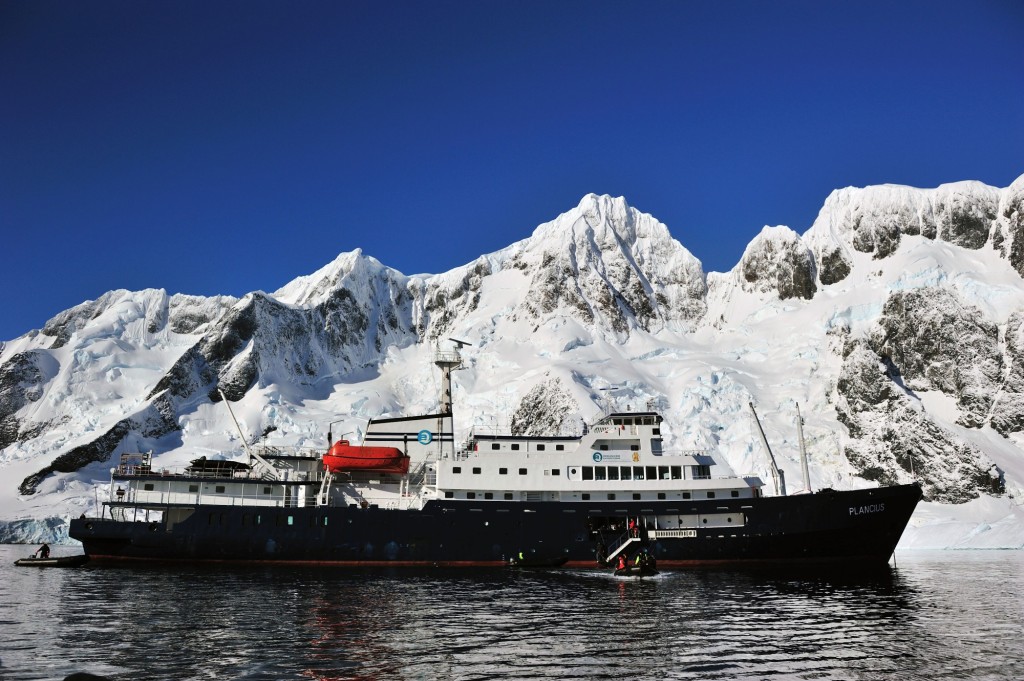
You’ve admired icebergs in Antarctica, spotted polar bears in the Arctic, and swum with sea lions in the Galapagos. If you’re anything like me, the expedition bug has taken its grip. So where next? Well, if you love fantastically remote places, why not consider Australia’s Kimberley coast?
A lot of people, Australians included, couldn’t even pinpoint this remote region of Western Australia on a map. It’s one of the most inaccessible, ancient, and sparsely populated places on Earth, rich in Indigenous rock art, storytelling, and wildlife. As such, it’s a privilege to be able to visit here and a small ship is the most practical, and, let’s not pretend otherwise, luxurious way to see it.
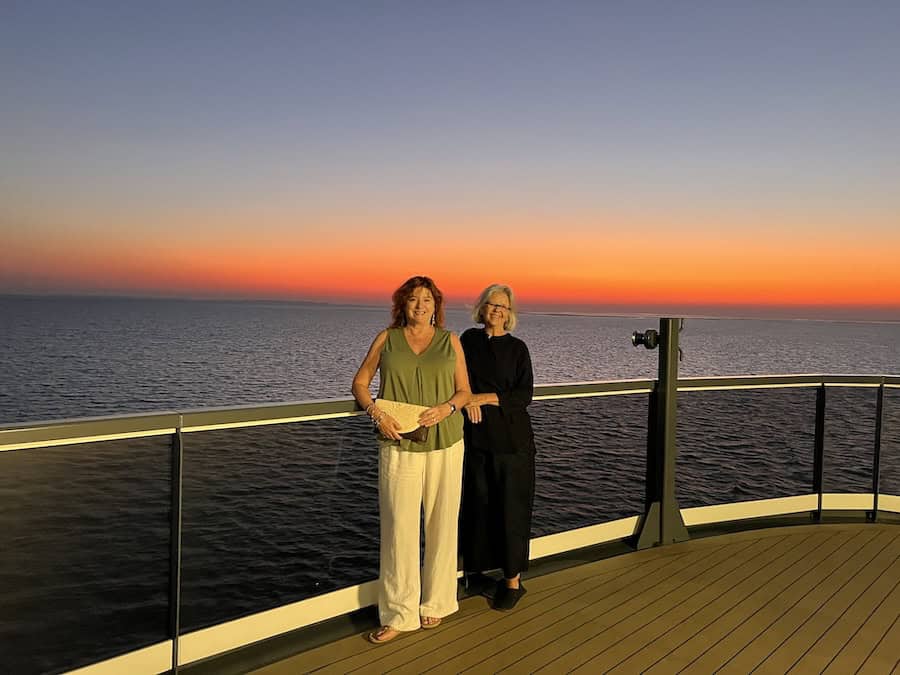
My Aussie friend Gretchen and I are no strangers to extreme places; some 40 years ago, we were thrown together on an overland truck expedition across Africa, sharing a tiny tent for four months. Our friendship has endured — if you can survive dysentery, being held up at gunpoint, and August in the Sahara Desert, your bond is solid. And although we live on different sides of the world, in London and Melbourne, we try to meet every few years for a trip somewhere beautiful.
Zoom helps, of course, but it had been 11 years since our last face-to-face and it was high time for me to head Down Under for some adventure on Seabourn’s 10-night Waterfalls and Wandjinas expedition.
Where Is The Kimberley?
Stretching 450 miles across the northern coast of Western Australia and only slightly smaller by surface area than California, the Kimberley coast is an 1.8 billion-year-old landscape of crenelated cliffs, vast escarpments, cascading waterfalls, and deep gorges. Humans have lived here for an astonishing 40,000 years. There’s no tourist infrastructure on the coast; nobody would build a boutique hotel in a place with a teeming population of man-eating saltwater crocodiles, or “salties.”
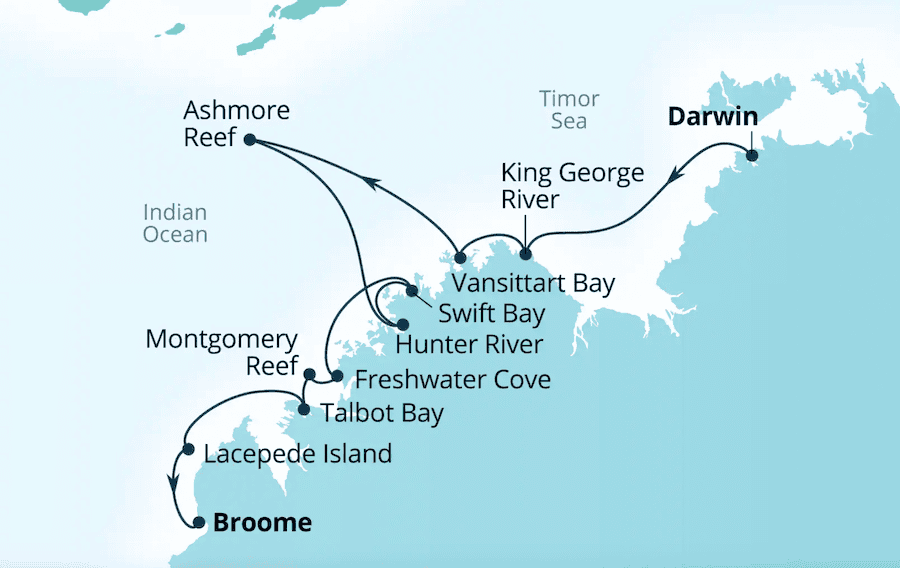
A typical expedition takes you between Darwin and Broome over 10 days — and there are no towns or villages between the two. The season runs from April to October; come in April and May to see the waterfalls in full force and in July and August for whale-watching.
Who Goes There?
Lines including Seabourn, Ponant, Silversea, and the Australian-owned Coral Expeditions sail this remote shoreline.
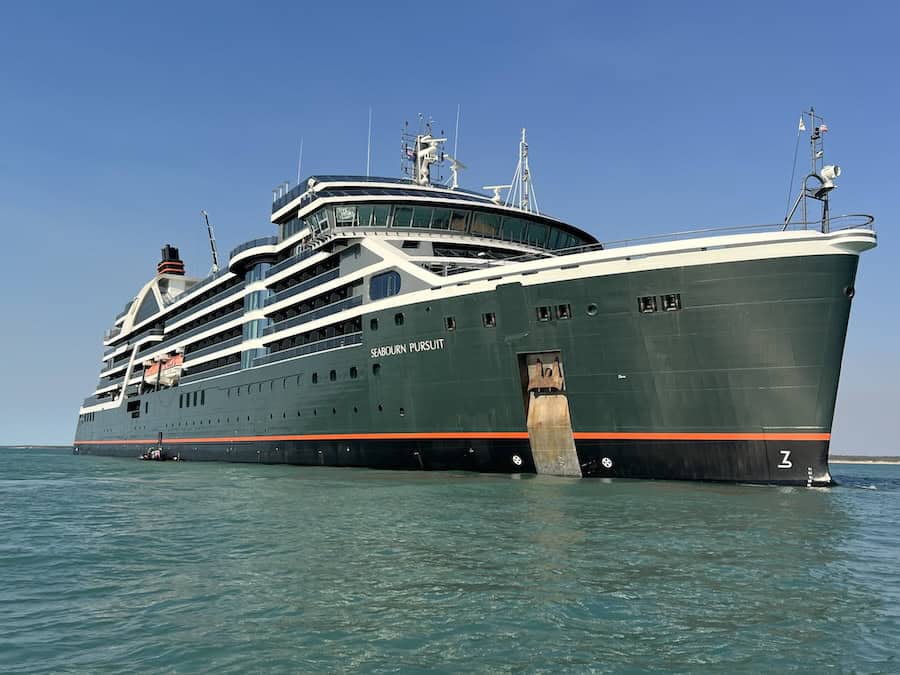
The two-year-old 264-passenger Seabourn Pursuit is arguably the most upscale ship offering Kimberley coast cruises — all-inclusive, all verandas, with the vibe of a large, luxurious yacht.
Silversea’s Silver Cloud comes with butler service and fine dining, although only 80 percent of cabins have balconies.
Ponant’s ships have a distinctive French vibe when it comes to food and service, while Aussie-owned Coral Expeditions is more casual, with fewer inclusions.
RELATED: Learn about some quirky cruising on Australia's Murray River.
Seabourn Pursuit: First Impressions
Although Seabourn Pursuit is a sturdy, ice-class ship capable of sailing the toughest regions of Antarctica, it felt more of a hybrid of an expedition ship and a small, luxurious cruise ship to me. There’s a spa, and jewellery shops that do daily sales promotions.
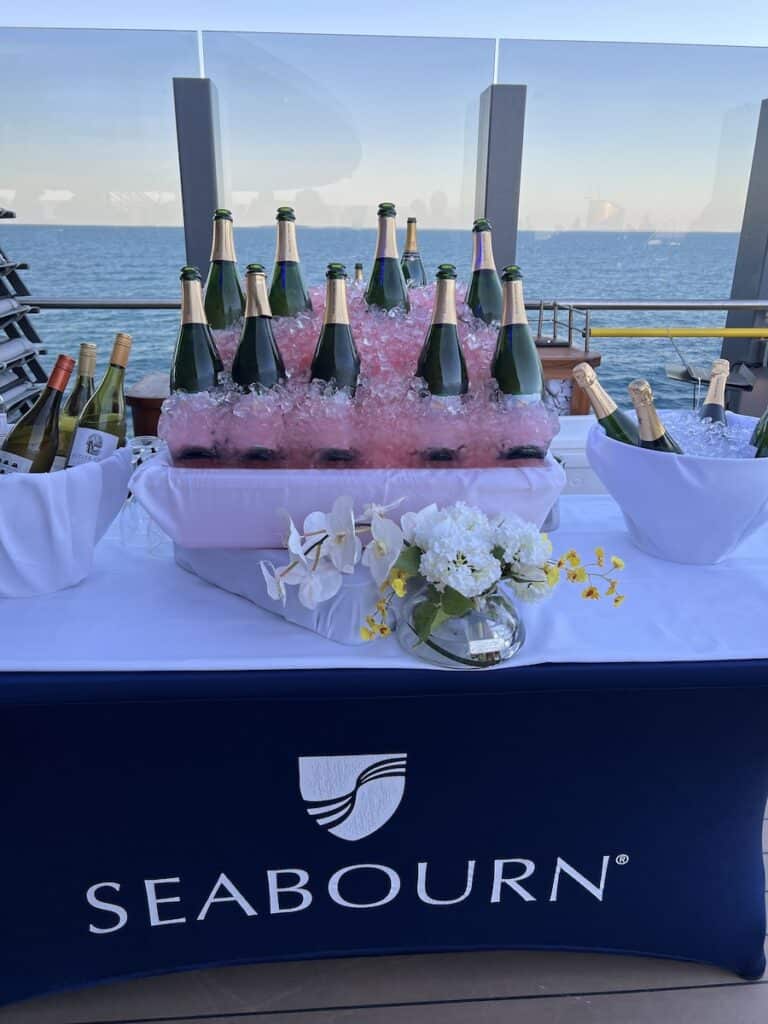
The Club is a cocktail bar with late night dancing and live music (Cruise Director Nick Martland is quite the crooner), and between forays ashore, ladies basked in floaty, glittered kaftans by the infinity pool, drinking the free-flowing champagne.
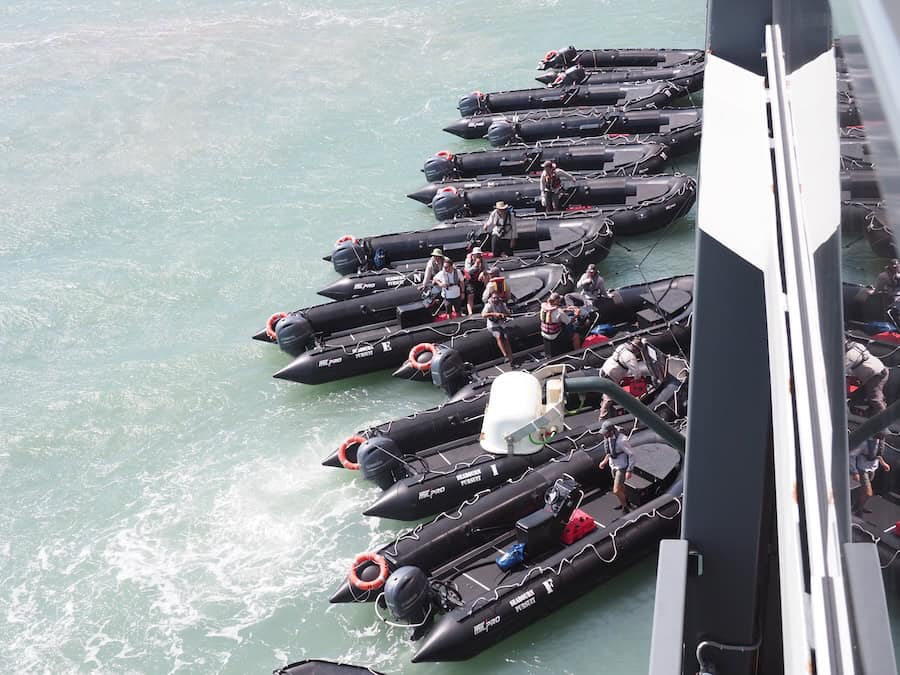
There’s no science lab and no citizen science programme of the sort you’d find on Pursuit’s Antarctica cruises. Having said that, the Discovery Center theater, with its wide, HD screen is a very comfortable place for daily recaps and briefings and the talks by the expedition team were excellent, covering everything from whales to geology and rock art. The ship carries a big fleet of Zodiacs and has an efficient boarding/disembarking process in a mud room with lockers for each cabin.
Fellow passengers were from the US, Canada, Australia, and New Zealand, mostly couples but with a few pairs of female travelers like us. There was a sense of camaraderie and shared adventure throughout, although there’s no pressure to mingle over meals if you don’t want to. Gretchen and I mixed it up, sometimes dining with other guests and sometimes gossiping for hours, filling in the gaps of the last 11 years.
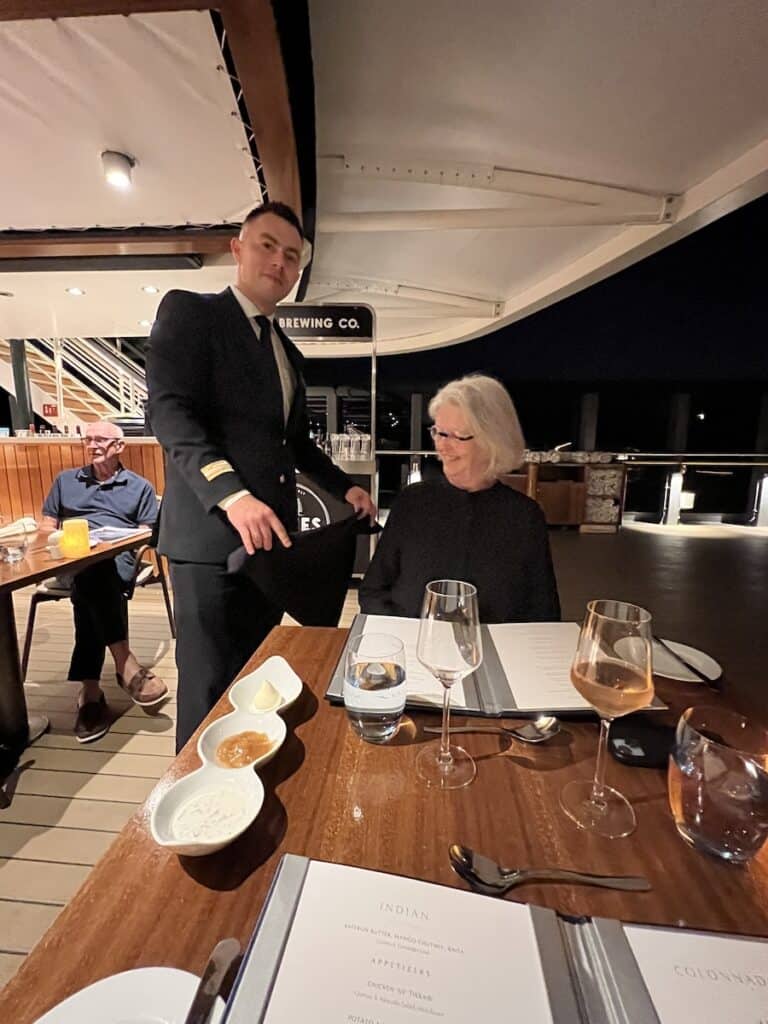
I’ve always rated Seabourn’s intuitive, friendly service and Pursuit didn’t disappoint. I’ll never forget the delight on Gretchen’s face when Aleksandar Ristic, the manager of The Colonnade, appeared every night with a special black napkin to match her habitually black evening wear (apparently de rigeur for arty types in edgy Melbourne).
As an older woman living in a big city, she said, it’s all too easy to feel invisible. The napkin was a tiny touch, but it made such an impression.
Our Veranda Stateroom
All staterooms on Seabourn Pursuit have a private veranda; essentially, there are no bad cabins. Gretchen and I were in a Veranda Stateroom which had decent storage in the walk-in closet, a separate sitting area and a minibar that had been pre-loaded (at my request on the pre-departure questionnaire) with gin and cans of tonic, as well as champagne waiting on ice and a magnificent marble-lined bathroom with robes and slippers.
Even with the bed split into two singles, there was plenty of space for two women not used to living together; I think Gretchen (almost ruthlessly tidy and organized) just about survived 10 days with me (messy and chaotic).
The heavy curtain between the sleeping and living areas was useful to give her a little peace when I woke at strange hours with jetlag.
VIDEO: Below, a quick look at Sue's Veranda Stateroom.
Food & Drink
Seabourn Pursuit has a main dining room, The Restaurant, which is more formal and has a huge choice — 12 appetizers and 12 entrées most nights — and the casual The Colonnade, which has indoor and outdoor seating and offers a buffet for breakfast and lunch and a la carte table service in the evenings, usually with a theme.
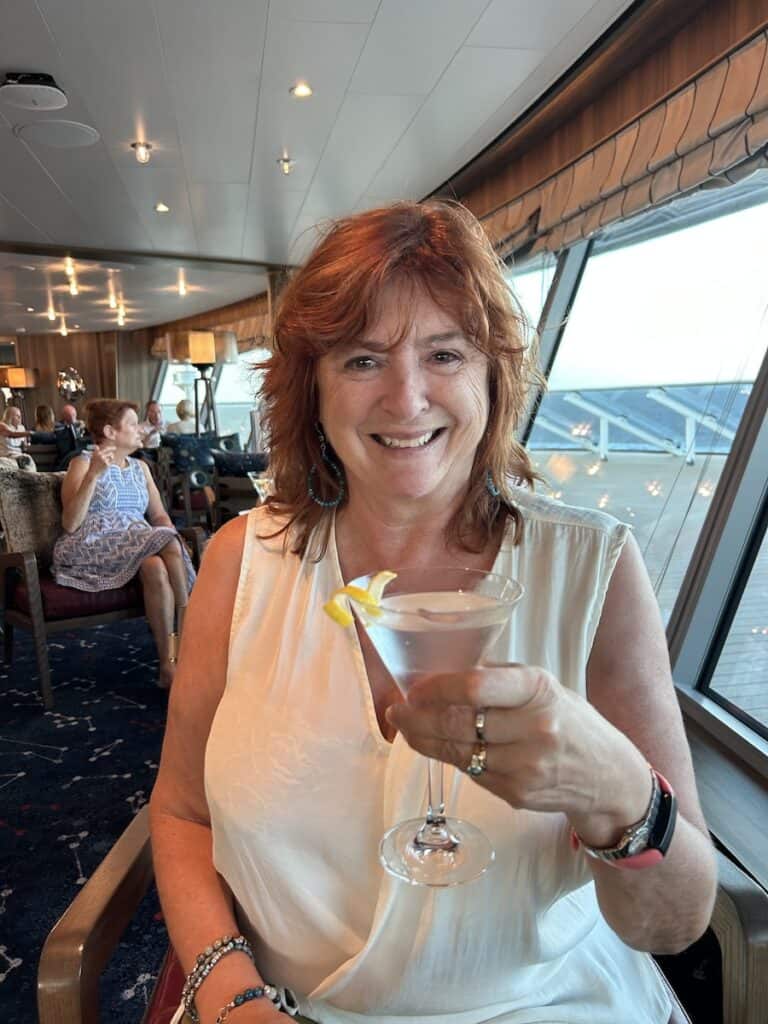
The Club also serves hand-made sushi, sashimi and rolls every night from 6pm to 9pm. And let’s not forget the tasty tapas in the Constellation Lounge, with epic sunset views and a fine line in martinis.
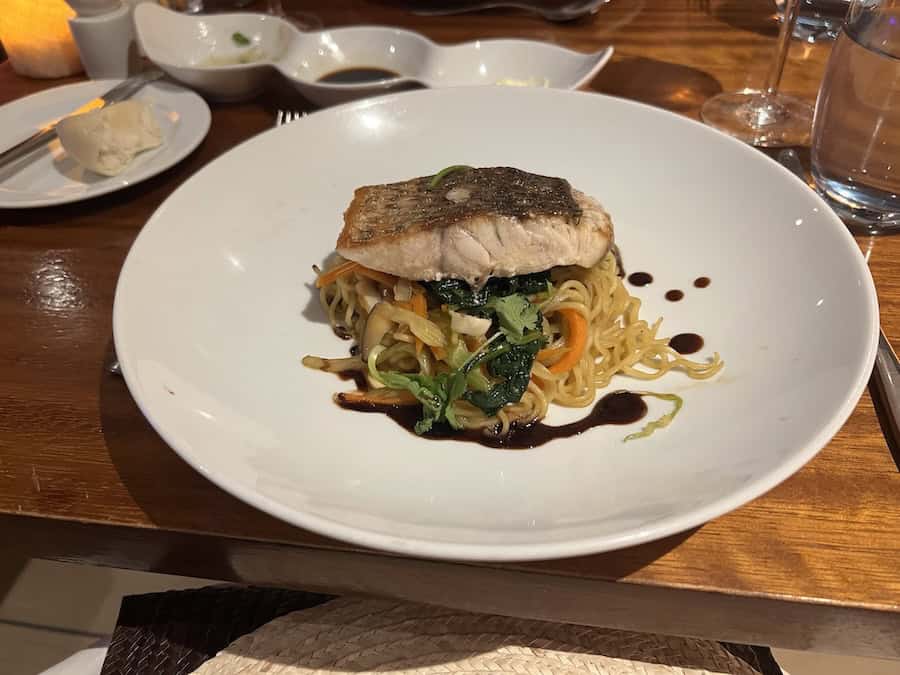
While there’s more choice in The Restaurant, we usually opted for The Colonnade as dining under the stars in the balmy night air was so delightful. Pan-roasted baramundi, Pad Thai, and Malabar shrimp curry were all standouts in themes ranging from Indian to seafood to Thai. We were pleased to learn, too, that more than 75% of the food is sourced in Australia.
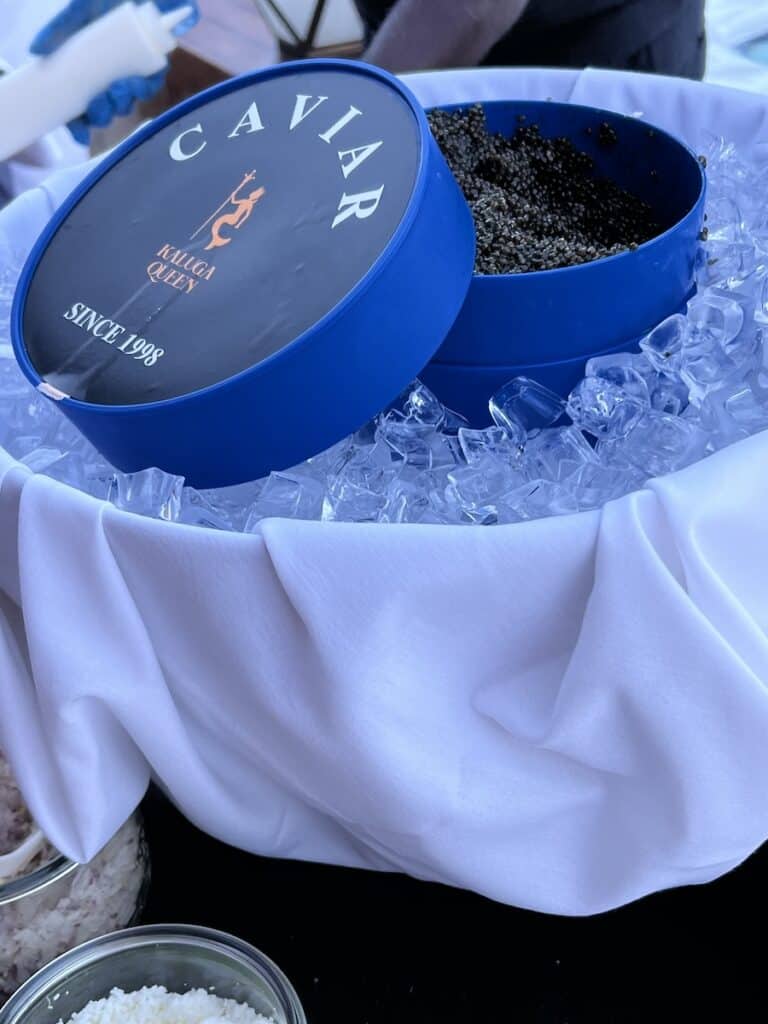
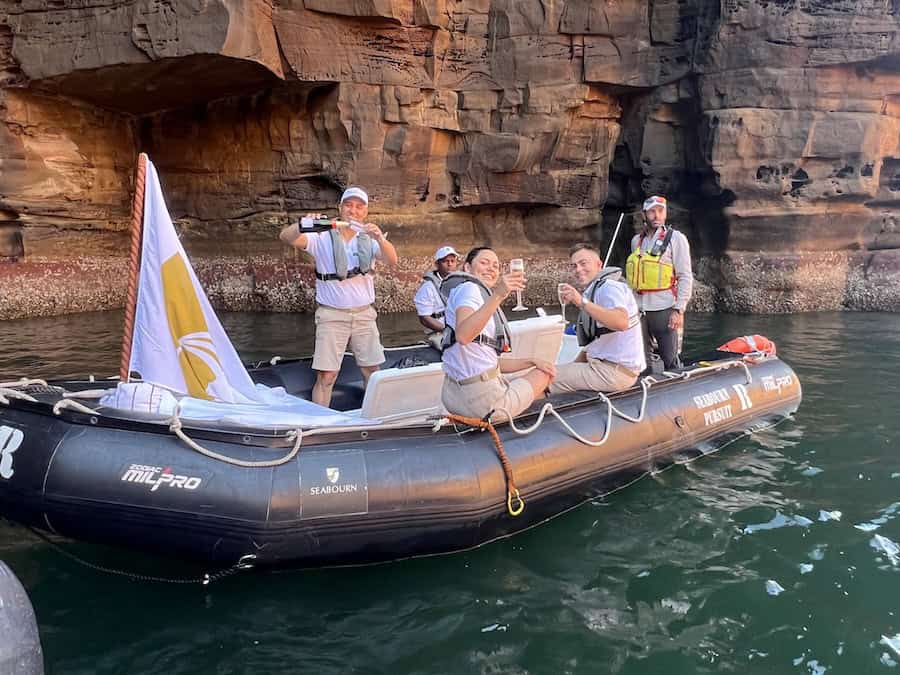
There were a couple of lively deck parties, including a sunset caviar feeding frenzy and a fantastic buffet served by the ship’s officers. The crew staged “Seabourn Moments,” too; we’d arrive at the base of a random waterfall to find bar waiters in a Zodiac dispensing champagne, which everybody loved.
Going Ashore In The Kimberley
Cruising in August (“wintertime” in the southern hemisphere), our itinerary took us from Darwin to Broome. I was grateful for the day in Darwin to recover from the journey, shop for Indigenous art and sample the city’s excellent Asian restaurants.
Staying A Few Days in Darwin & Broome Before/After A Kimberley Cruise
Before the cruise, I stayed two nights in Darwin to get over the jetlag. There's easily enough to do in Darwin for a couple of days, not least the fantastic Museum and Art Gallery of the Northern Territory or a self-guided tour of the amazing street art. And shopping for Aboriginal art, which occupied most of our time — every other shop is a gallery.
The Darwin Festival runs for two weeks in August and is a major arts festival. So if you do a cruise in August, it's worth checking out the program before your visit.
Broome is more outdoorsy, with endless (and safe) sandy beaches, camel safaris and pearling history.
Both Darwin and Broome have good connections to all of Australia's major cities — Sydney, Melbourne, Perth and so on. But you have to remember that Australia is huge and some of the flights offered by regional airlines may not go direct, especially from smaller Broome.
First Stop: King George River
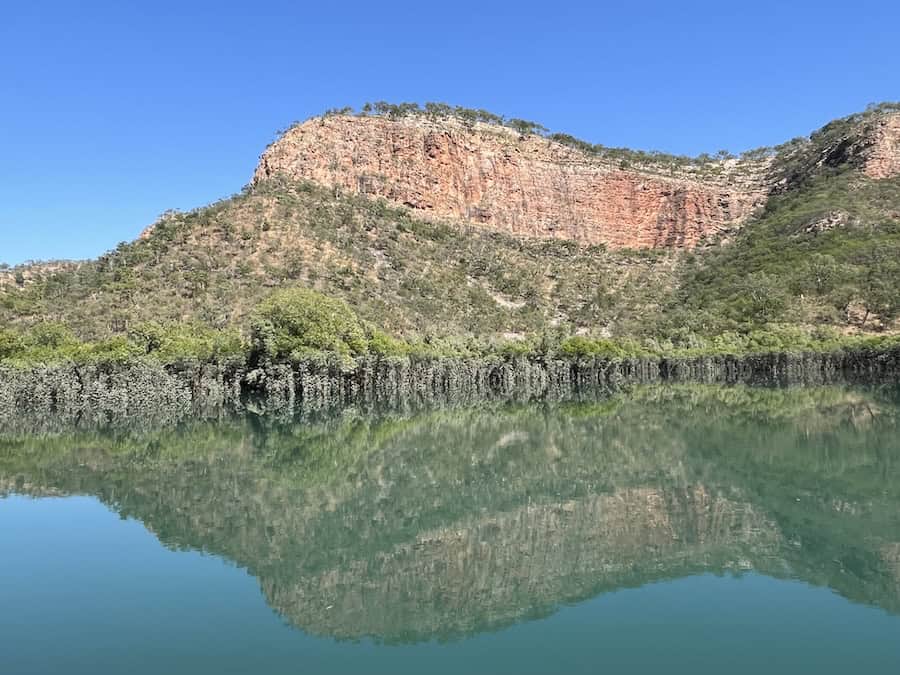
After a day at sea, we arrived at the edge of the Kimberley. I stood on my veranda at dawn inhaling the faint smell of woodsmoke from a distant bush fire, reveling in the technicolor beauty: a long row of cliffs glowing vermillion in the sunrise and sea the most astonishing shade of milky green. Bottle-green mangroves on spindly legs guarded the estuary of the King George River, or Oomari, as the Indigenous people call it.
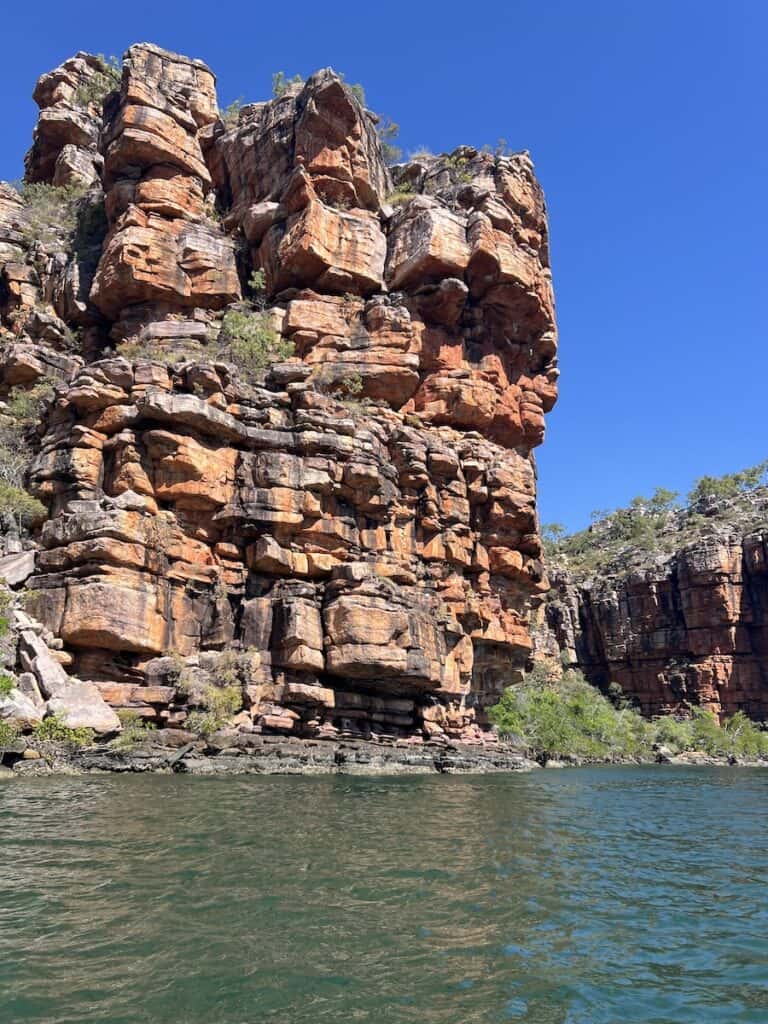
The 200 or so passengers were divided into six color-coded groups to spread out the Zodiac embarkations. Gretchen and I scrambled onto a Zodiac, eyeballing the other guests in our “Brown” group; we’d be spending 10 days together, after all. Later, I confess that we would loiter in the embarkation area until some of our louder and needier shipmates had already boarded a Zodiac so we could ride with the more mellow members of the group.
VIDEO: Below, zodiac excursions to Horizontal Falls on our Seabourn Kimberley coast cruise.
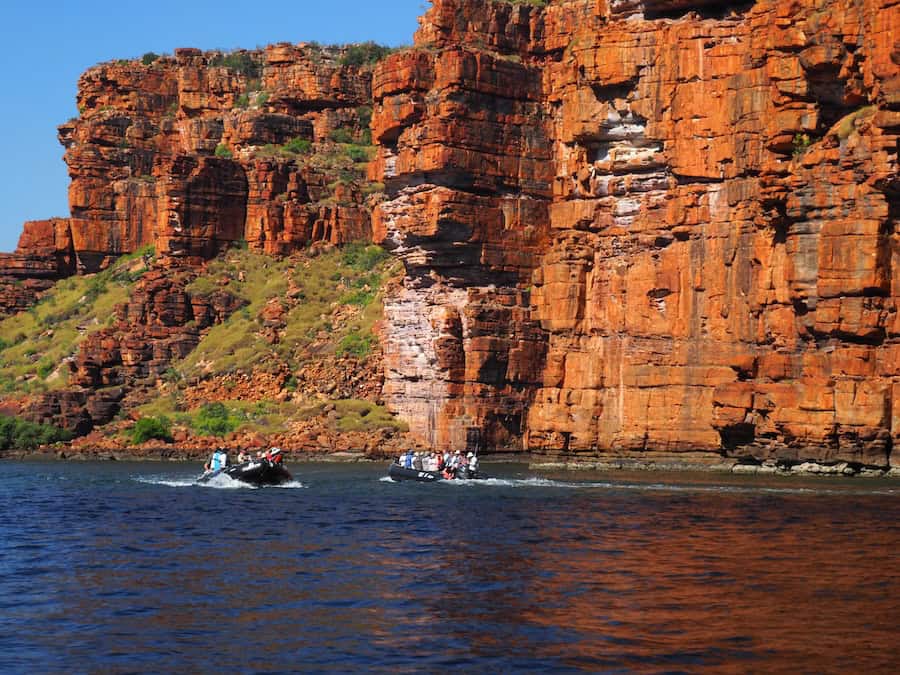
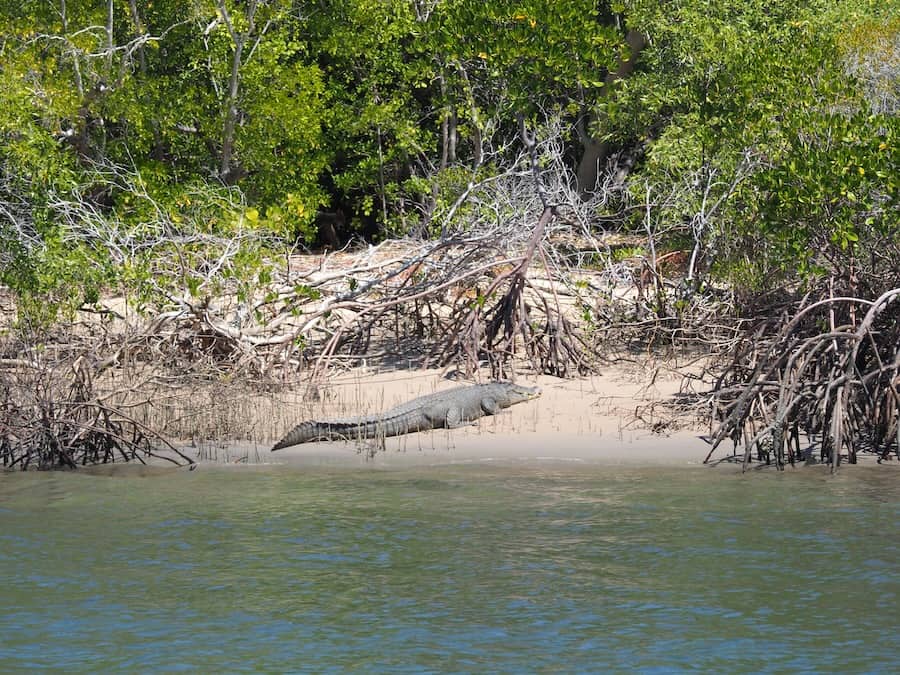
Within minutes, we’d spotted our first saltie, an enormous beast, more than 12 feet from snout to tail, lying watchfully on the sand, like a statue. Peregrine falcons and black kites wheeled above us. King George Falls tumbles 230 feet over a rock face in a slender ribbon. It was more of a trickle in the “dry” — we were sailing in August — but still spectacular up close, the cooling spray welcome in the heat.
Gwion Gwion Art & An Airplane Wreck
Time to step ashore at Jar Island, or Ngula, for which there was a strict briefing: Don’t hang around the Zodiac. Head 20 feet up the beach and wait for your group there. Sure enough, a giant croc had been spotted cruising the shallows just before we arrived — and sure enough, the guides had to herd a delinquent passenger briskly up the beach, as he hadn’t listened and decided to take a paddle.
TIP: Water shoes are your friend on Kimberley expeditions, as every landing is a “wet” one, jumping off the Zodiac into sometimes knee-deep water. You’ll also need a hat with a chin strap, as sometimes the Zodiacs travel at great speed.
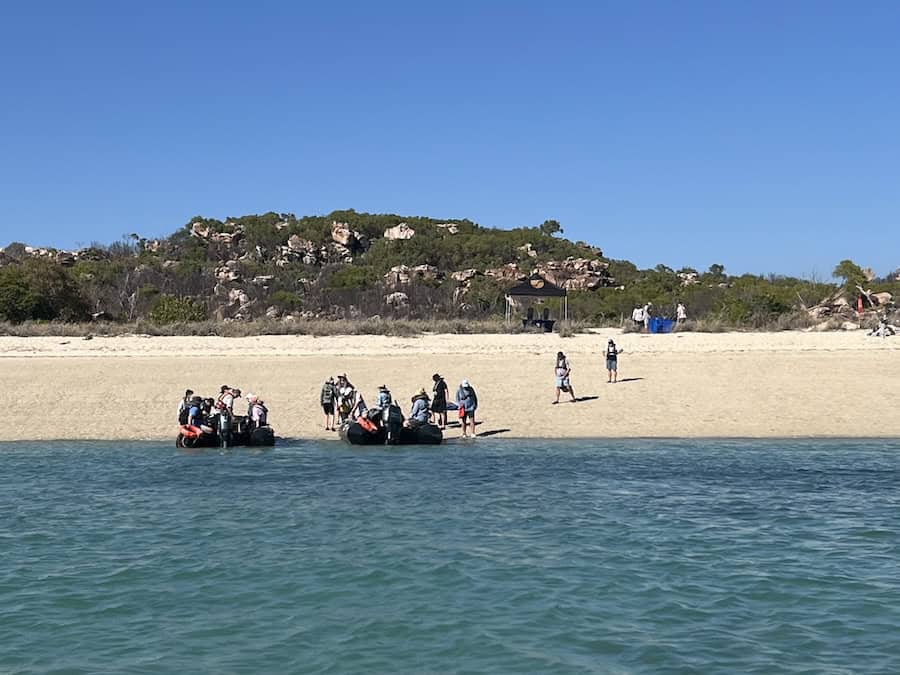
My feet sank into soft, white sand tufted with grass, yellow ochre rocks tumbled behind it. We were here to look at 12,000-year-old Gwion Gwion rock art, which takes some getting your head around.
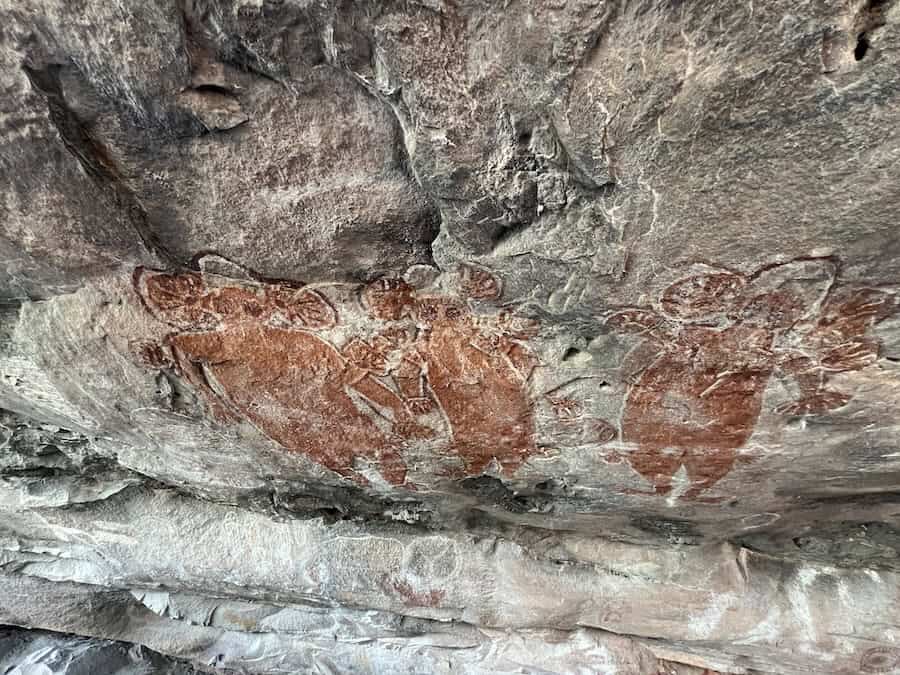
At first, I was puzzled; the paintings looked like streaks of wine-red pigment on the rock, but as I studied them, the detail became clear; graceful, dancing figures sporting tasselled headgear.
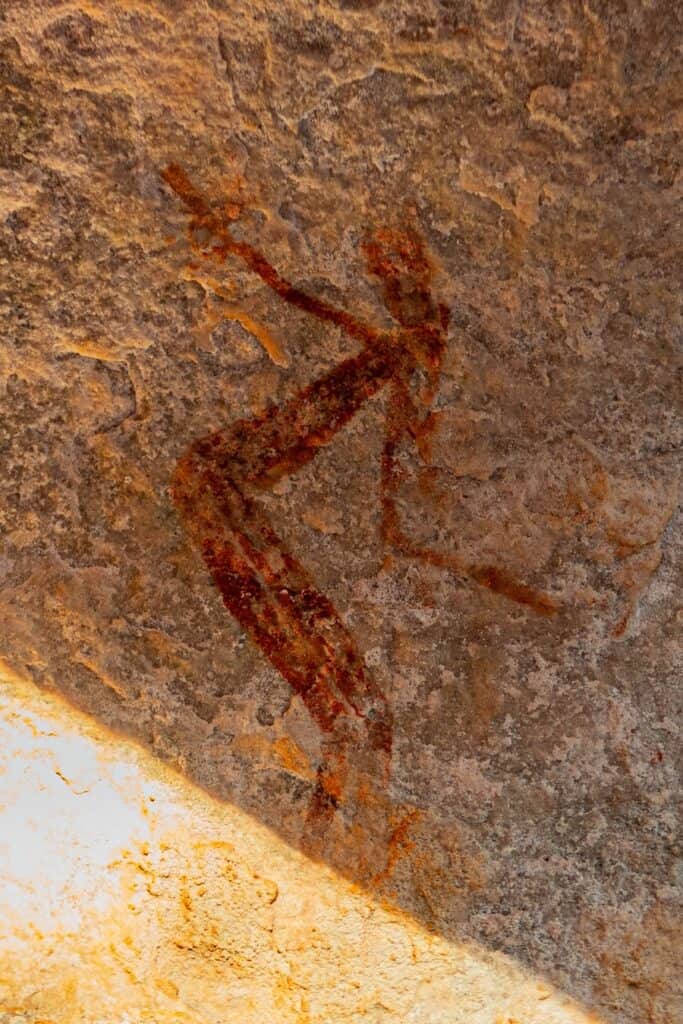
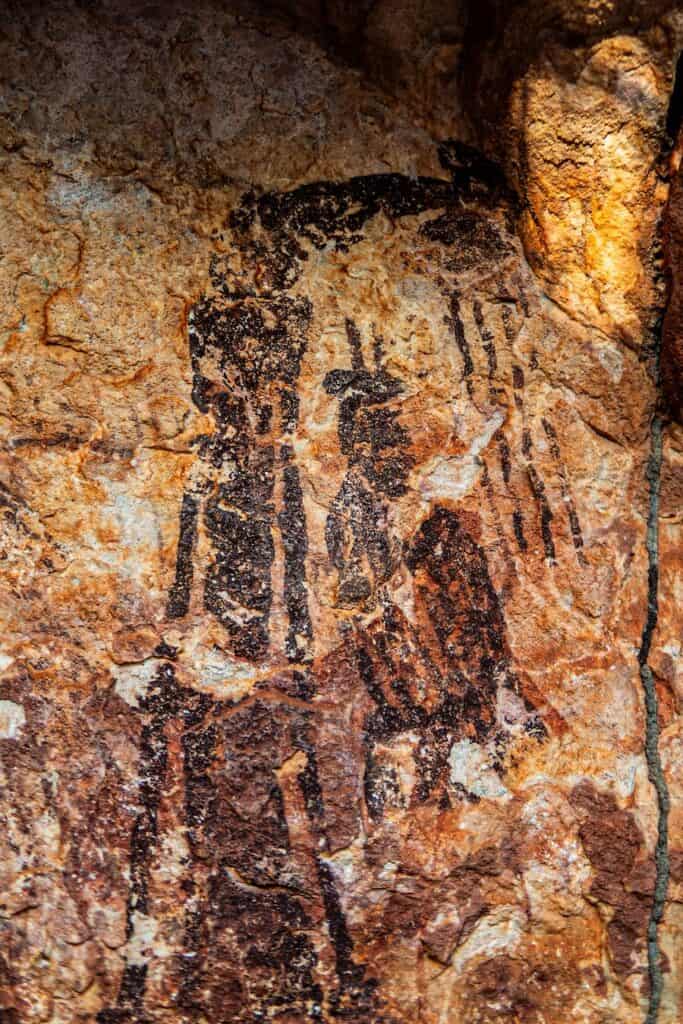
“I’ve waited all my life to see this,” said Gretchen, emotionally, which made me realize that to even the most well-traveled Australians, the Kimberley, with its art, is a real bucket list destination.
The afternoon’s landing had a slightly surreal quality as we were in Vansittart Bay to look at an airplane wreck. Hidden among the trees here is the remarkably well-preserved wreck of a C-53 which had been ferrying semaphore experts along the coast during WWII but had the wrong coordinates. The pilot managed to crash land, snapping off a wing, and the crew survived until they were rescued.

Out To Ashmore Reef
Ashmore Reef, 200 miles offshore on the edge of the continental shelf, is closer to East Timor than to Australia, and to my excitement, was promoted as a possible snorkeling stop as salties don’t swim out this far.
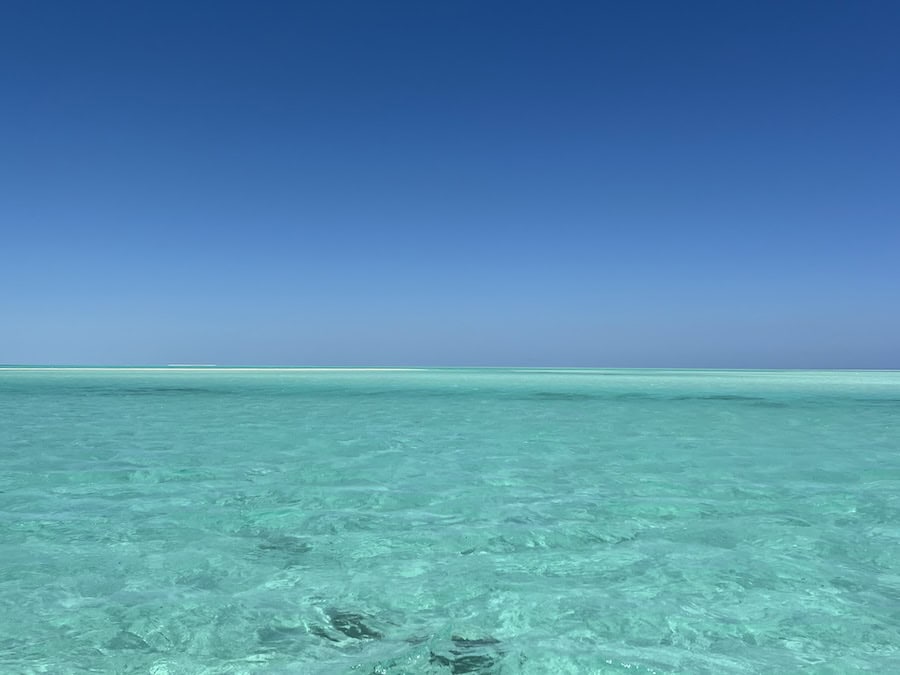
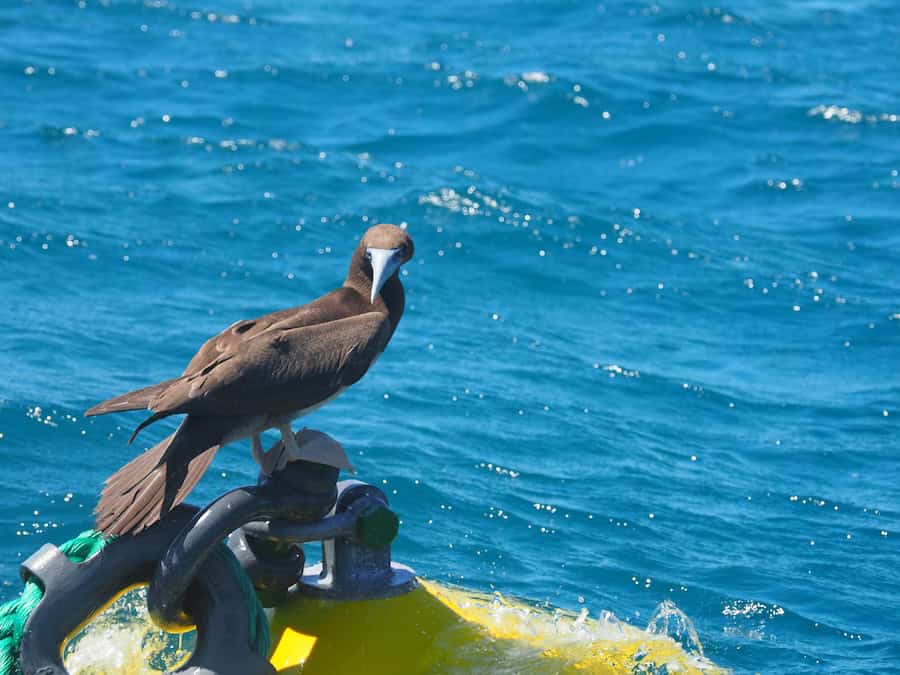
Brown boobies, noddies, frigatebirds, and terns began to fly around the ship as the blinding white of a sandbar appeared on the horizon and the sapphire blue faded into an iridescent turquoise. But disappointingly, snorkeling was canceled due to strong winds (I would have gone in as I'm an experienced snorkeler and strong swimmer, but of course, we had to respect their choice), so essentially, this was a bird-watching trip — interesting in itself but I’d have loved a glimpse of the underwater world here.
Rock Scrambling At Swift Bay
There’s more art at Swift Bay, where the paintings, this time a mere 4,000 to 5,000 years old, are concealed under overhangs of ancient sandstone. Viewing them requires commitment; we had to scramble over boulders and squeeze through narrow gaps to reach the gallery, stashing hats and rucksacks outside to the site to avoid scraping against the fragile rock faces.
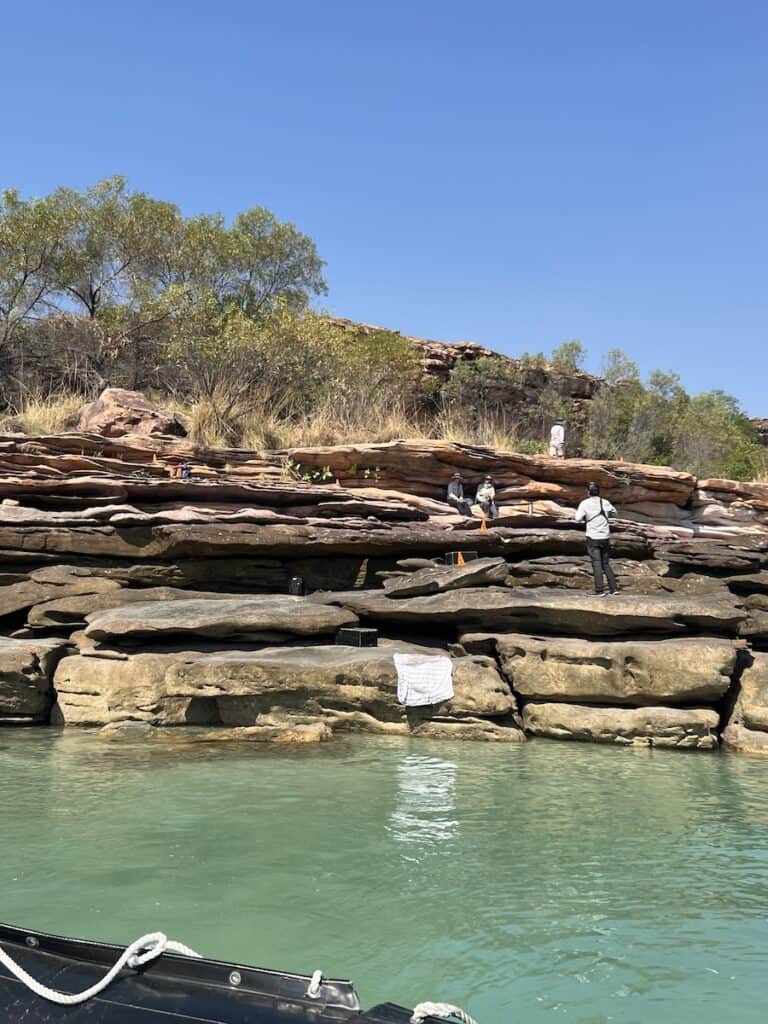
The main attraction, next to the 5,000-year-old handprint “signature” of the artist, is an ethereal Wandjina figure, a powerful ancestral spirit believed by the Aboriginal people to bring rain and life.
TIP: You don’t especially need endurance to enjoy the Kimberley, as forays ashore are short; the longest walk we did was 1.5 miles. But you do need to be nimble, and able to clamber, with assistance, on and off a Zodiac.
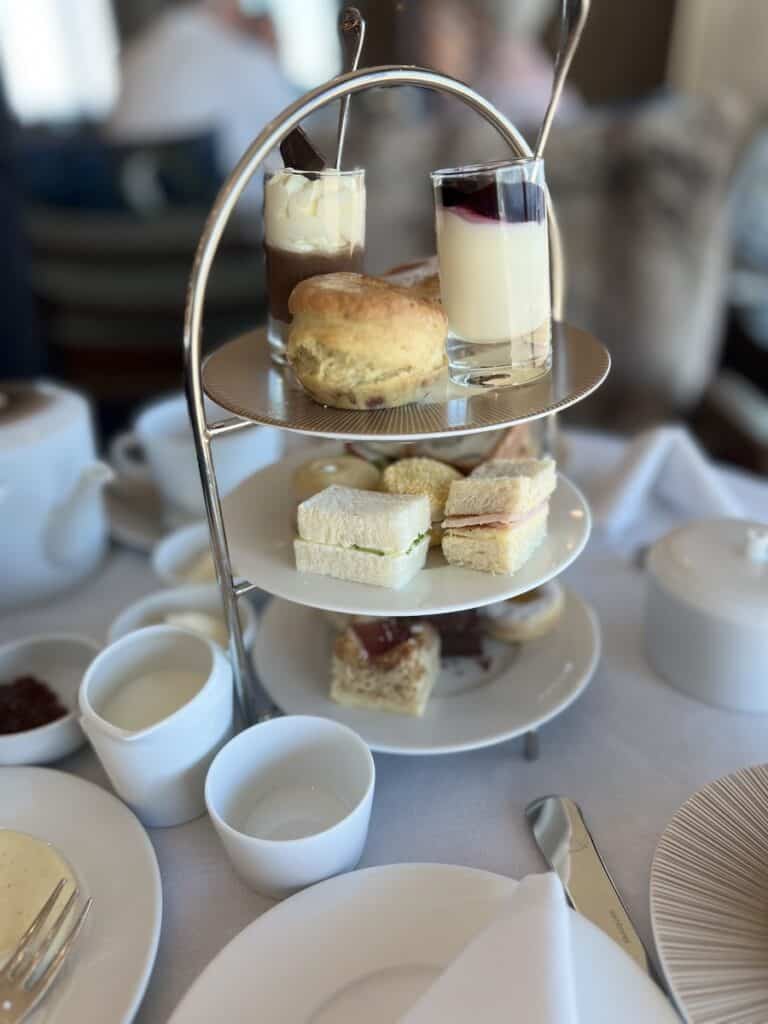
In the name of research, Gretchen and I tried the Viennese Afternoon Tea: apple strudel, dainty cakes, and scones with jam and cream. And then, to add to the surreal nature of the occasion, the call went out over the ship’s PA: whales had been sighted. Humpback blows and flukes surrounded the ship, cheers of joy going up as the mammals breached and dived.
Taking To The Skies
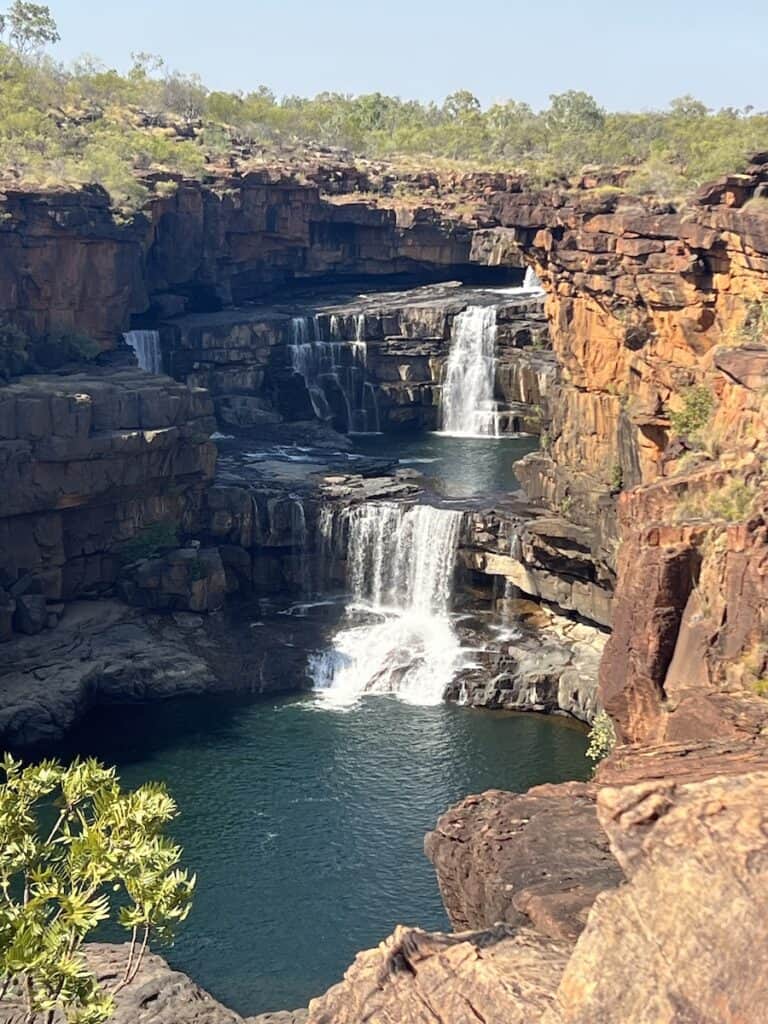
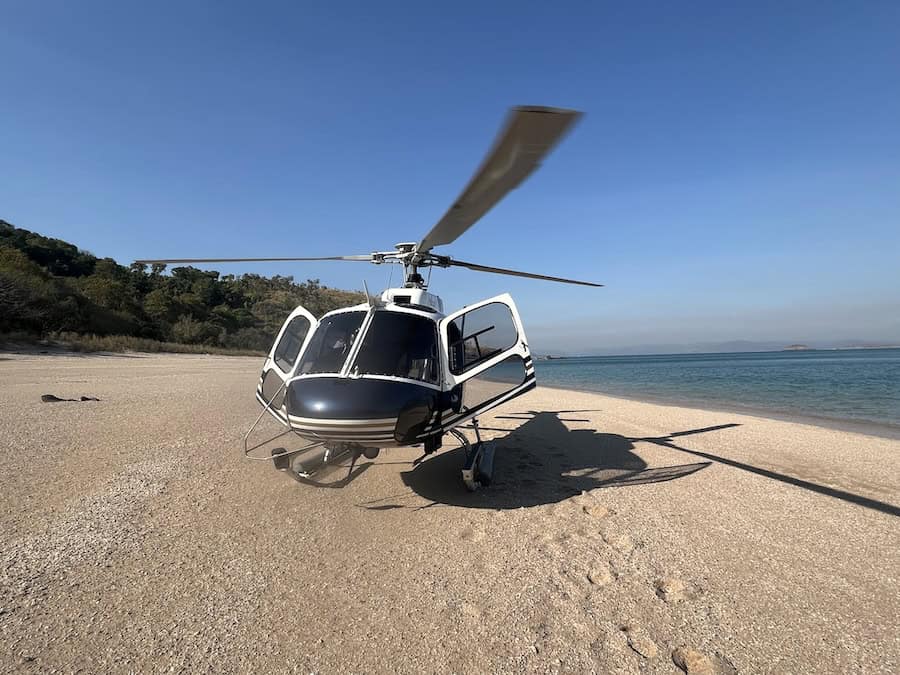
Seabourn Pursuit anchored off a beach on Naturalist Island, about as gorgeous as you could imagine, were it not for the ever-present wildlife, all tumbled rocks, lush greenery, and white sand. Helicopters buzzed back and forth to Mitchell Falls, an expensive (at $795 USD per person) but unforgettable expedition. We flew over rust-red escarpments criss-crossed by deep gorges, the aquamarine waters of the creek far below framed by emerald mangroves. From the air, you get a real sense of the vastness of the Kimberley, the expanse of scrub and red earth stretching all the way to the horizon.
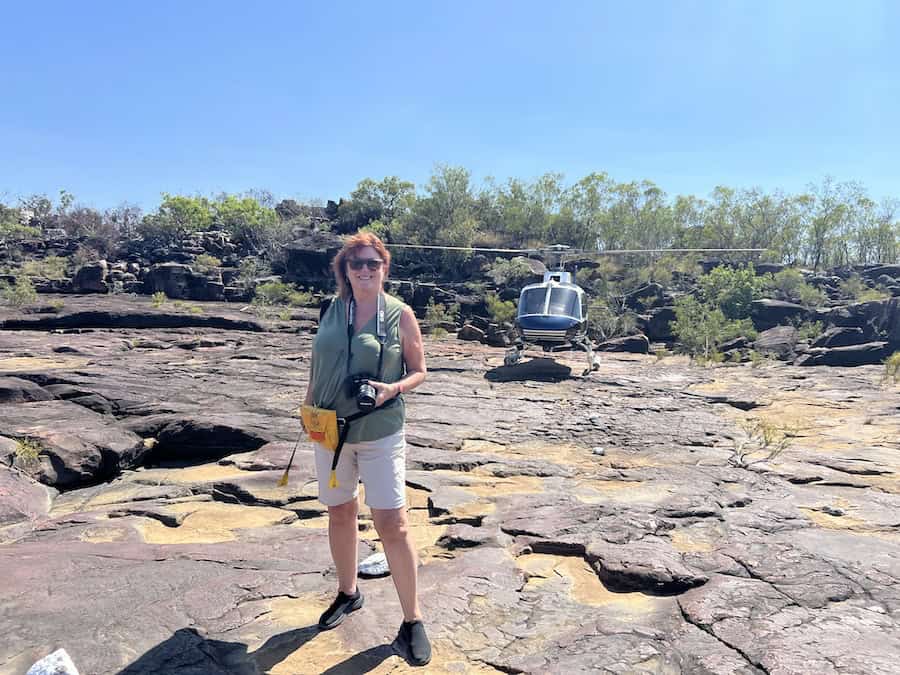
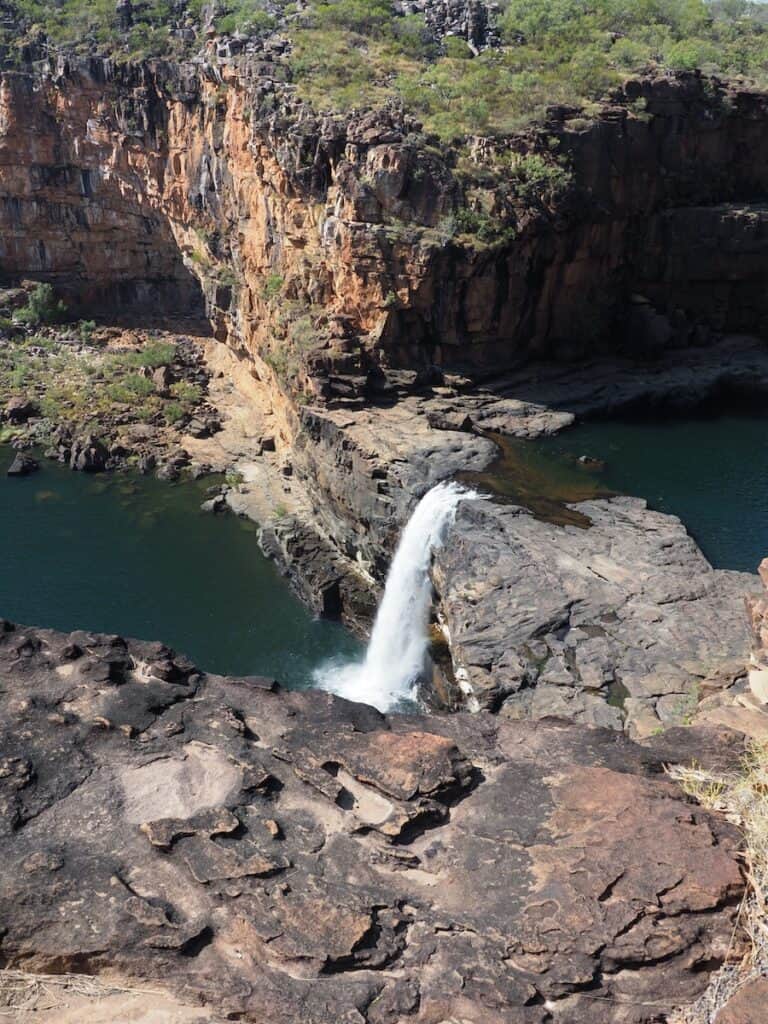
The Hunter River, aka Yirinni, tumbles in slender ribbons over a series of rock shelves, a pool at the bottom of each. We landed above the falls, where swimming is allowed as crocs can’t make it this far upstream (or uphill). My feet sank into gooey mud, but the water was silky cool. Bliss.
Meeting The Custodians Of The Land
Wiggingarra Butt Butt, or Freshwater Cove, was my favorite rock art site as we got to meet members of the Worrorra group, the traditional custodians of the land. In the soft light of dawn, we followed guide Neil Maru along a rocky trail criss-crossed with animal tracks. I was intrigued to learn about the life of Neil and his small team; they live here in the dry season, in the wild, running a small ecotourism business, sustaining themselves on what they can hunt: emu, salmon, wallaby, kangaroo, and dugong.
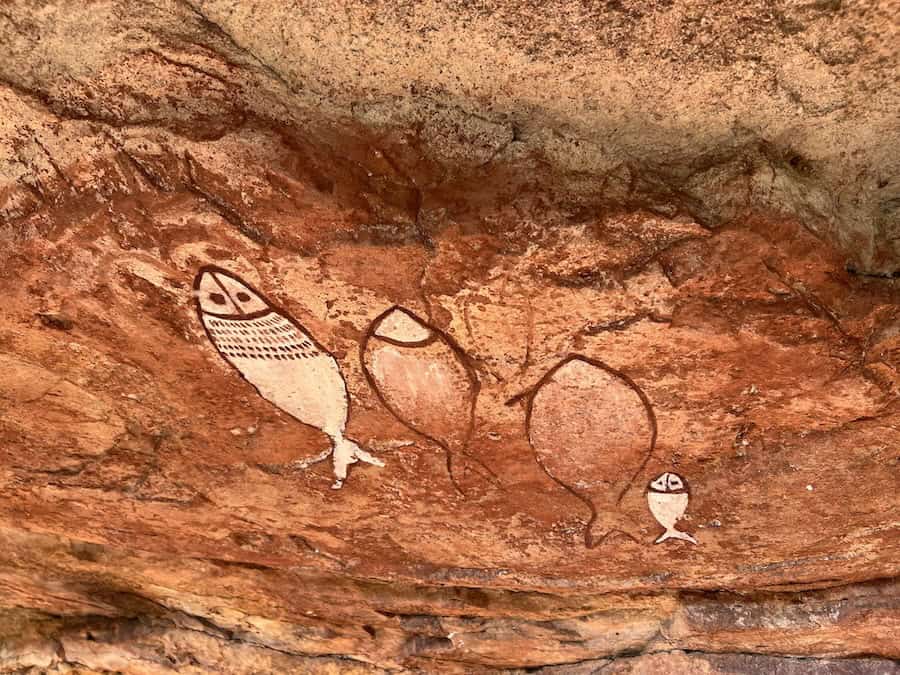
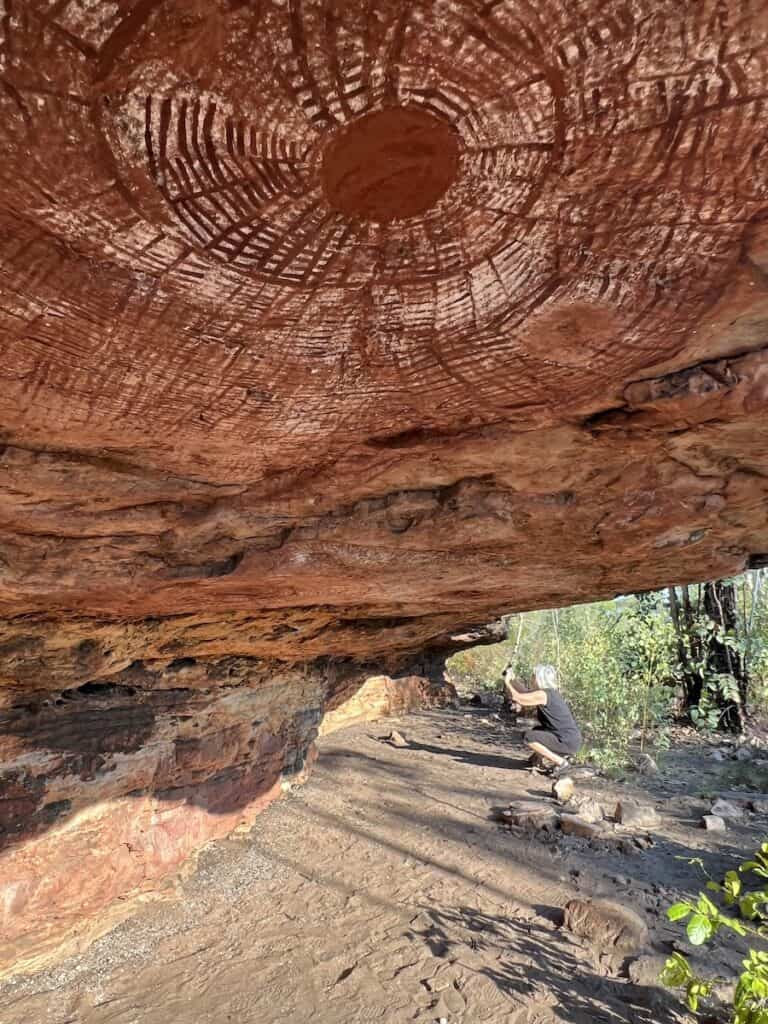
The paintings, on the ceiling of a huge overhanging rock called Cyclone Cave, were the most impressive yet, a snapshot of life here thousands of years ago; fish, fruit, and the haunting figure of a child who drowned in a whirlpool.
Marvelous Montgomery Reef
More crazy stats: Montgomery Reef, or Yowjab, at 154 square miles, is the world’s largest inshore reef with a tidal range of 40 feet. Forty feet! This creates an astonishing phenomenon. As the tide recedes, the reef appears to rise out of the ocean, streams cascading off the rocks. Hapless sea creatures stranded on the top fall prey to the gulls and brown boobies that shriek overhead. We watched in awe, at the same time trying to count the dozens of sea turtles that surrounded the Zodiac.
The Grand Finale: Thrill Rides At Talbot Bay
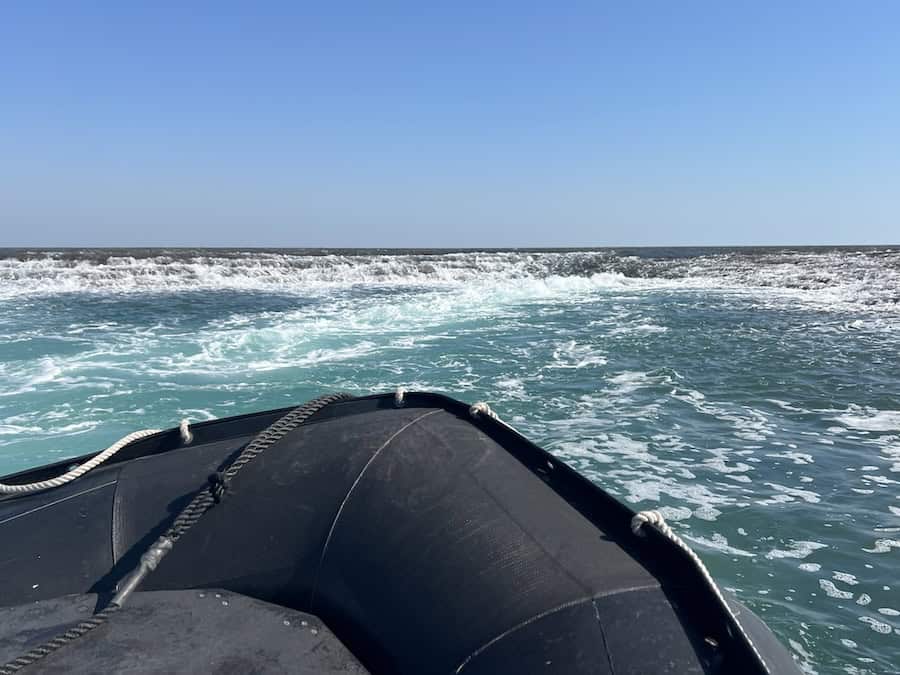
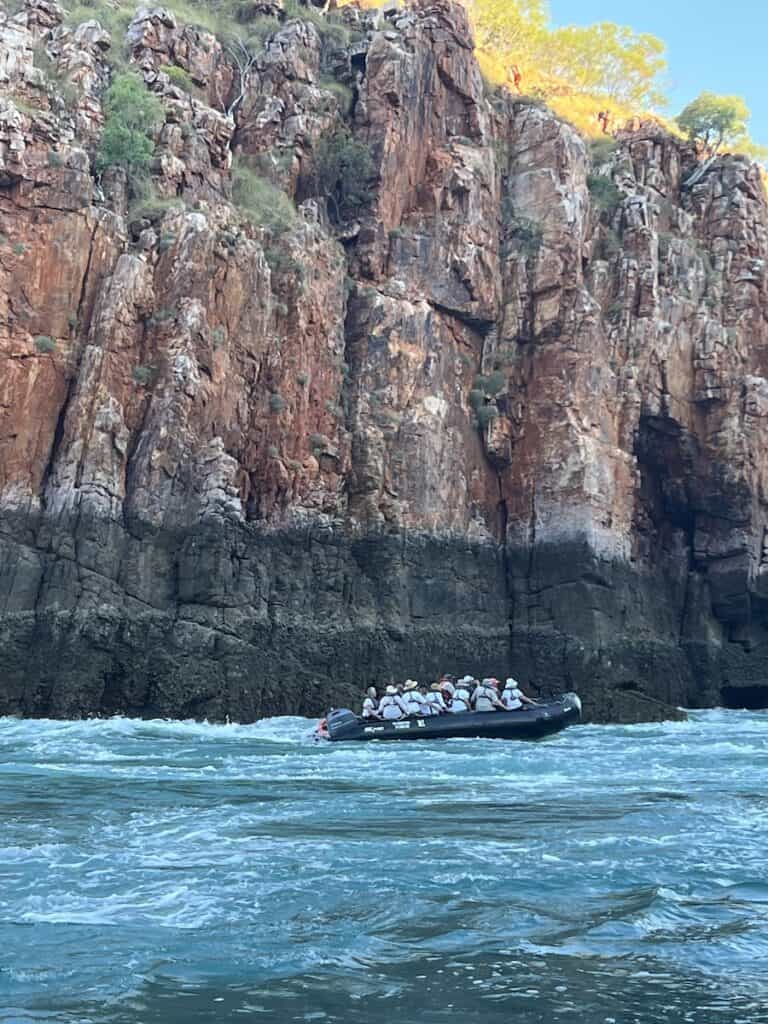
The Horizontal Falls, or Garaanngaddim, at Talbot Bay were a thrilling finale to this Kimberley coast cruise; we were still in the region of enormous tides and water funnels at a furious pace through a narrow sandstone canyon which put the skill of our Zodiac drivers to the test, the boats skidding and spinning on the foaming water.
A last G&T in the Constellation Lounge, a final blazing sunset and a bittersweet feeling as Gretchen and I sat on deck, gazing up at the Southern Cross, bright in the jet-black sky. Had it been worthwhile? Absolutely. We couldn’t have picked a better place for our reunion. It’s an honor, nowadays, to travel somewhere so beautiful, where so few have been.
Interested In A Kimberley Coast Cruise With Seabourn?
All-inclusive fares for this 10-night “Kimberley Expedition: Waterfalls & Wanjinas” cruise between Darwin and Broome, Australia, starts at $14,899 per person, includes meals, open bar, most excursions and gratuities.
If this expedition appeals to you and you’d like help booking this unforgettable cruise, then do show your interest in the form below and our favorite travel advisor Kevin is happy to help. He’s excellent.
Interested In A Kimberley Cruise?
For years, we've been referring our readers to our favorite travel advisor, Kevin Flink, because of his excellent customer service and expertise in travel planning. Kevin owns a franchise of Cruise Planners, one of the highest producing land and cruise travel agencies in the world, which means he gets access to various discounts and perks from cruise lines, hotels and insurance companies that he can pass on to his clients.
To show your interest in booking a Kimberley cruise (or any cruise!) with Kevin, please tell us a bit more about what you’re looking for and we will be happy to get you both connected.
* Your personal information will be used solely for purposes of responding to your request.

Don’t miss a post about small-ship cruising, subscribe to QuirkyCruise.com for monthly updates & special offers!
© This article is protected by copyright, no part may be reproduced by any process without written permission from the author. All Rights Reserved. QuirkyCruise.com.




 HEIDI SARNA


