
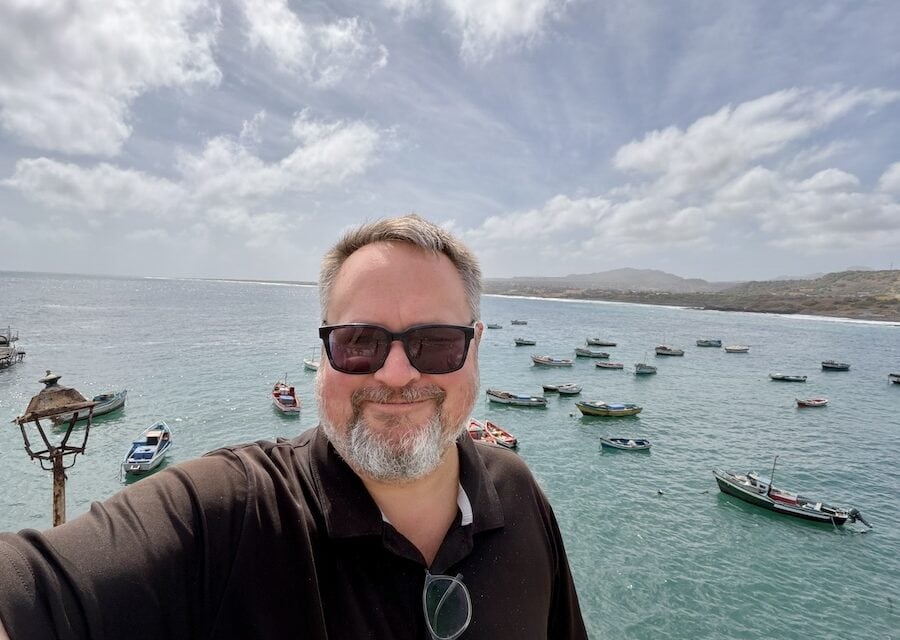
Photo Above: A Tim Johnson selfie on the island of Santiago in the Cape Verde archipelago.
Cape Verde Archipelago Cruise In West Africa
By Tim Johnson
Casting lines, our small ship spirits us to a different world, every day. An intimate vessel that also serves as a sort of spaceship. The Harmony V providing a promise of (almost) a unique, new planet, just over the wavy horizon of the Atlantic.
Of course, Variety’s 49-passenger vessel is not outfitted for intergalactic travel. But, opting for their 7-night voyage through the islands of Cape Verde, every landing brings a brand-new reality. Each island with not only geography and history, but also personality.
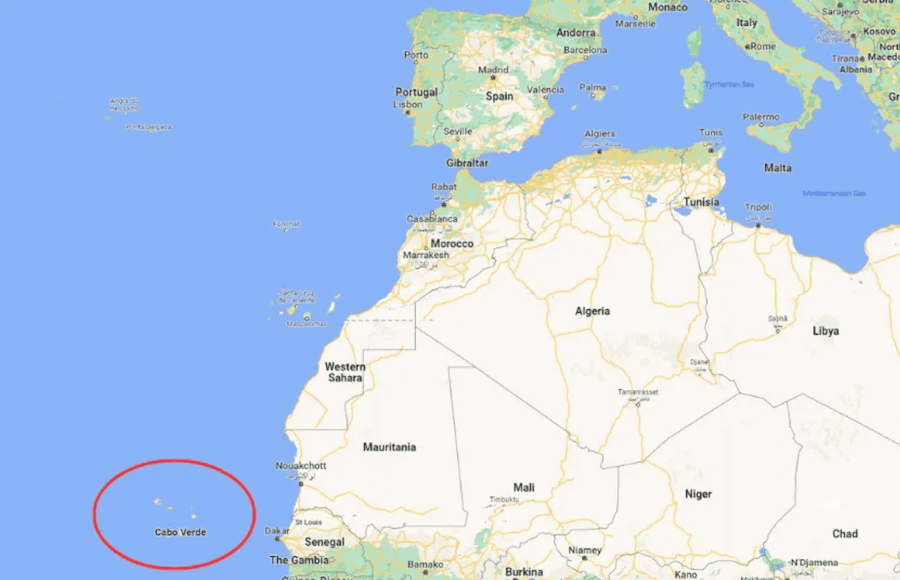
This small nation is comprised of a series of 10 islands (nine inhabited) off the coast of West Africa, arranged roughly in a horseshoe shape. With just 530,000 residents, Cape Verde captured the world’s imagination with their passionate play in the recent World Cup. (After ties with perennial powerhouses, including eventual champion Spain, they were eliminated by Argentina, the other championship game finalist.)

While Senegal is the closest mainland country, Cape Verde remains heavily influenced by Portugal, from which it gained independence in the 1970s. A visit here provides all the charms that you often find with archipelagos. That is: a mixture of the cultures blown in on the trade winds, with the added of fascination provided by its remoteness. And the Harmony V is an excellent vessel to see as much of it all, as possible.
Cruise Summary
In a nutshell, here's what to expect on a Cape Verde Archipelago cruise In West Africa:
7 Reasons to Sail Cape Verde Aboard Variety’s Harmony V
- A rare opportunity to visit this remote West African archipelago
- Spending more than a week island-hopping here is truly unique
- Each island has its own culture and even language, something you’ll experience in depth on this voyage
- Local guides bring each island to life with personal stories and their true passion for their home
- Small size of the ship and Variety’s overall philosophy encourages intimacy and connection amongst guests
- On board performances bring the sounds and sights of Cape Verde to the ship’s decks
- On tours, natural wonders abound, from lava flows to sea cliff formations to cloud forests
And 2 Caveats
- The Atlantic waves can create quite a bit of movement on the ship, especially when crossing from the southern end of the archipelago to the north
- The ship’s small size presents few extra amenities (no hot tub or fitness center, for example)
Please read on for more details of this very quirky cruise!
A Look at the Ship: Harmony V
Having taken three previous voyages with Variety (in Greece, Iceland, and French Polynesia), I’ve learned that their fleet of yachts and small ships are sailed with one goal: to maximize the destination. Which means two things.
On one hand, they’re able to maneuver and explore far-flung islands that larger lines aren’t able to get to, from tiny, unknown — and beautiful — spots in the Cyclades, to hidden harbors in the Seychelles. But the caveat is that on-board amenities tend to be somewhat limited (though note, some sailings on Harmony V offer treatments in a mini spa off the main lounge). The ships are not luxurious, they're utilitarian and comfortable.
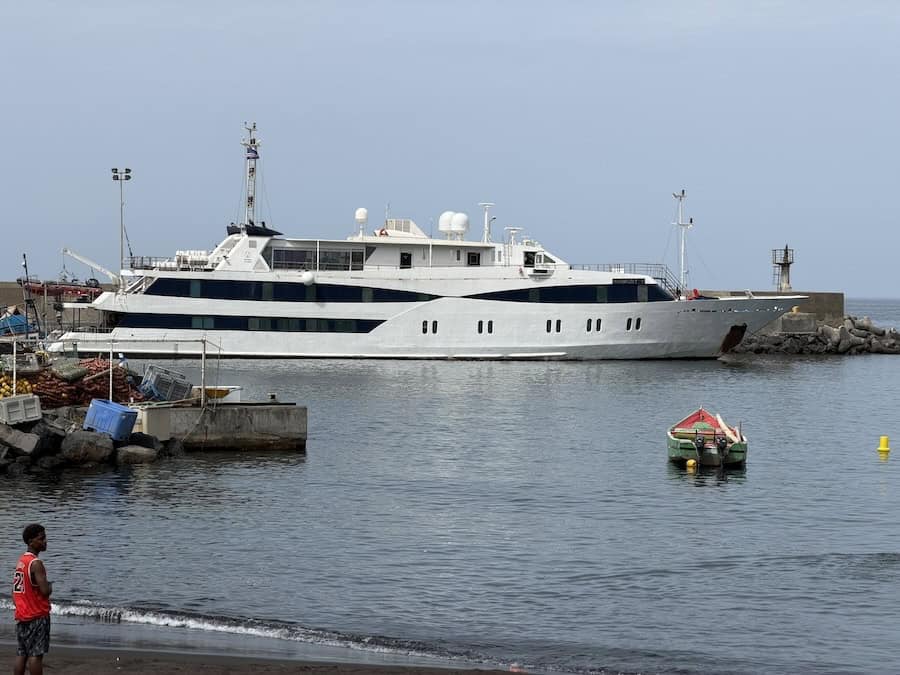
The Harmony V is no exception. Variety promotes the idea that their vessels provide a home at sea, and that’s always been my experience. Intimate and small, the 179-foot ship maxes out at 49 guests. Those on board tend to sit together at communal tables for six or eight in the spacious, comfortable main deck dining room, sharing experiences from the day over a steaming, multi-course meal.
I made fast friends with an Austrian American couple and another from South Africa, and we swapped stories over dinner on most nights. By the way, the ship was sailing almost full and mixed together a broad spectrum of nationalities including Americans, Austrians, Canadians, South Africans, French, couple Australians, and others.
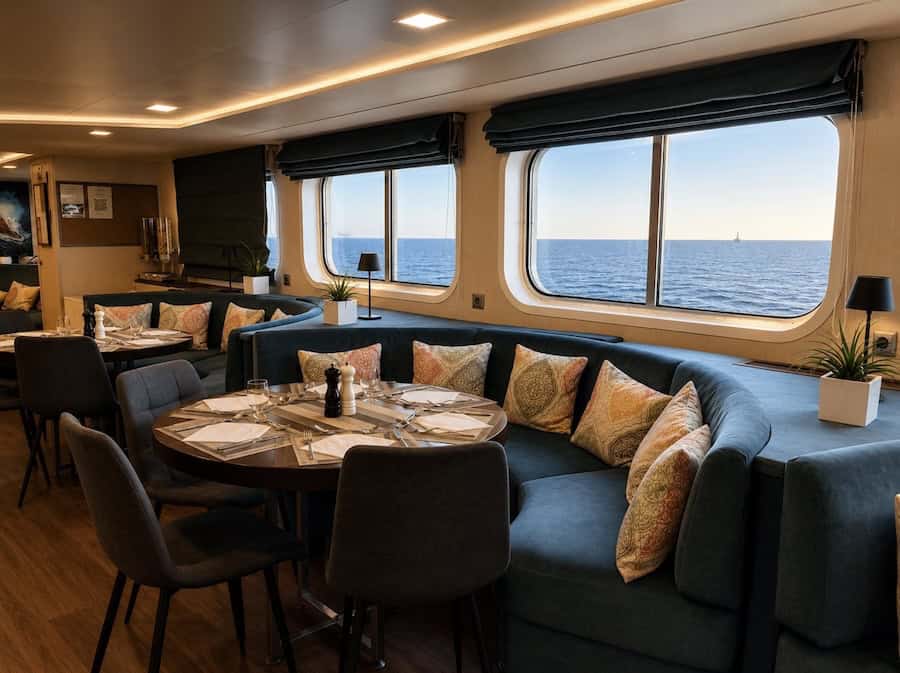
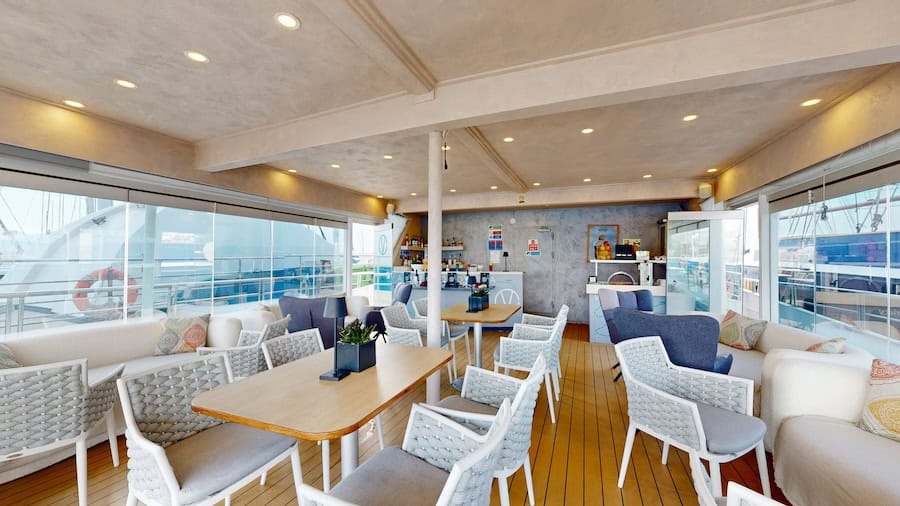
On the upper deck, there’s a semi-enclosed lounge and bar. It’s open at the back, with huge floor-to-ceiling windows along both starboard and port sides. Equipped with a stocked bar, on my voyage this was the place where guests would gather for a nightcap, or to enjoy local musical and dance performances. On my cruise, there were local performances on two or three nights, and the entertainers were always brought on board from local ports. Further, the cruise director provided talks every evening about our plans for the next day, the history and context of what we were going to see.
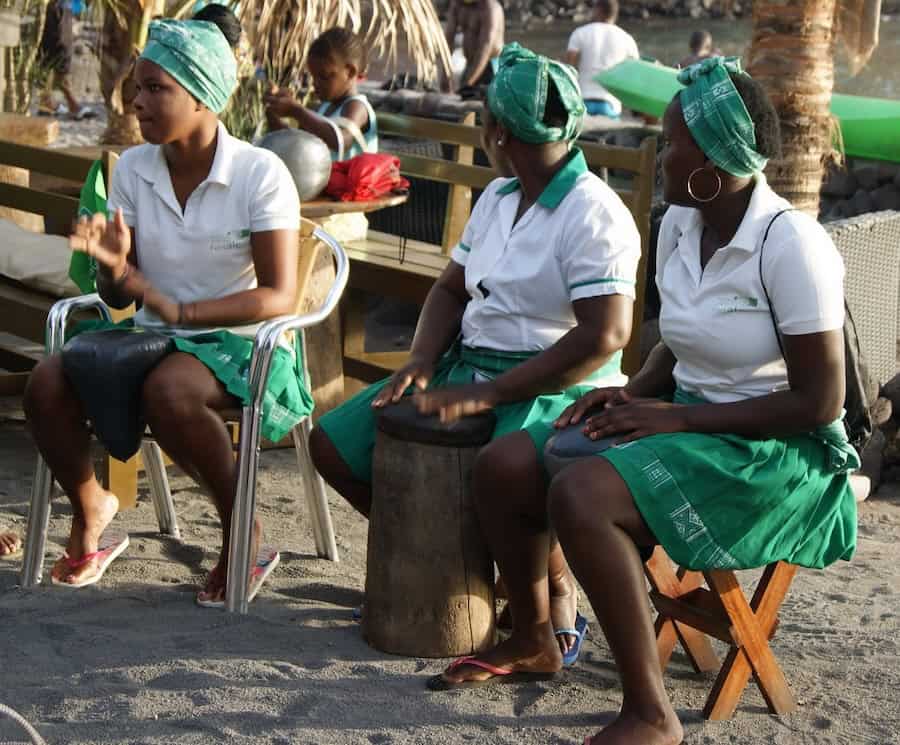
We enjoyed one of the highlights of the trip on the open stern of this upper-deck lounge, an area with cushy chairs called the Sun Deck. With the Harmony V docked alongside the wharf in on the island of Santiago, an all-female troupe came aboard to perform Batuko. Clapping and pounding their feet to create a beat, they sang and danced in a distinct call-and-answer style, with rapid steps and shaking hips.
Certainly fun, Batuko is also significant. Banned during Portuguese colonial times, it’s been resurgent since Cape Verde’s independence in 1975. Today, it is a symbol of both cultural resistance as well as women’s autonomy. And, I’ve got to say, when they really get going, the energy is electric — and magnetic. Enough to pull in a number of the onboard guests, who shook their hips with both fervor and joy.
Harmony V’s Cabins
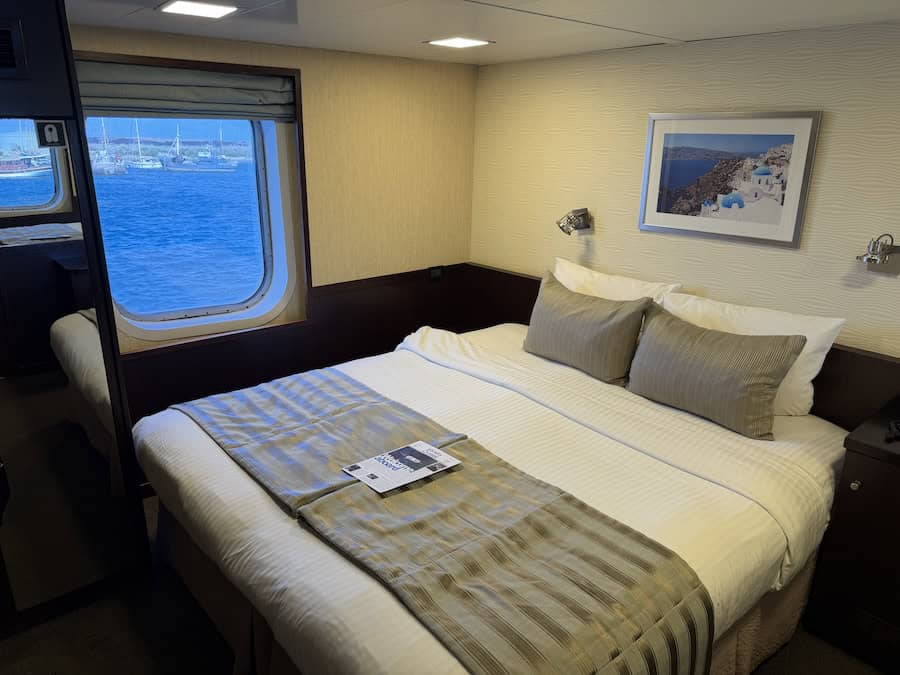
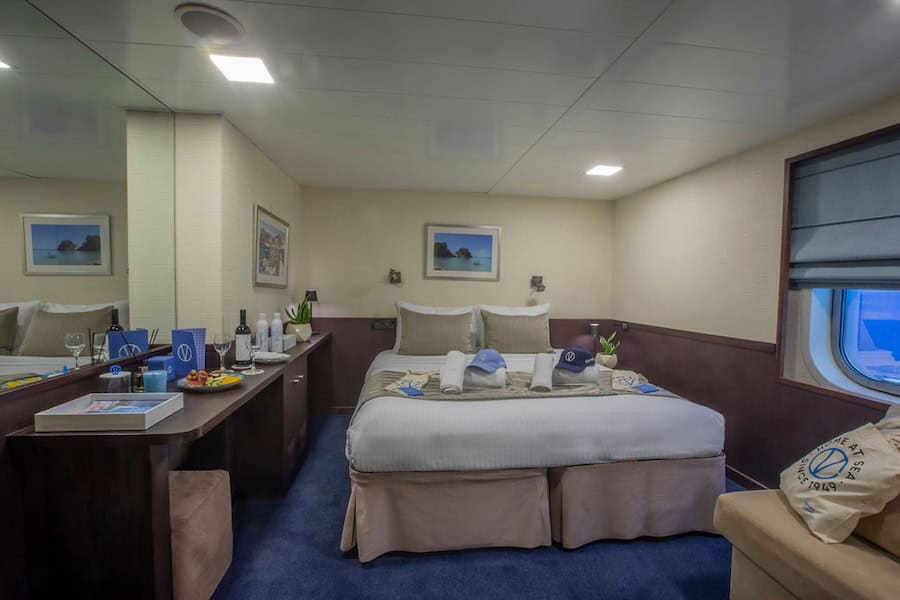
While not necessarily luxurious, the cabins aboard the Harmony V provide everything you need to rest and recharge for the next day’s exploring. My main deck, Category B cabin had a large, comfortable bed, plenty of storage, and a big window. Plus, an ensuite bathroom (with shower) and a flat-screen TV (which I never once watched).
Dining on Harmony V
While this cruise is all about the itinerary and excursions and not the dining experience, the food on board provided good, solid fuel. There was hearty protein in the morning, like bacon and eggs. And after busy days of touring, we’d return to the ship for either multi-course seated dinners, or a buffet. Where possible, the staff brought fresh, local flavors on board, like papaya and melons from the markets along the way.
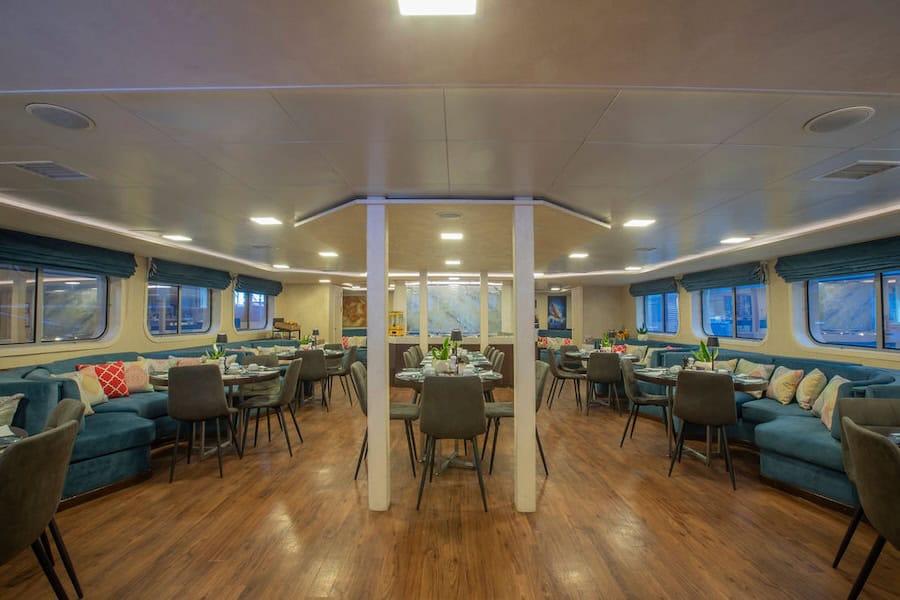
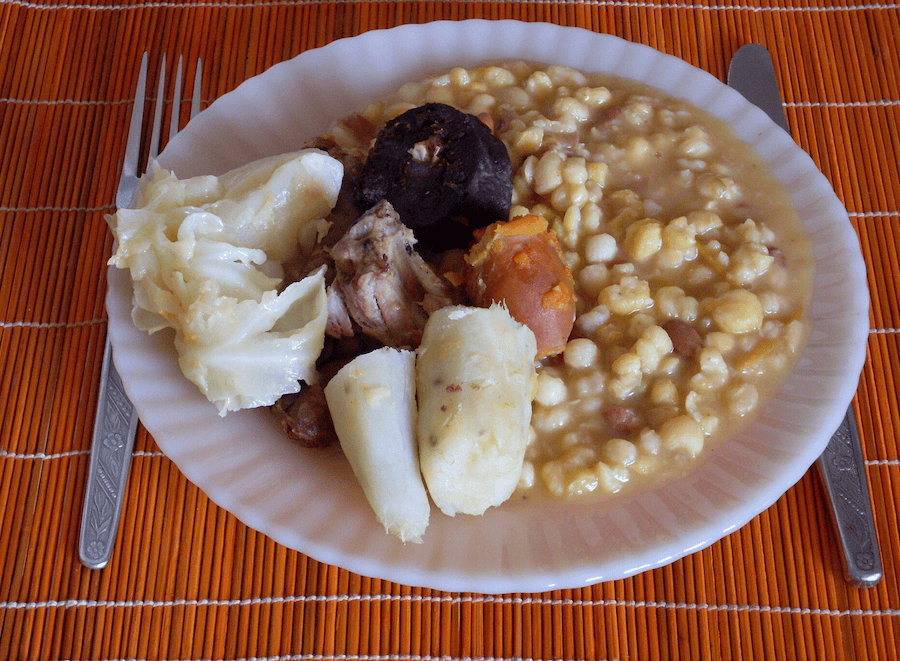
But most dinners included fairly standard fare like lamb chops and baked fish. The highlights? The lunches we enjoyed off the ship while on excursions, including chachupa, Cape Verde’s signature dish: a slow-cooked, hearty stew based on corn (hominy) and beans, along with fish or meat.
The Cape Verde Cruise Itinerary Highlights
On the standard, eight-day Islands of the Cape Verde Archipelago voyage, guests generally visit six different islands. It’s round-trip, leaving from, and returning to Sal, a beachy, tourist-friendly island. While the official plan takes the ship on an efficient, clockwise course, I learned quickly that, much like an expedition cruise, the winds and waves of the Atlantic dictate the actual schedule.
All tour guides were locals, a huge plus, when it came to true insights about the culture and day-to-day life on the islands.
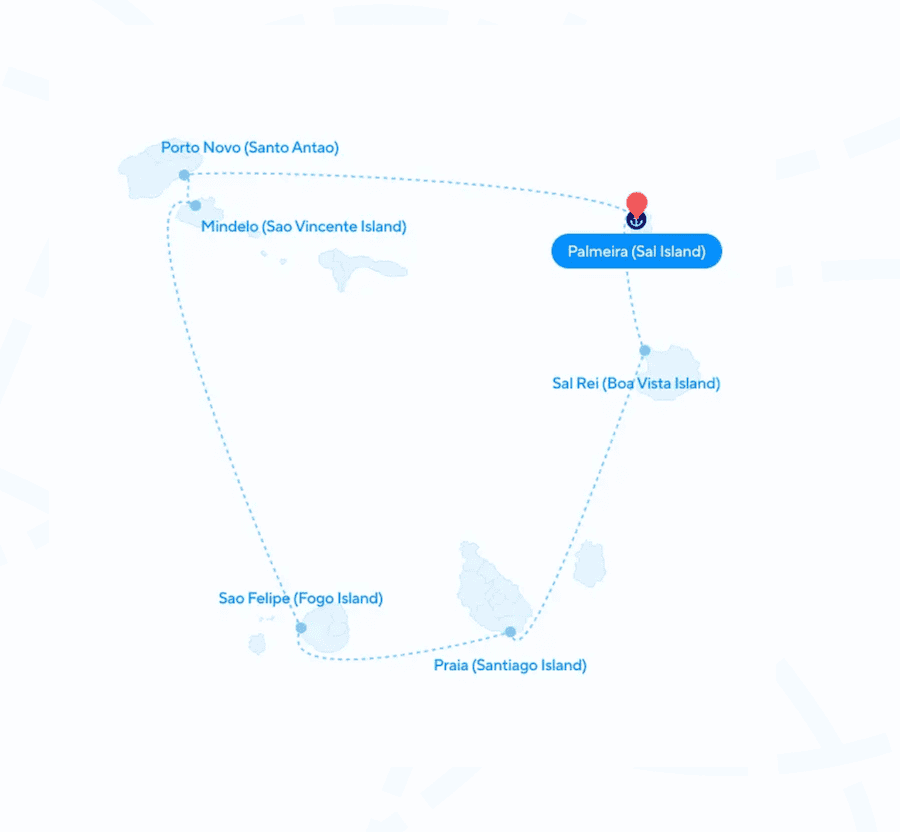
On my sailing, after boarding and leaving on time from the small port of Palmeira on Sal, we headed straight to Santiago. While it was a navigational decision driven by the weather, this was in many ways fortuitous. That’s because spending two full days on this island brought us to the historical heart of Cape Verde.
“This was the first island to be populated,” a guide explains, as our minibus climbs up a plateau toward the country’s capital, Praia. He notes that the closest part of the African mainland, in Senegal, is about 500 kilometers (or 310 miles) away. The Portuguese arrived in the 15th century. “People say they got lost, and found Cape Verde,” he laughs.
We descend from the vehicle and make our way on foot down the shaded cobblestones of Rua 5 de Julho, the city’s primary pedestrian street, arriving soon at the two-story Municipal Market. Walking through, I marvel at the vitality of the place and feel fortunate to gain a glimpse of day-to-day life in Praia. Abundant, colorful local produce — bananas, papayas, mangos — almost overflow the little stalls on the first floor. And the din of street-level transactions rises to the second, as I explore all sorts of treats there, from spices to molasses.

The day includes a number of other notable stops. These range from the main city square, a lighthouse, and the presidential palace, plus a short drive to the 16th-century Forte Real de São Filipe. Just below, we explore the Cidade Velha. This UNESCO-recognized Old Town, built in 1462, was the first settlement on the archipelago.
We remain on Santiago for Day Three of the itinerary. And experience a whole different side of the island. “Today we go to the north,” our guide explains to us as we roll out in the minibus. “Mountains and valleys and fishing on the coast. People making their lives in the countryside.”
He’s bang-on in his description. We spend the morning and afternoon climbing switchbacks over vertiginous ridges, and enjoying the views of busy fields filled with hardworking farmers cultivating corn and beans and sugarcane. Plus villages like Santa Cruz, with black-sand beaches and colourful fishing boats.
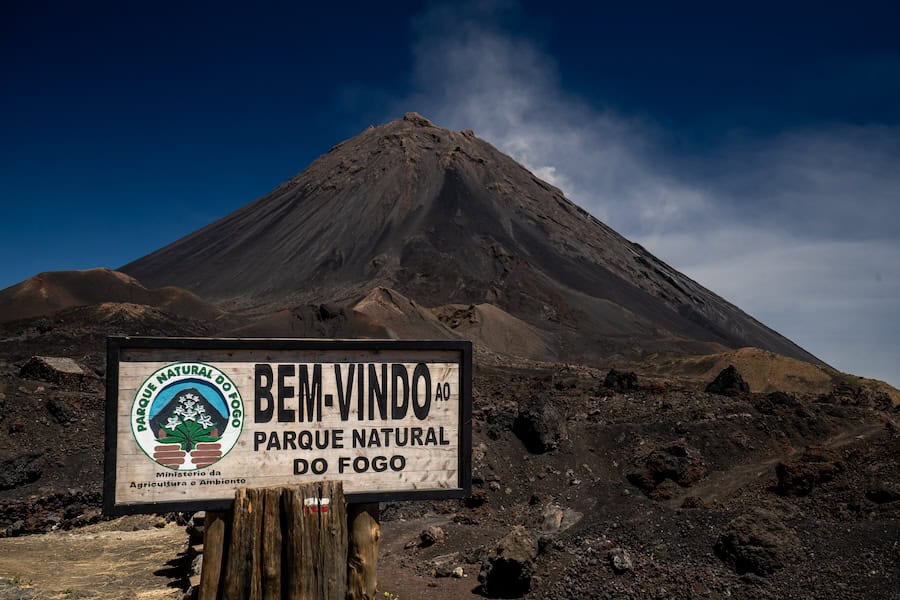
Sailing just to the west on the Harmony V, Fogo Island on Day Four feels like it could be a million miles away. This is a very volcanic island, one that, our local guide notes with a smile, just keeps getting bigger. As our van ascends through the stark landscape, he points out craters from dozens of eruptions. As well as lava flows, telling us, as we pass, which year these now-black rock formations were red-hot magma.
“Welcome to the moon!” he announces, as we arrive in the middle of the main caldera. We hike around on the now-crunchy former lava. And then lunch in a restaurant at Chã das Caldeiras, the village that sits in the middle of the crater, sipping (super) mineral-forward local wines.
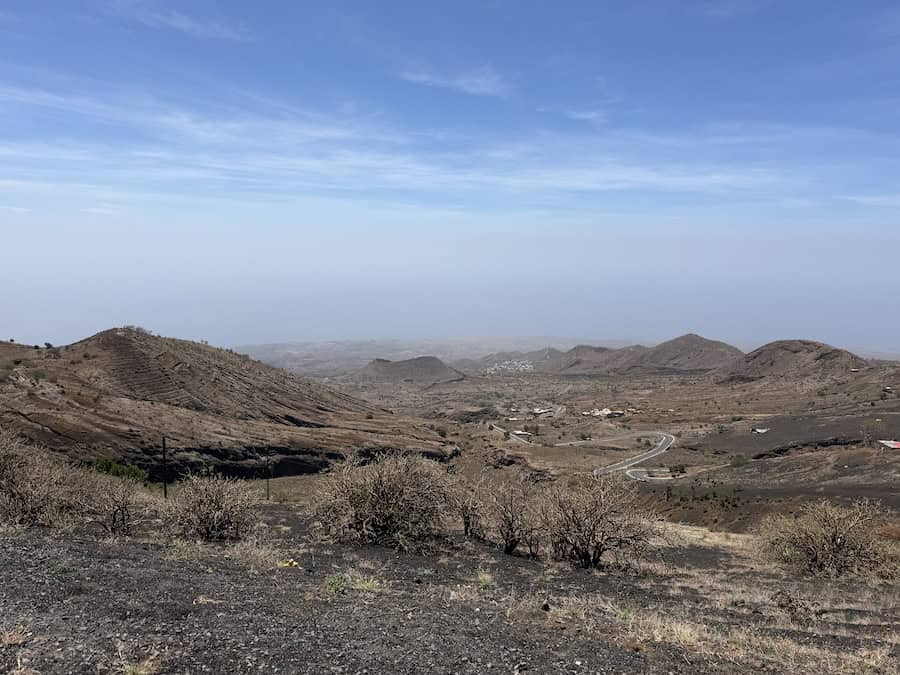
That night, we make a major crossing, from the southern (leeward) string of islands, across the opening in (what I call) the horseshoe, to the northern (windward) end of the archipelago.
Hot tip: this is the roughest night at sea on the voyage. And anyone with a propensity for seasickness should prepare, perhaps with some medication, before setting sail.
Arriving on Sao Vicente, another local guide explains the vast cultural differences across the islands of Cape Verde. She notes that each one has its own dialect, to the extent that she cannot understand the creole spoken by someone from Santiago. But what happens when all the islands need to communicate at a meeting? They speak Portuguese, she says.
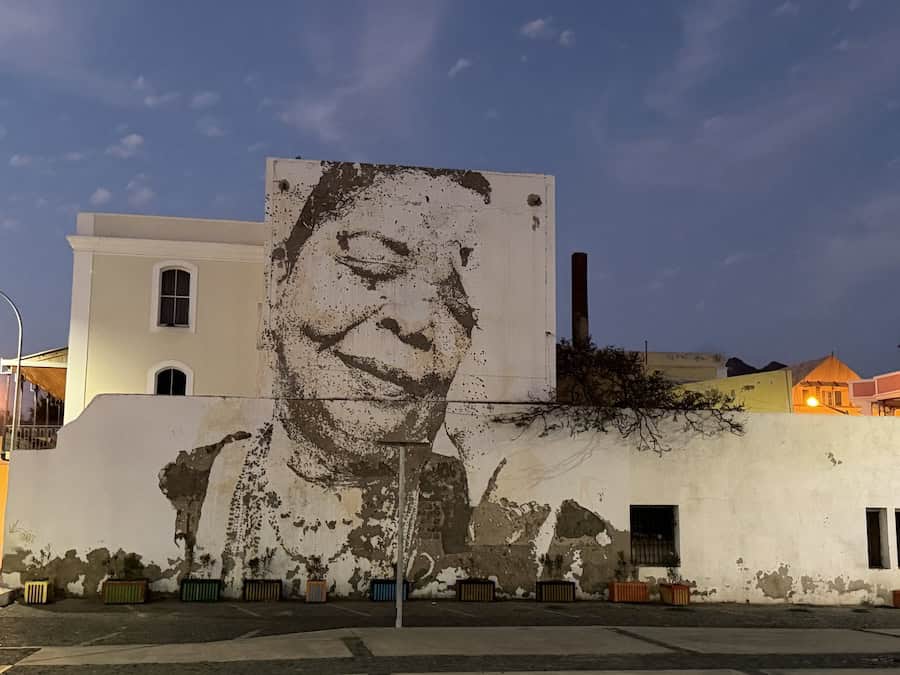
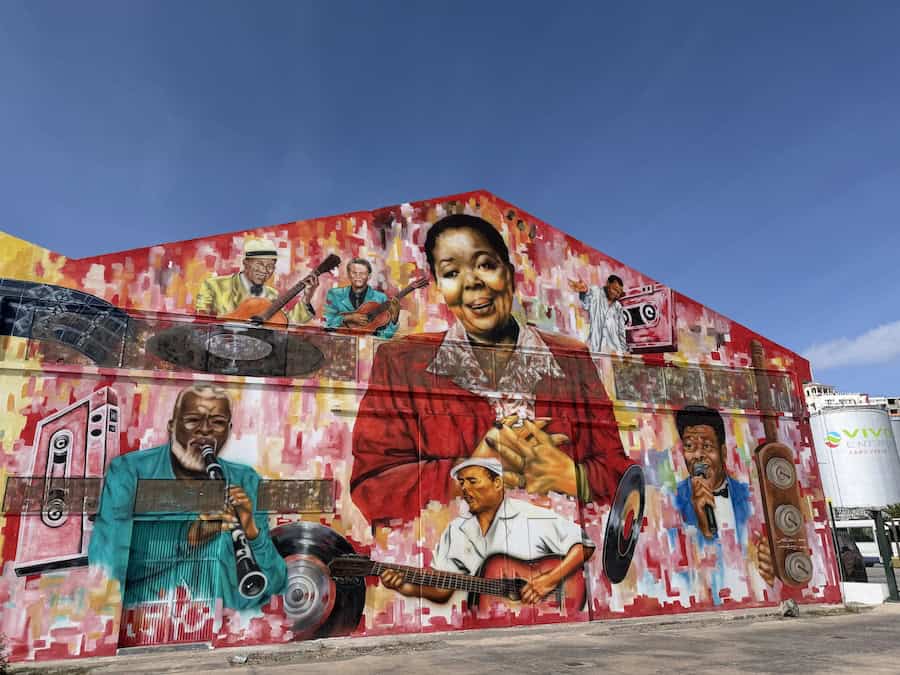
Sao Vicente is one of the most popular tourist islands, she says, and indeed it’s the only place where I spot another cruise ship throughout the voyage. In Mindelo, the cultural capital of Cape Verde, live music flows out from clubs. Walls are splashed with dramatic murals, including a bas-relief of the singer Cesária Évora, a local hero, a Grammy-winning artist, and the “Queen of Morna.”
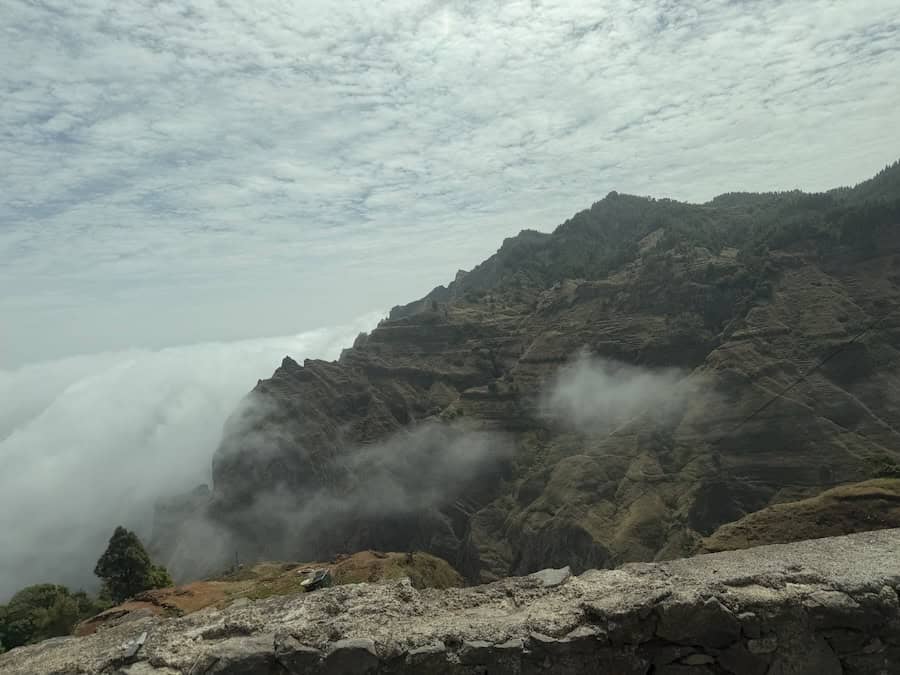
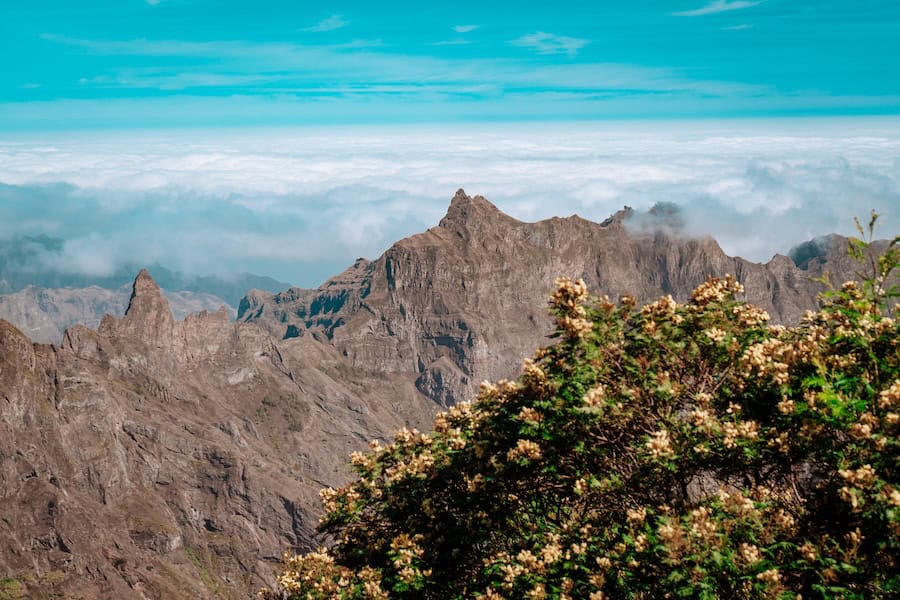
Our last two islands, on Days Six and Seven, both hold many joys. On Santo Antao, the minibus climbs into a cloud, over the spine of the island. Reaching a height of 1,500 metres (almost 5,000 feet), we descend into a verdant valley, where we stop at a distillery to see how the sugar cane growing all around us is turned into grogue, the local liquor.
And our final port-of-call, Sao Nicolau, is a truly rare treat. A guide explains that only 2,000 tourists a year come here. All flights are domestic, and only a very small handful of ships arrive on these shores.
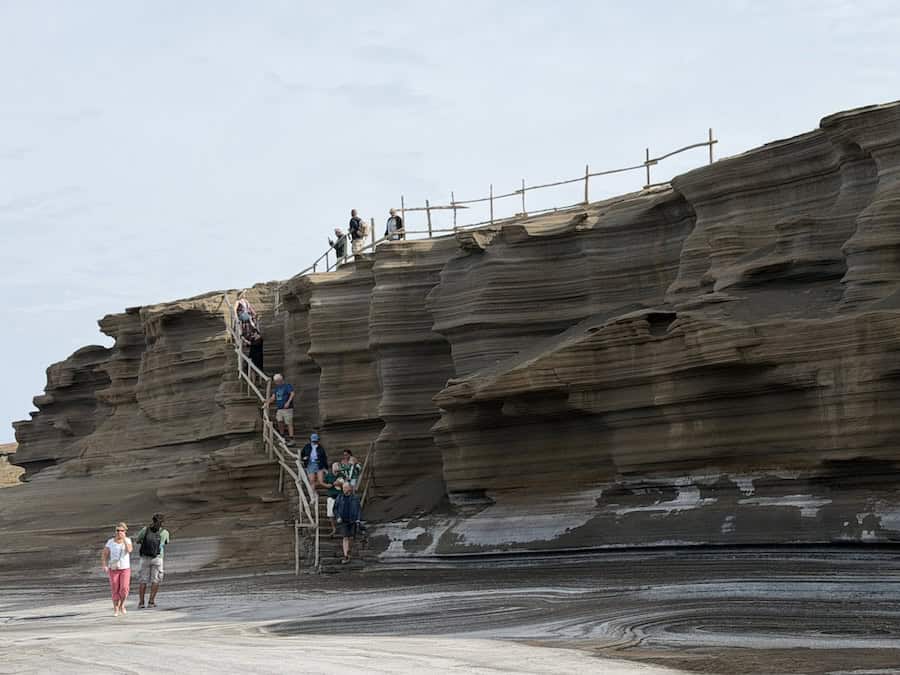
I walk to the water at the geological marvel of the Carbeirinho, coastal cliffs and rock formations carved out by the timeless wind and waves. The open ocean is fierce. I close my eyes and feel the force of it, the salty spray splashing, just a little, on my face. It is the perfect finish to the spectacular voyage (before our return to Sal), demonstrating the magic and power of the Atlantic, in this far-flung, and truly fascinating, archipelago.
Fares, Inclusions & Practical Matters
Variety’s seven-night “Islands of Cape Verde Archipelago” cruise starts at $2,781 USD per person. Most voyages include stops at six different islands or more.
What's Included:
- Accommodation in air-conditioned, ensuite sea view state rooms
- Full board (two daily meals) and a welcome cocktail
- 24-hour coffee, tea and drinking water
- Beach towels and snorkel and fishing equipment, as well as stand-up paddle boards and kayaks (when available)
Not Included:
- Crew gratuities
- Wine, spirits and beer
- Wifi
- Shore excursions
Getting There:
The easiest route to Cape Verde is through Lisbon, often aboard TAP, Portugal’s national flag carrier. You can reach Sal with just a single connection from a number of North American cities.
Cruising Season:
This seasonal itinerary operates in the winter — from the end of November, until the last week of February.
Why I Recommend This Cape Verde Archipelago Cruise in West Africa?
I’ve visited some 150 countries and taken 100 cruises and have never experienced a place like Cape Verde. The diversity of each island in the archipelago is almost unbelievable, and the opportunity to hop between these cultural and natural worlds was truly unique. And the Harmony V was a comfortable, friendly, intimate place to land each night — and awake with anticipation for the awaiting adventure the next morning.

Tim Johnson has visited 153 countries on all seven continents, always in search of a good story. He contributes regularly to National Geographic Travel, the Toronto Star, the Globe and Mail, Reader’s Digest, Financial Review (Australia) and the Vancouver Sun, and also writes for CNN Travel, the New Yorker, National Geographic, Bloomberg, BBC Travel, the Daily Beast, the Telegraph (London) and many others. He also cohosts Travel in Ten, the number one travel podcast in Canada, the US and the UK.
Interested In This Cruise?
For years, we've been referring our readers to our favorite travel advisor, Kevin Flink, because of his excellent customer service and expertise in travel planning. Kevin owns a franchise of Cruise Planners, one of the highest producing land and cruise travel agencies in the world, which means he gets access to various discounts and perks from cruise lines, hotels and insurance companies that he can pass on to his clients.
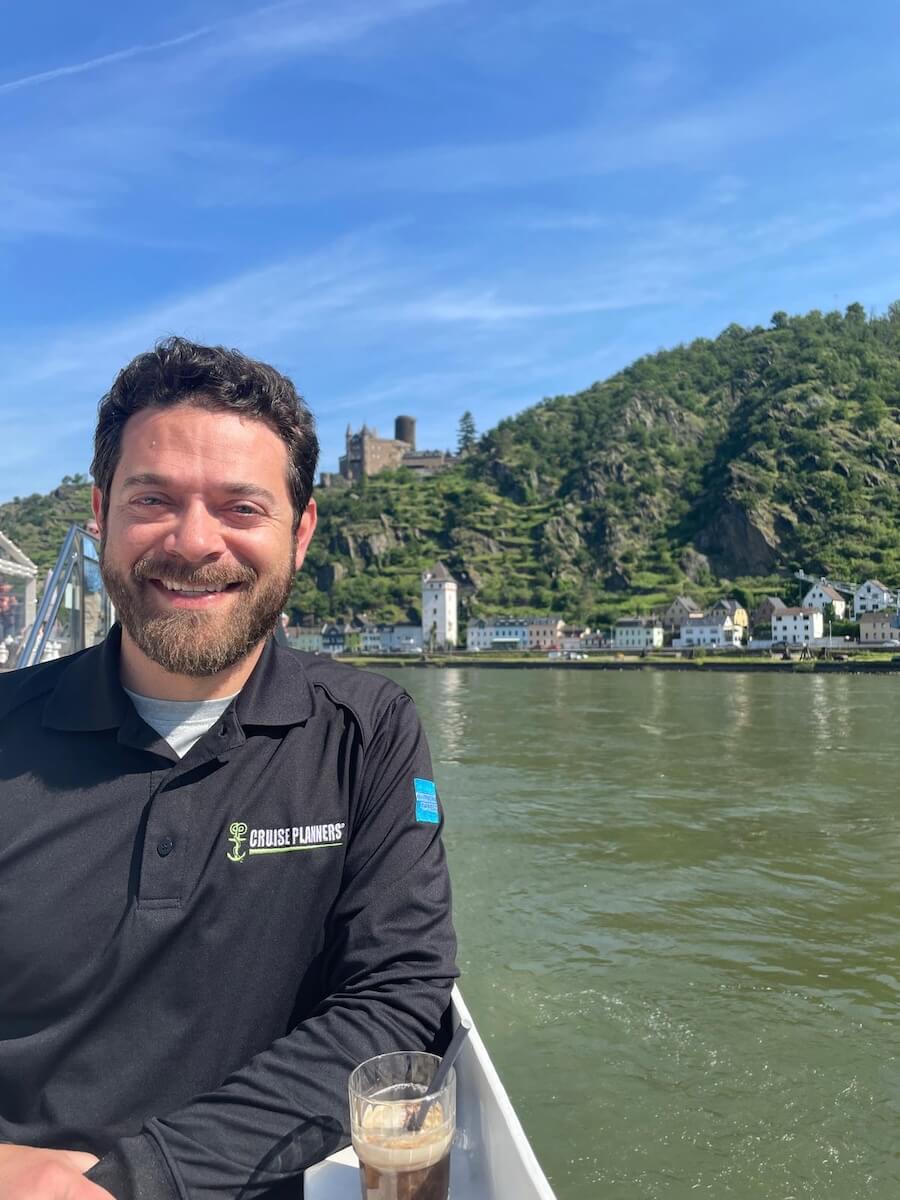
To show your interest in booking a West Africa Variety cruise (or any cruise!) with Kevin, please tell us a bit more about what you’re looking for and we will be happy to get you both connected.
* Your personal information will be used solely for purposes of responding to your request.





 HEIDI SARNA


