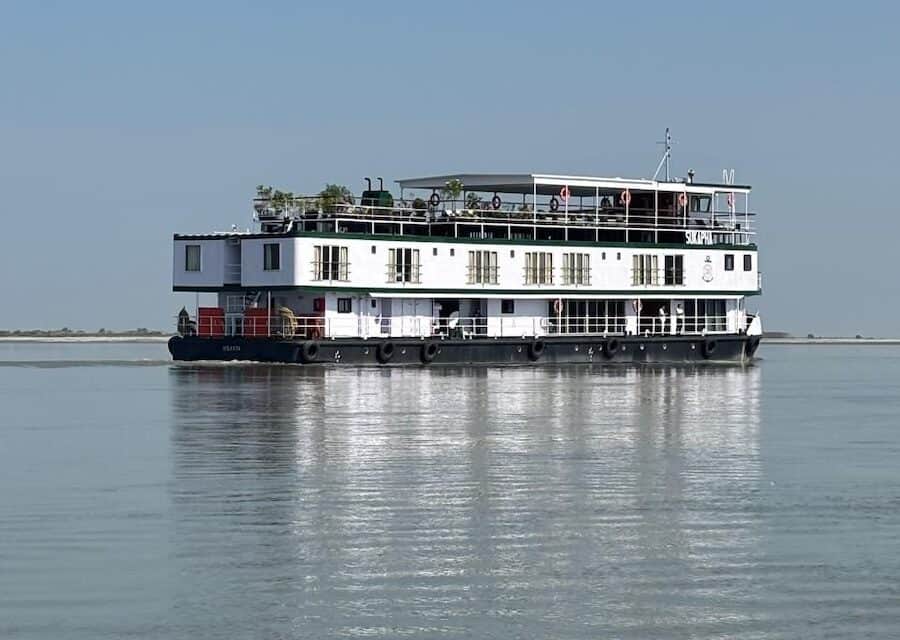
Sukapha Brahmaputra River Cruise Review
By Anita Nirody
When I, along with my husband and a few friends, boarded the Sukapha in late November, we did not know quite what to expect. Some of us have done small boat cruises in other parts of the world (including Egypt, the Mediterranean and the Peruvian Amazon), but this was our first experience with small boat cruising in India. We were excited and a bit apprehensive at the start.
Named after an ancient Assamese king, the Sukapha is a luxury cruise boat operated by the Assam Bengal Navigation (ABN), a company that offers various cruises on the Brahmaputra and Ganges rivers.
We opted for the four-night Silk and Rhinos cruise on the Brahmaputra River in Assam, India.
What Makes a Sukapha Brahmaputra River Cruise so Appealing?
- It’s a relaxed and leisurely cruise experience.
- The selection of good quality food focuses on Assam’s local delicacies, with a good mix of vegetarian and non-vegetarian offerings.
- Excellent service customized as requested to meet the diverse needs of passengers.
- Glorious views of the Brahmaputra River from the boat, especially the sunsets!
- A spacious sundeck with a bar.
- Comfortable and well-appointed cabins and washrooms.
- Daily two-hour morning excursions – including visits to a silk weaving workshop, a tantric temple and a jeep safari in the Kaziranga National Park.
- Inclusive pricing (including alcohol with meals) made it more convenient.
Some Caveats About a Sukapha Brahmaputra River Cruise
- With only 12 cabins, be prepared for an intimate experience and interactions with other passengers — may not be suitable for everyone. We loved it.
- The leisurely pace of the cruise may not work for those wanting a more packed agenda. It was perfect for us!
- There is no WiFi in the cabins, although available in the common areas albeit sometimes spotty.
- Lights out! The generator on the boat is shut off every night at 11:00 pm and switched back on at 5:30 am in the morning. There is an emergency light if needed and a torchlight provided in all cabins.
- The cost may be prohibitive for some – about $2,120 USD per person for this four-night cruise. Note, there are also three-, seven- and 10-night cruise Brahmaputra options.
Welcome to the Sukapha
We boarded the Sukapha at Pandu Port in Gauhati, Assam’s capital and were received by Ram, the “Master” (captain) of Sukhapa; Romeet, the manager; and a warm and welcoming crew. We were greeted with chilled towels — much needed — and a refreshing lemonade with a distinctively delicious flavor. We were told that the lemons, called kajinimbu, are indigenous to Assam. We made a note to buy some to take back home with us.
The Sukapha has 12 upper deck cabins, accommodating 24 passengers; 10 of the cabins look like photo below and two (#11 and #12) are larger, with a second window facing aft. Cabins are bamboo-paneled with air-conditioning and large sliding windows that offer panoramic views of the river. Each room as ensuite bathrooms with amenities from “Kama,” a well-recognized Indian wellness brand.
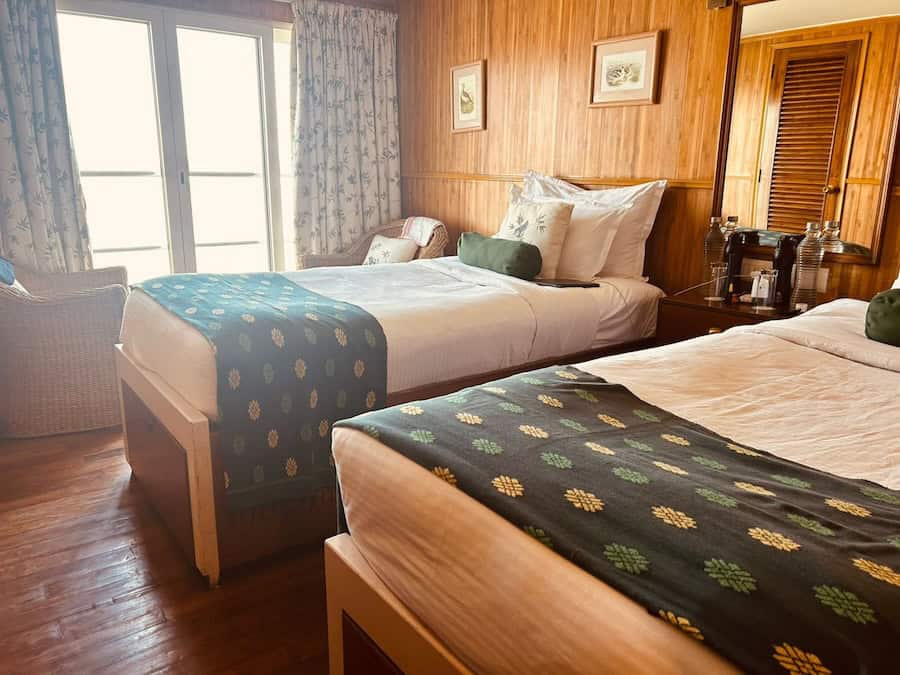
A cabin identical to the author's cabin aboard the Sukapha. * Photo: Anita Nirody
VIDEO: Below is a look around the author's cabin and bathroom.
Cane furniture, object d’art and Assamese handlooms are used to furnish and decorate the Sukapha's cabins and public areas. We were told that much of what we were admiring were hand made by Assamese local artisans.
There is a saloon with a library where we had our daily evening briefings.
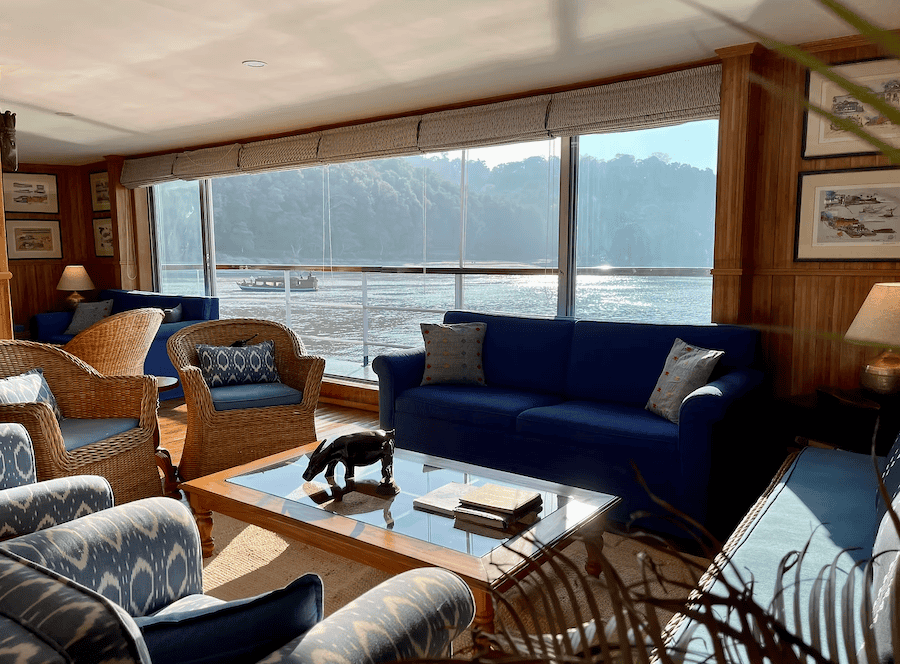
Sukapha's saloon. * Photo: ABN
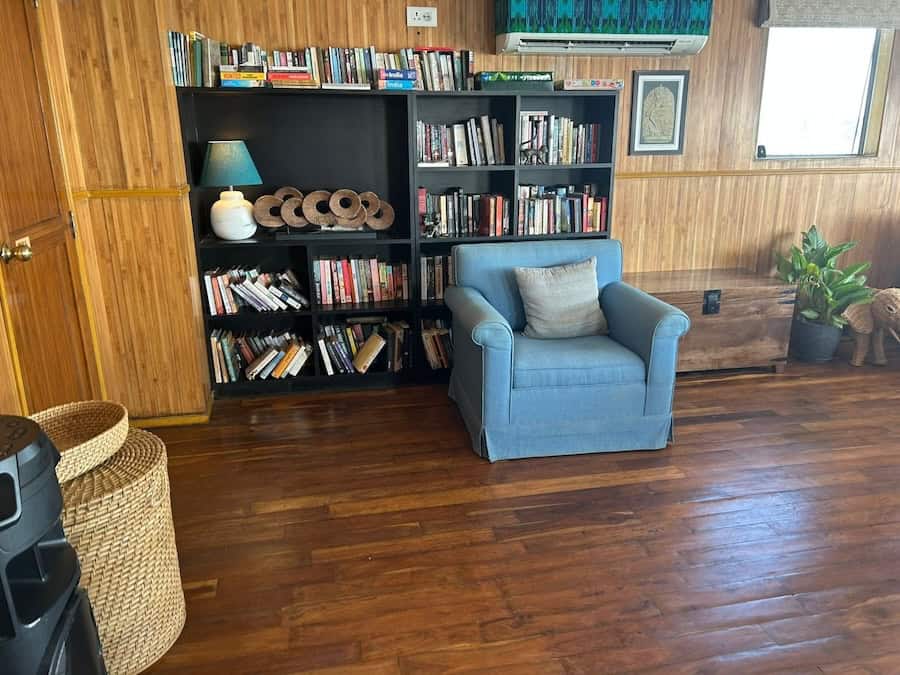
The Sukapha's collection of library books. * Photo: Anita Nirody
A spacious sundeck with a bar is set at the very top of the ship, offering glorious views of the Brahmaputra — a place to relax and take it all in. This is where we spent most of our time. We were lucky as only half of the 12 cabins were occupied, so we could really spread out.
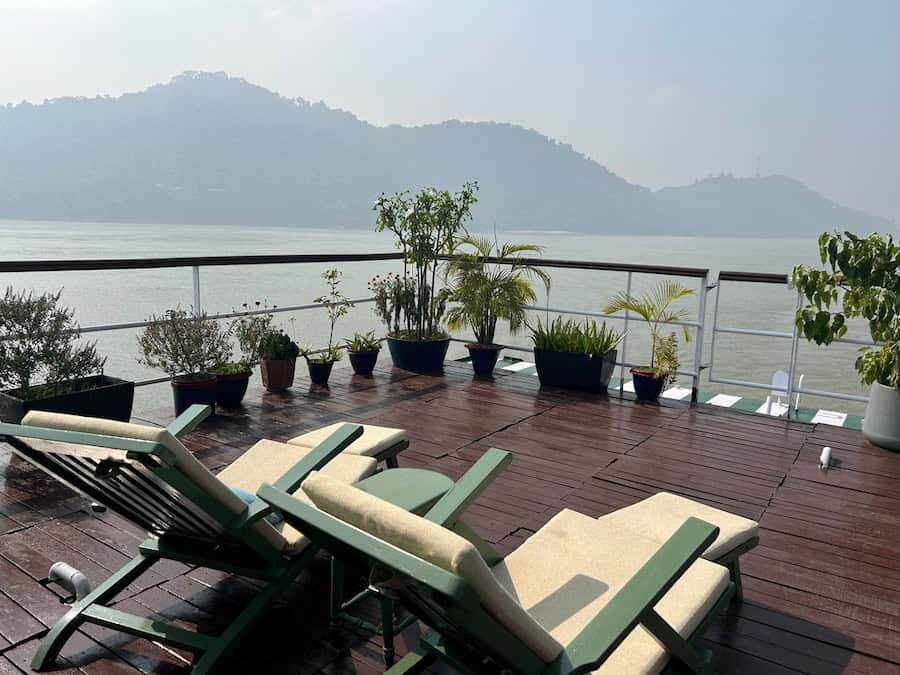
The Sukapha's sun deck. * Photo: Anita Nirody
Sukapha also offers a small spa with a masseur on board whose massages we found to be generally good.
While mornings were reserved for two- to three-hour excursions, we had the rest of the day to enjoy the boat.
Dining Aboard the Sukapha
Meals were served in the main dining room. The breakfast buffet comprised fresh eggs, some bread, pastries and a local dish along with fruit. We missed having brown bread (white bread was on offer), yogurt and good quality fruit (others loved the fruit, we're a bit fussy!.
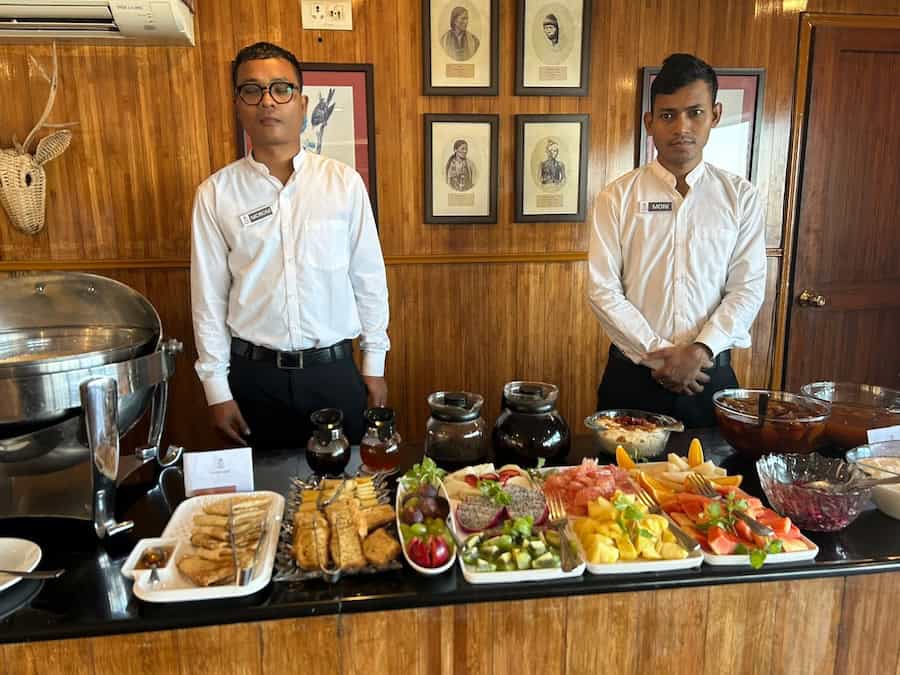
The buffet spread in the dining room. * Photo: Anita Nirody
Lunch and dinner included local delicacies, such as banana blossom, banana stem salad, local fish and pork preparations among many others. The orange soufflé is a must try.
Dining was (with breakfast being a caveat) overall an excellent experience. Kudos to the chef! Alcoholic drinks during lunch and dinner were included in the overall cruise price. A special shout-out to Anom and Radhika in the dining room.
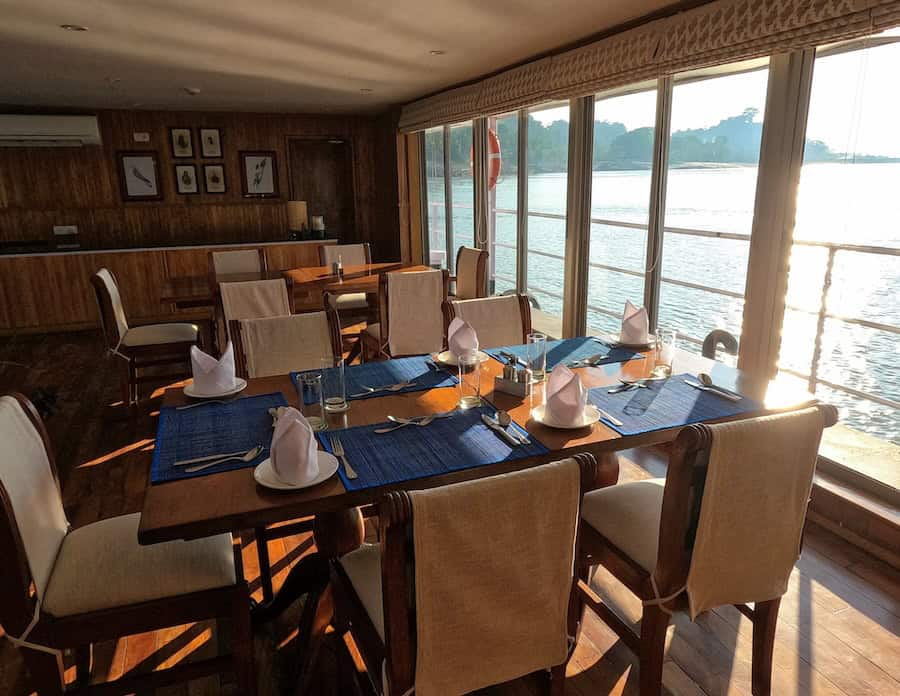
Sukapha's dining room. * Photo: ABN
Day 1 Aboard Our Sukapha Brahmaputra River Cruise
After a leisurely morning, we disembarked and walked through Sualkuchi, a bustling town at the center of Assamese silk manufacturing. We visited a weaving center to learn about silk weaving — from cocoon and spinning to dyeing and hand weaving that transformed the silk into exquisite garments such as mekhela chadars (traditional Assamese attire for women), saris etc.
The evening was spent relaxing on the boat, which then sailed up to dock close to the Saraighat bridge.
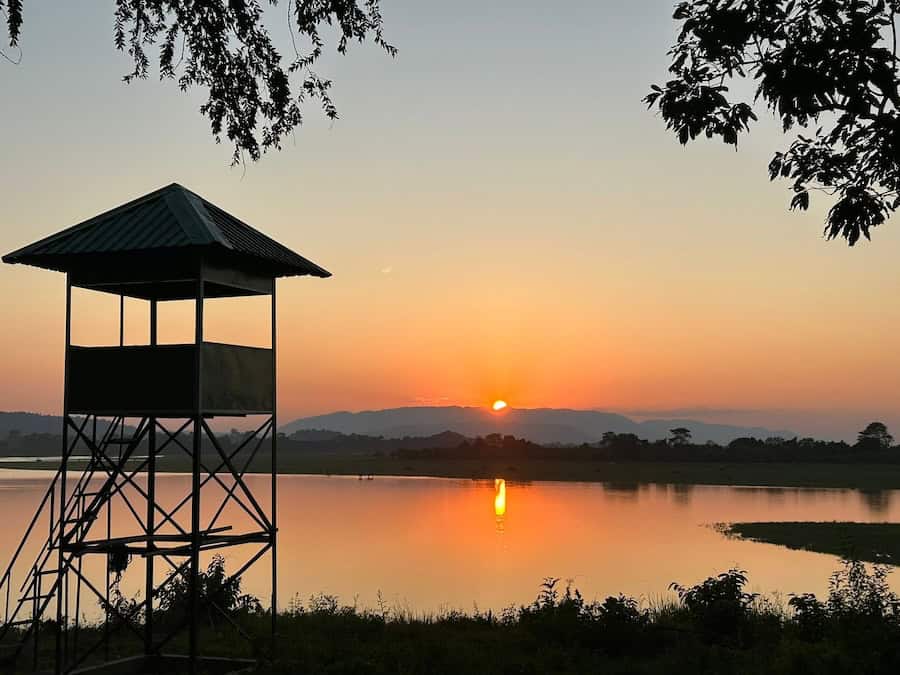
Spectacular sunsets were a daily event aboard our Brahmaputra River cruise. * Photo: Anita Nirody
Day 2 Aboard Our Sukapha Brahmaputra River Cruise
Our excursion was a visit to the Kamakhya temple dedicated to the Goddess of Desire. We drove up Nilachal Hill to reach the temple, deposited our footwear, and walked around its exterior amongst the jostling throngs of pilgrims and devotees.
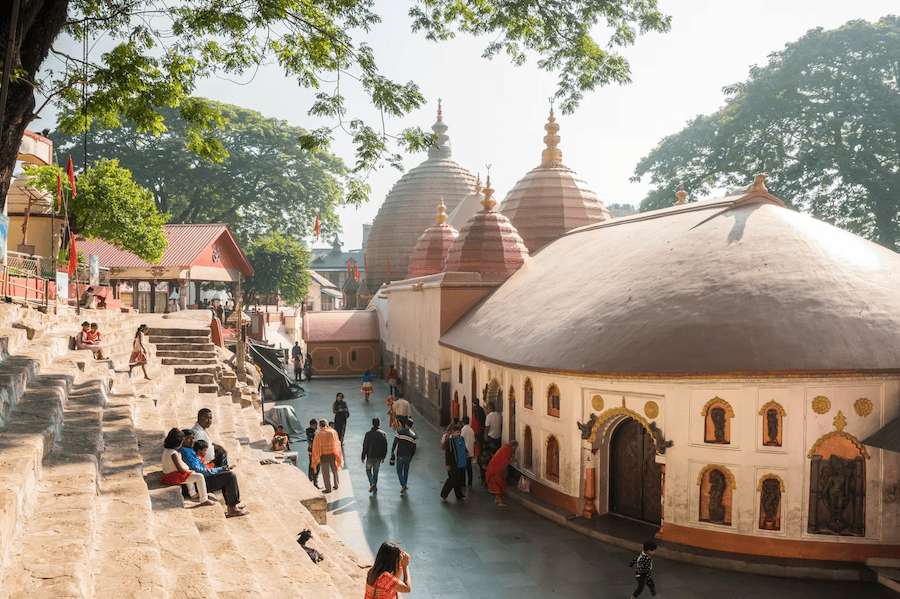
The temple complex. * Photo: ABN
Be warned, this temple, whilst architecturally striking is not for the faint-hearted. The temple performs animal sacrifices — mainly of baby goats who are spotted everywhere; some visitors have had gory sightings in the temple.
We later cruised towards Mayong town.
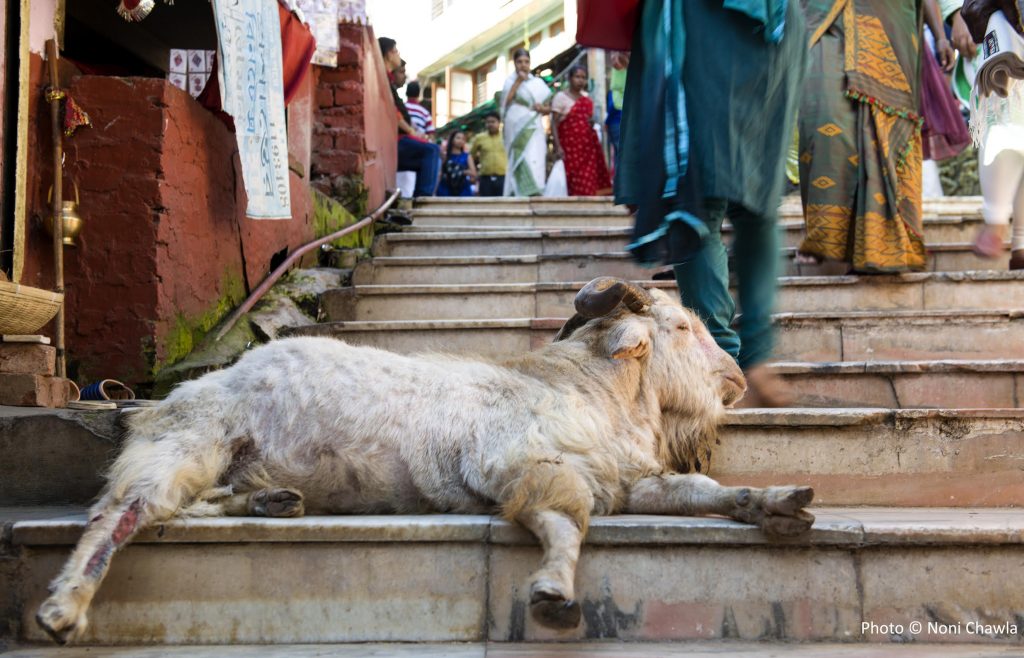
One of the many goats seen around the temple complex. * Photo: Noni Chawla
Day 3 Aboard Our Sukapha Brahmaputra River Cruise
A meandering walk in a riverside village with lush green field was on our morning agenda. As we disembarked, village children followed us with curious eyes and big smiles. We stopped at a school where children welcomed us enthusiastically and sang the national anthem.
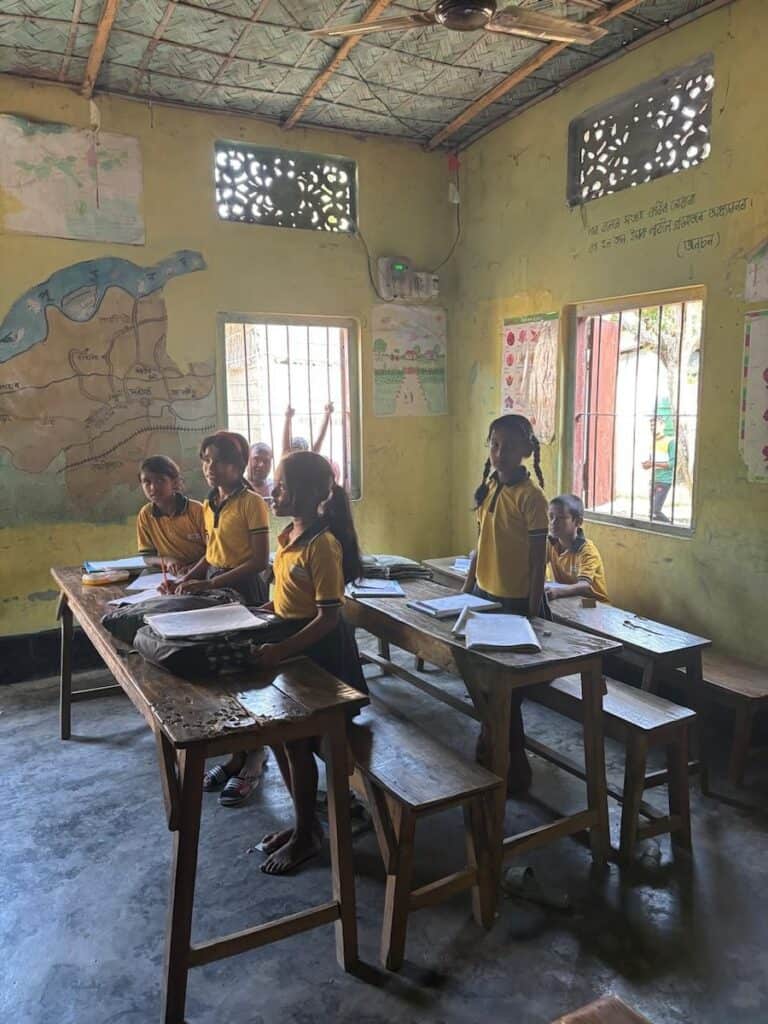
A visit to a local school. * Photo: Anita Nirody
Onboard that afternoon we were treated to a cooking demonstration of a local chicken curry.
During our evening briefing we saw a wonderful documentary on the Kaziranga National Park narrated by Sir David Attenborough. We were excited to be visiting the park the next day.
A major highlight of this day was when we dropped anchor on some sand banks during sunset, went for a long walk and enjoyed a delicious bonfire barbecue dinner. Truly magical!
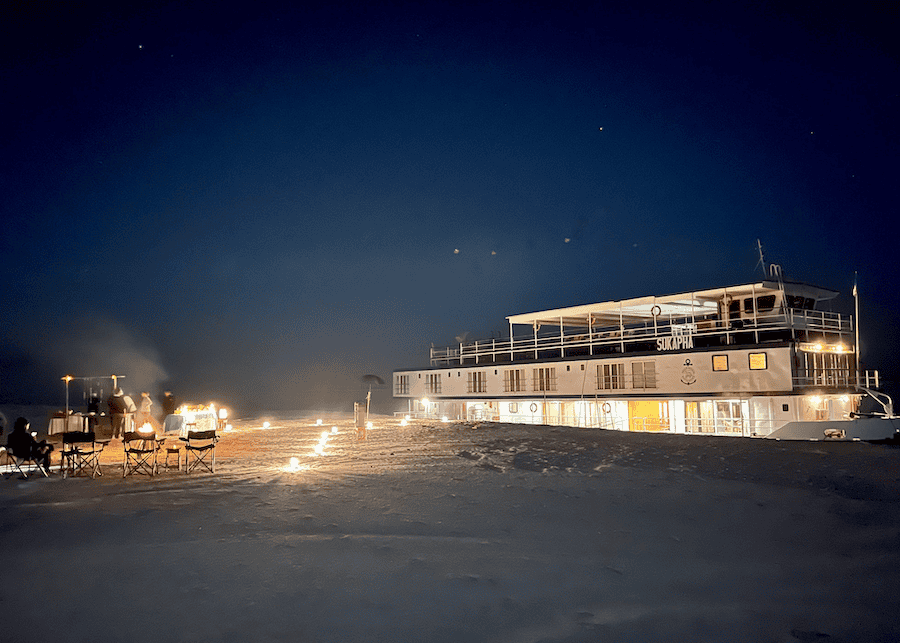
Magical evening on the sands along the Brahmaputra. * Photo: ABN
Day 4 Aboard Our Sukapha Brahmaputra River Cruise
We cruised to Silghat and after lunch, disembarked and drove to Kaziranga National Park, a protected area and UNESCO World Heritage Site. Covering an area of about 160 square miles, it is home to the largest population of the one horned Rhino as well as wild water buffalo, elephants, the Bengal Tiger and a variety of birds.
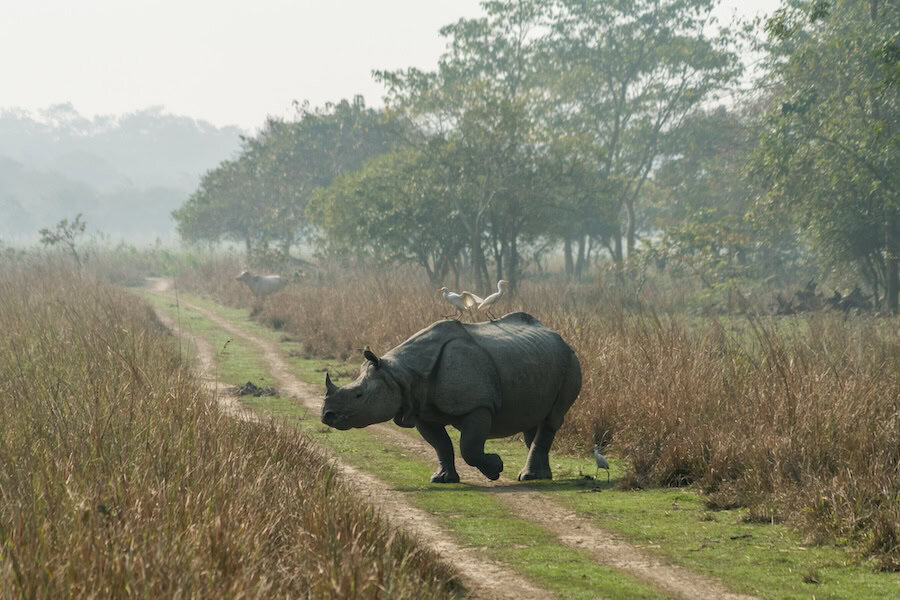
Kaziranga's famous one-horned Rhino. * Photo: ABN
On our jeep safari, our naturalist Yasser helped us spot many of these animals and birds. Alas we missed the Bengal tiger — maybe next time.
VIDEO: Below, Anita shows us one of their sightings of the greater one-horned rhino in Kaziranga.
VIDEO: And here, below, is the massive Asiatic elephant that walked in front of Anita's safari jeep.
https://youtube.com/shorts/NybxTSFVa8I?feature=share
Elephant Safaris: Yes or No?
Elephant safaris are offered during the winter months (Nov-April), when visitors have the opportunity to search for wildlife with a guide, while sitting on the backs of elephants (upon a howdah or seat). This is a controversial practice for some folks, who view it as cruel to the elephants. Others believe it's an acceptable and desirable way to tour if elephants are treated well and are allowed, for instance, to have ample rest time and aren't separated from their young. Generally, elephant safaris are offered in the early morning, when safari vehicles aren’t allowed to operate, creating a more peaceful environment for the safari elephants.
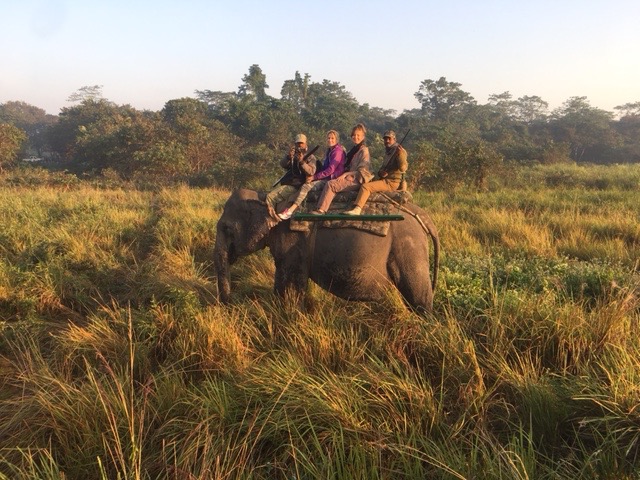
An elephant safari in Kaziranga National Park. * Photo: Heidi Sarna
On our last evening, following a tour around the engine room, we were treated to a melodious and exhilarating Bihu harvest dance on the boat. A perfect ending to our cruise.
Sad to say our goodbyes, we left with delightful memories of a tranquil small boat experience and of the mighty Brahmaputra River.
Onward to our next adventure!
READ MORE: Here’s another review of the Sukapha by writer and wildlife-lover Hema Maira.
READ MORE: Heidi has also enjoyed a Brahmaputra River cruise, for 7 nights; here’s her review.
READ MORE: Here are Heidi's 10 reasons to consider a Brahmaputra River cruise.
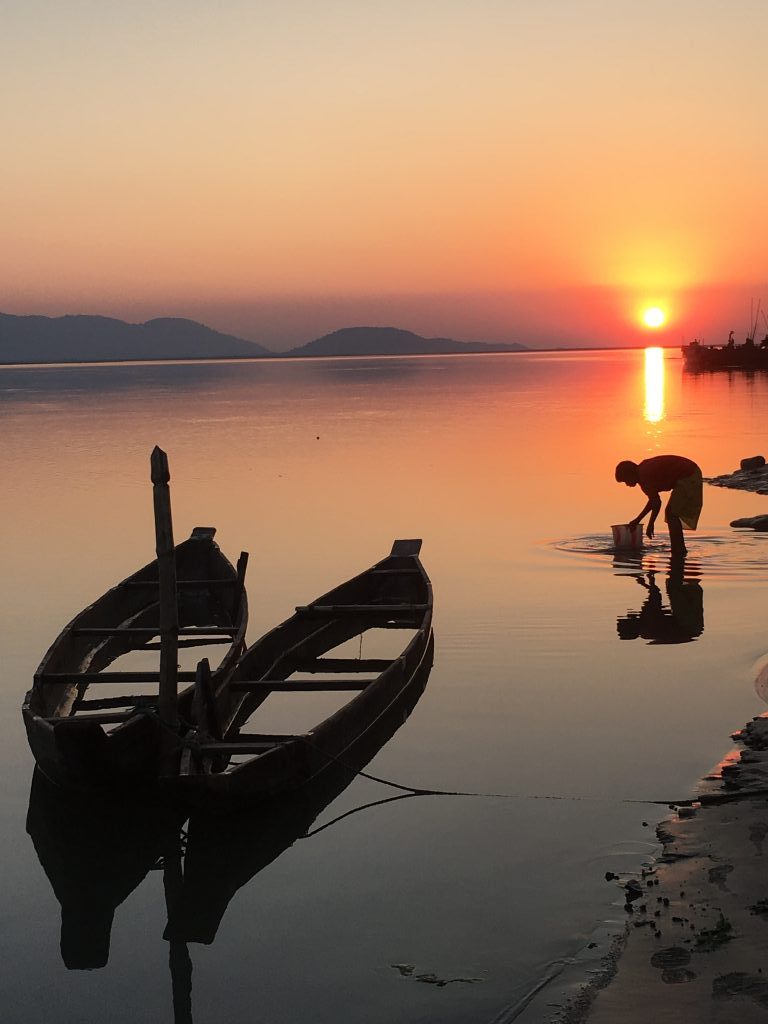
A solitary figure washing in the Brahmaputra seems unaware of the stunning sunset. * Photo: Heidi Sarna
Final Reflections on Our Sukapha Brahmaputra River Cruise in India
With the exception of the safari in Kaziranga National Park, the other excursions were a good opportunity to stretch our legs, but not much more. We loved the languid pace and elegant ambience of the Sukapha.
Overall, our Sukapha Brahmaputra River cruise was a wonderful experience.
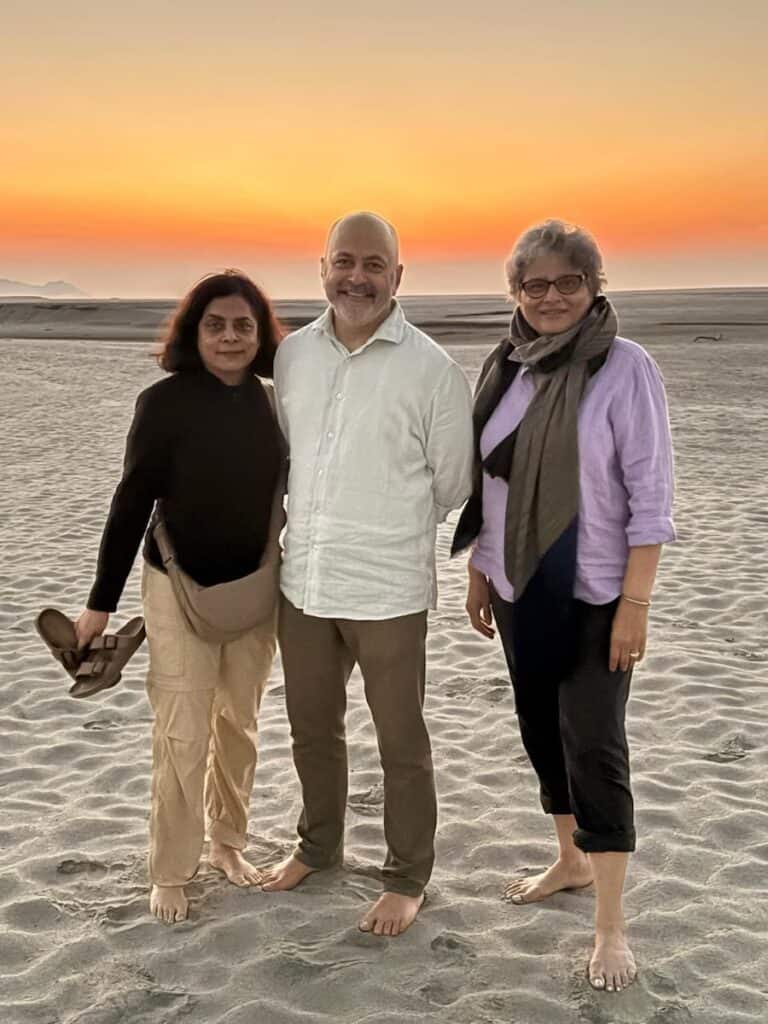
Sunset on the sandbanks; the author, her husband and a shipmate. * Photo: Anita Nirody
Anita Nirody is a former career diplomat with the UN who headed its missions. in Indonesia, Egypt and Uzbekistan.
Don’t miss a post about small-ship cruising, subscribe to QuirkyCruise.com for monthly updates & special offers!
© This article is protected by copyright, no part may be reproduced by any process without written permission from the author. All Rights Reserved. QuirkyCruise.com.










 HEIDI SARNA