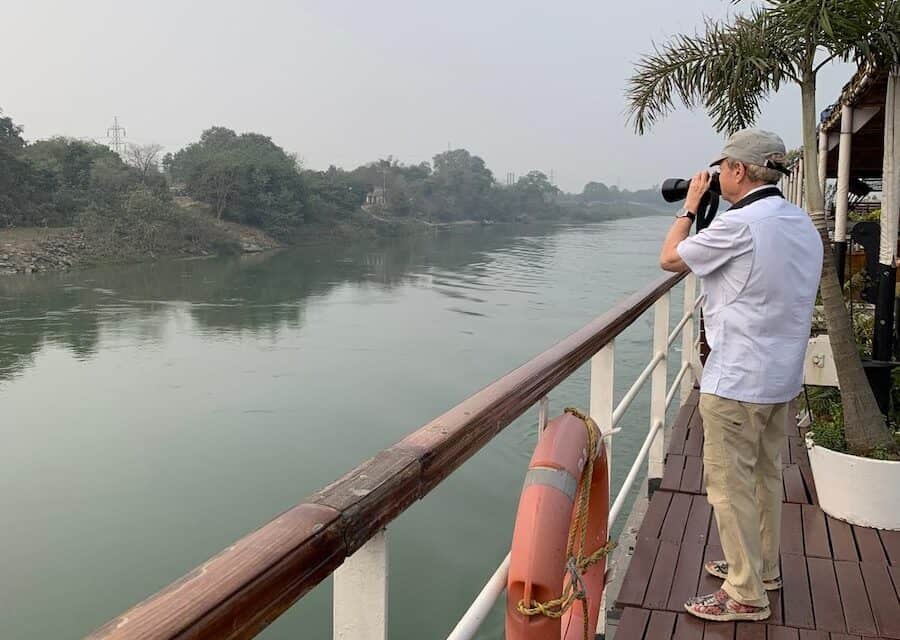
Hooghly River Cruise Review
By Heidi Sarna
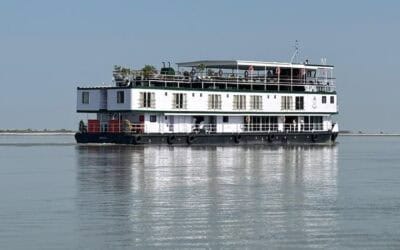
I recently spent a fascinating week on a Hooghly River cruise aboard Raj Mahal, a 40-passenger riverboat from Assam Bengal Navigation (ABN). Our journey covered about 250 miles of this twisting distributary of the Ganges, also called the Lower Ganges, running between the Farakka Barrage and Kolkata (Calcutta when it was British India’s capital from 1772–1911). Each morning and afternoon, we set out on guided tours led by two excellent Indian guides who sailed along with us, offering insight into India’s endlessly layered culture and history.
India is one of the world’s most spectacular destinations, yet it also can be challenging and overwhelming to navigate independently. A luxury India river cruise smooths out some of the rough edges while focusing on the highlights: ornate Hindu temples, Mughal-era mosques and citadels, colorful markets, lively villages and the varied scenery along the riverbanks while cruising.
At the end of dusty days ashore, there was nothing like returning to Raj Mahal to smiling crew members handing us fragrant hand towels, refreshing drinks, and even cleaning our shoes before the next outing. The onboard vibe was calm and welcoming. Even though sailing full, the roomy, welcoming Raj Mahal never felt crowded.
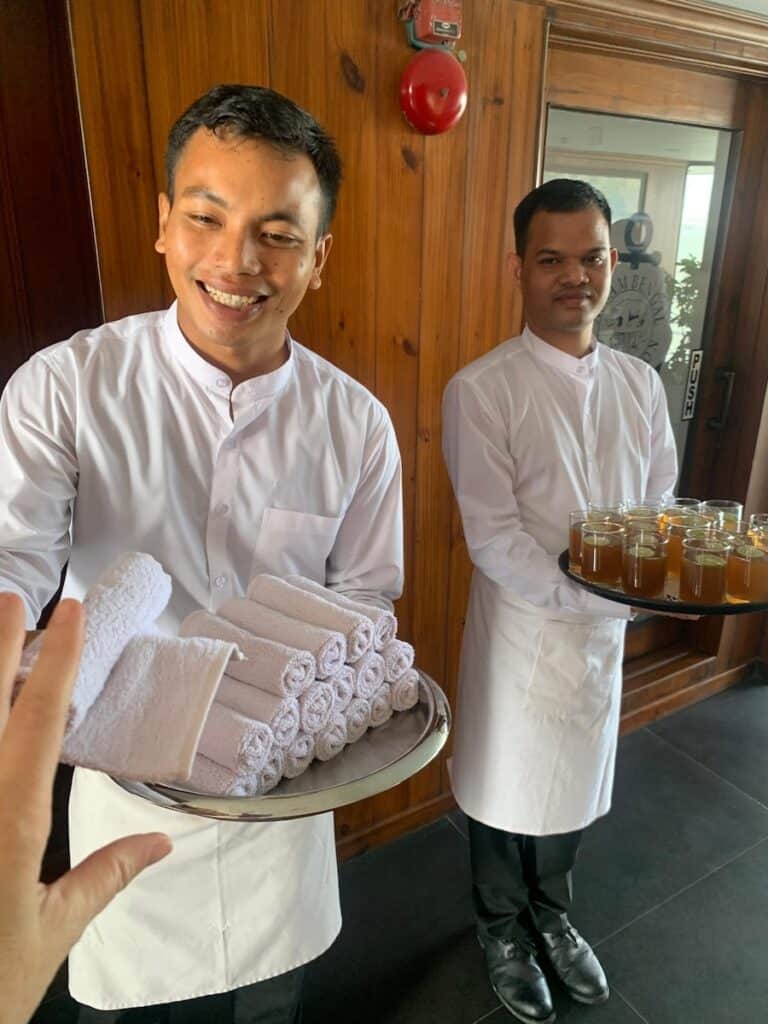
Such a pleasure to be given a refreshing face towel and a drink when re-boarding. * Photo: Heidi Sarna
Fascinating Excursions Ashore
Our convoy of motorized tuk-tuks (aka auto rickshaws), the mode of transport used for most of our daily excursions during our India river cruise, often wound through narrow, bustling streets before arriving at grand surprises.
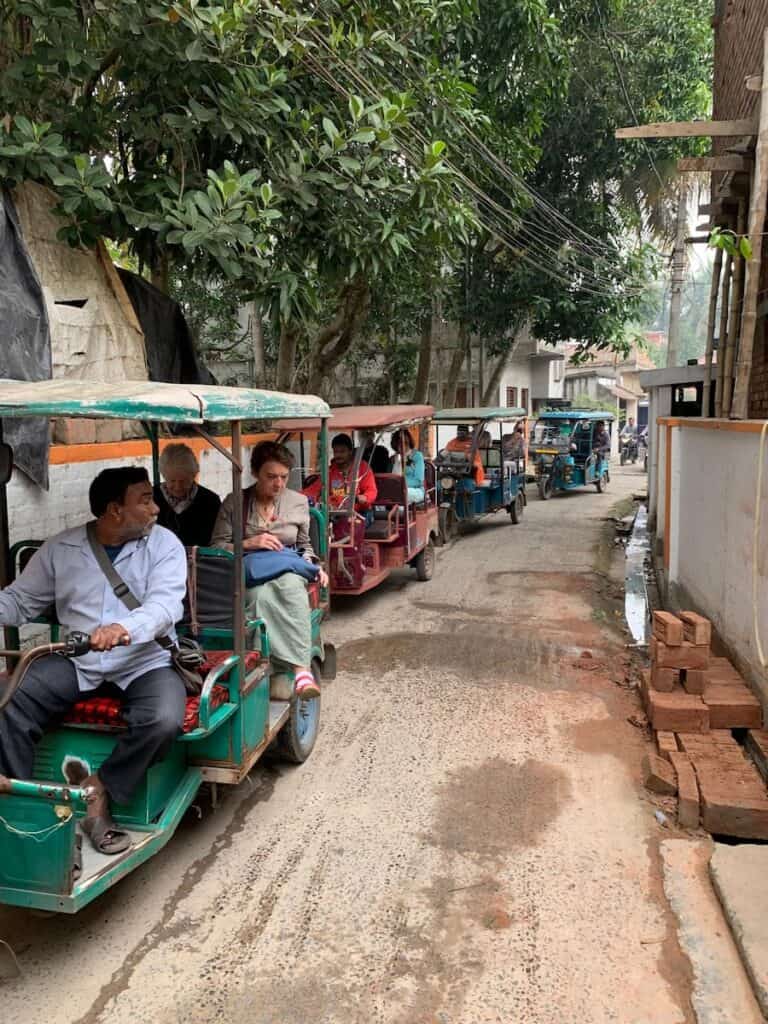
Daily guided excursions are often via local tuk-tuks. * Photo: Heidi Sarna
One afternoon we pulled up at Kathgola Palace in Murshidabad, a marigold-orange, Palladian-inspired 19th-century mansion built by wealthy merchants and beautifully reflected in a pond (or a tank, as they’re called in India). As our tuk-tuk rattled into the estate, I had been chatting with a new friend from the UK, Pam, and we were both rendered speechless as the four-story façade loomed into view.
We hopped out of our tuk-tuk, in awe, noticing the crew, who had arrived ahead of us, laid out cookies and small cups of fragrant Indian chai (tea) beneath a shady tree to enjoy before our guides led us around the opulent estate.
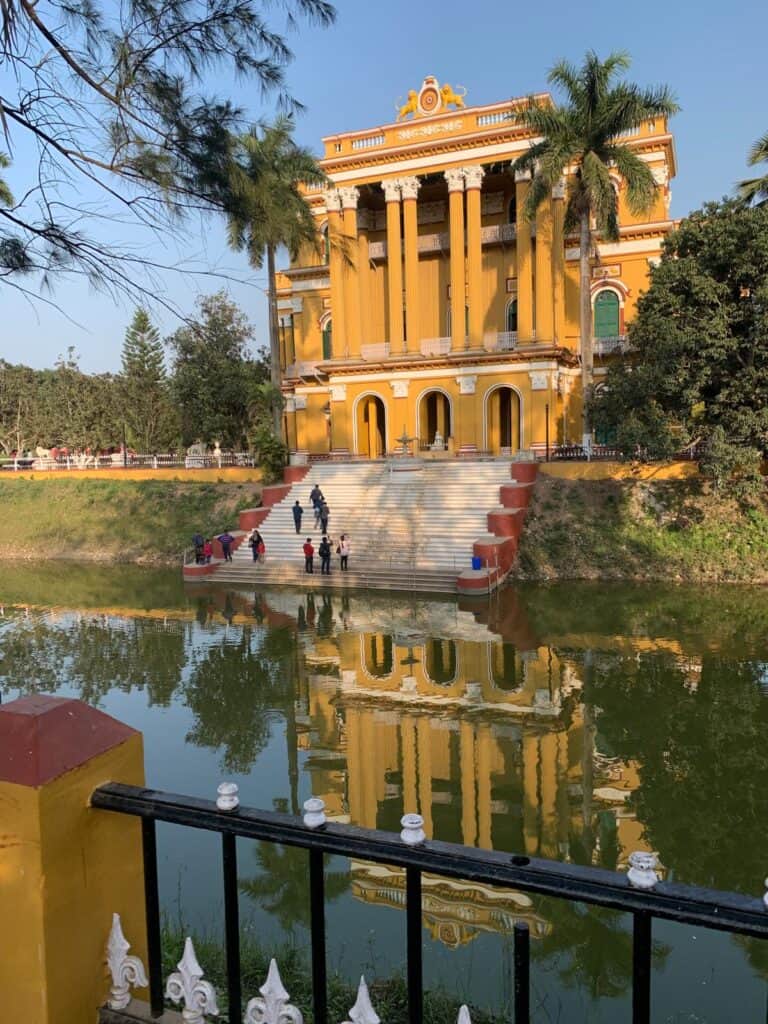
The lovely Kathgola Palace Murshidabad. * Photo: Heidi Sarna
Other excursions wowed us in equal measure. At Kalna we visited a circular Shiva temple, an architectural gem made up of 108 shrines to Lord Shiva set in two concentric rings, a breathtaking sight. In the medieval citadel of Gaur, once one of India’s greatest cities, we wandered among Indo-Islamic ruins dating back to the 12th century.
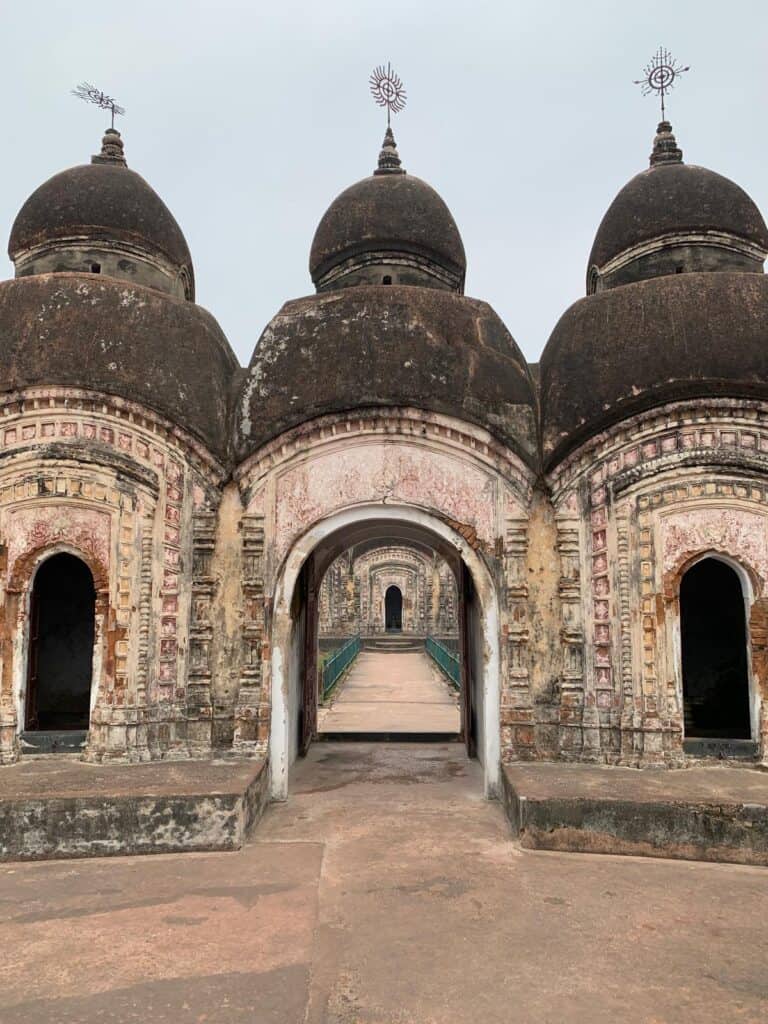
The Shiva Temple at Kalna. * Photo: Heidi Sarna
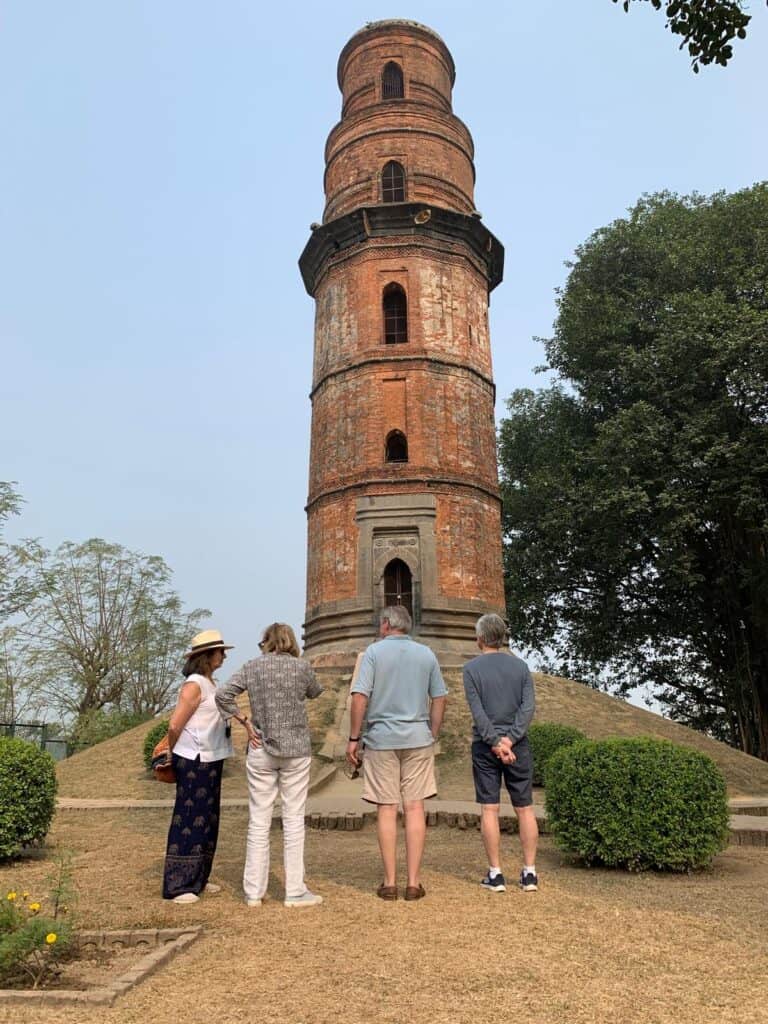
The 15th-century Firoz Minar, a five-story victory tower in Gaur. * Photo: Heidi Sarna
Hidden at the edge of a quiet village, Gaur felt otherworldly — crumbling arches draped in vines, fields spreading out beyond the walls. It was easy to imagine the power and wealth that once radiated from here when Bengal was one of the world’s most prosperous regions.
Each day brought a different glimpse of Indian life. We passed women in brilliantly colored saris bent at 90-degree-angles harvesting rice, giggling at our cameras; children waving from the banks; and bullock carts piled high with vegetables.
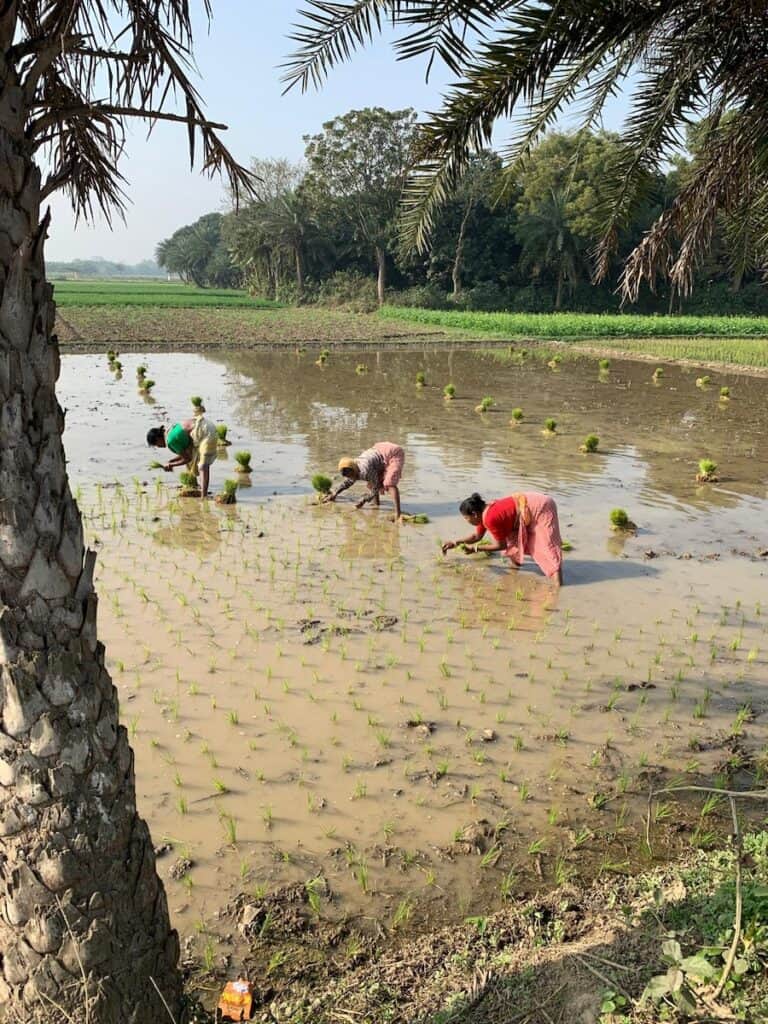
Harvesting rice. * Photo: Heidi Sarna
In villages, we visited traditional craftsmen, from brass to glass makers and handloom weavers, working in what seemed like medieval conditions, in cramped dimly-lit spaces — producing beautiful plates, lamps and shawls the old-fashioned way.
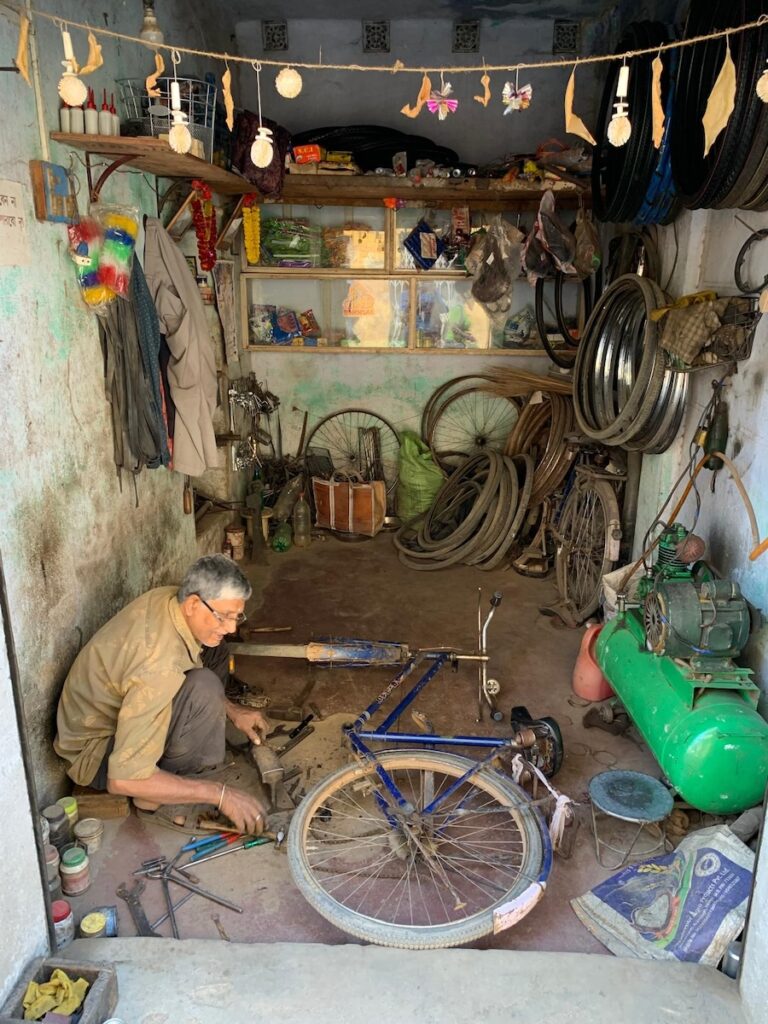
A bicycle repair shop in a village we walked through. * Photo: Heidi Sarna
One stop brought us to a large Hare Krishna complex — an eye-opening look into yet another facet of India’s diversity. Another day we toured 16th- and 17th-century mosques, each showcasing unique Indo-Islamic architecture.
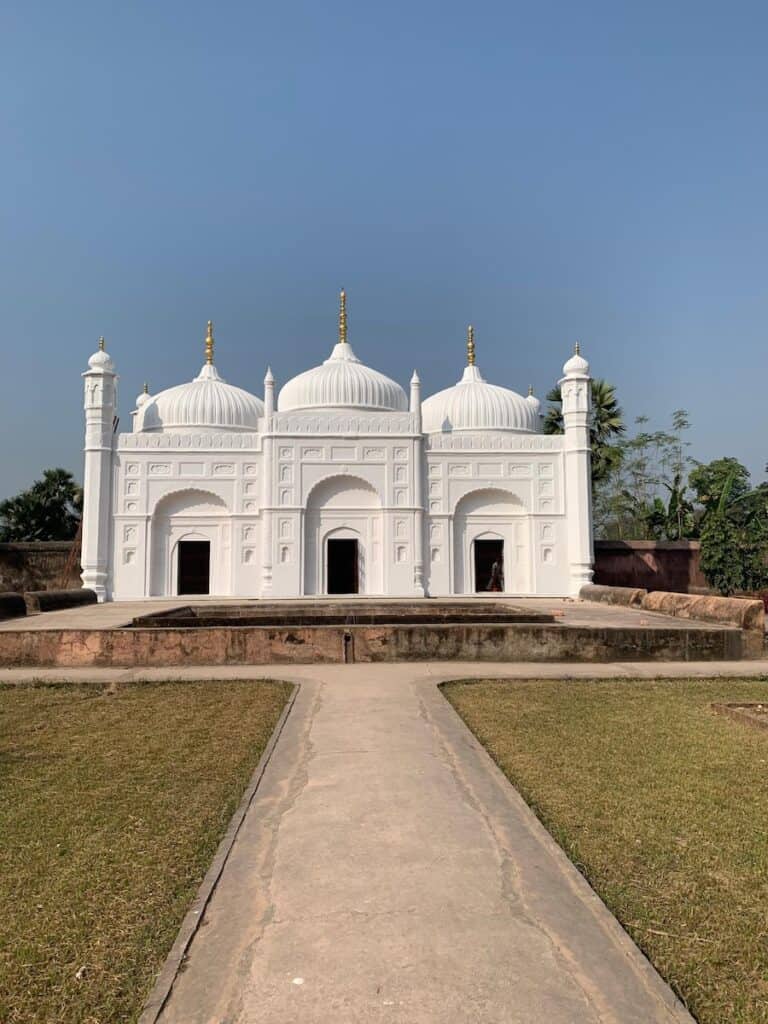
One of many centuries-old mosques we admired during the week. * Photo: Heidi Sarna
And in Plassey, at a simple monument marking the site of the 1757 battle where the British East India Company defeated the Nawab of Bengal, British passengers in particular were deeply engaged, debating the legacy of empire (some thought it was to be applauded, while Indians of course may feel differently).
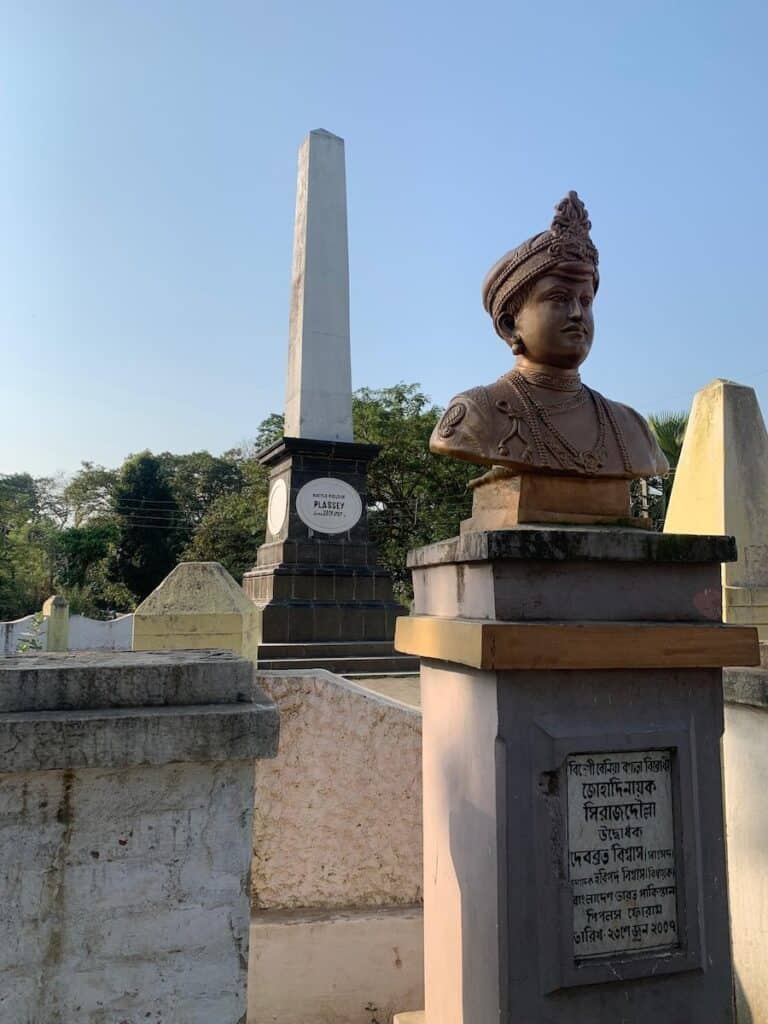
Monument at Battle of Plassey site. * Photo: Heidi Sarna
Each excursion was an eye-opening burst of color, audacity or opulence — sometimes breathtaking, sometimes heart wrenching, but always unforgettable.
A Typical Day on the Hooghly
Dawn on Raj Mahal began with the sun rising over misty fields and the gentle sounds of the river. Some mornings on our Hooghly River cruise we opened our cabin's sliding glass doors to feel closer to the river and ambient birdsong as we sipped our tea (made from the room's tea station) and admired the smoldering morning sun (tip: never leave the sliding doors open when the boat is not in motion, to keep out mosquitos and other insects).
VIDEO: Below, the breathtaking morning view from the cabin bed.
After breakfast, we climbed into skiffs for the short ride to shore, greeted by the day’s convoy of tuk-tuks. Raj Mahal usually anchored mid-river, for a more pleasant and quieter mooring than riverside; a wooden tender boat with a rattling outboard motored followed Raj Mahal for the week, and was used to transport passengers to and from shore.
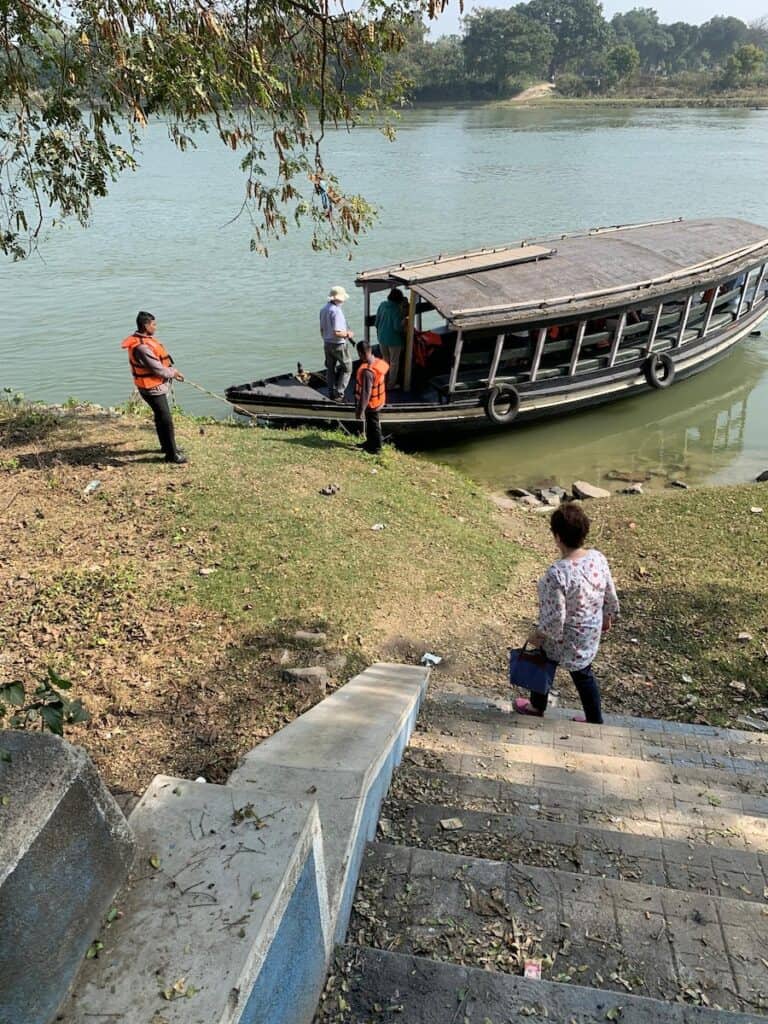
Our trusty tender boat. * Photo: Heidi Sarna
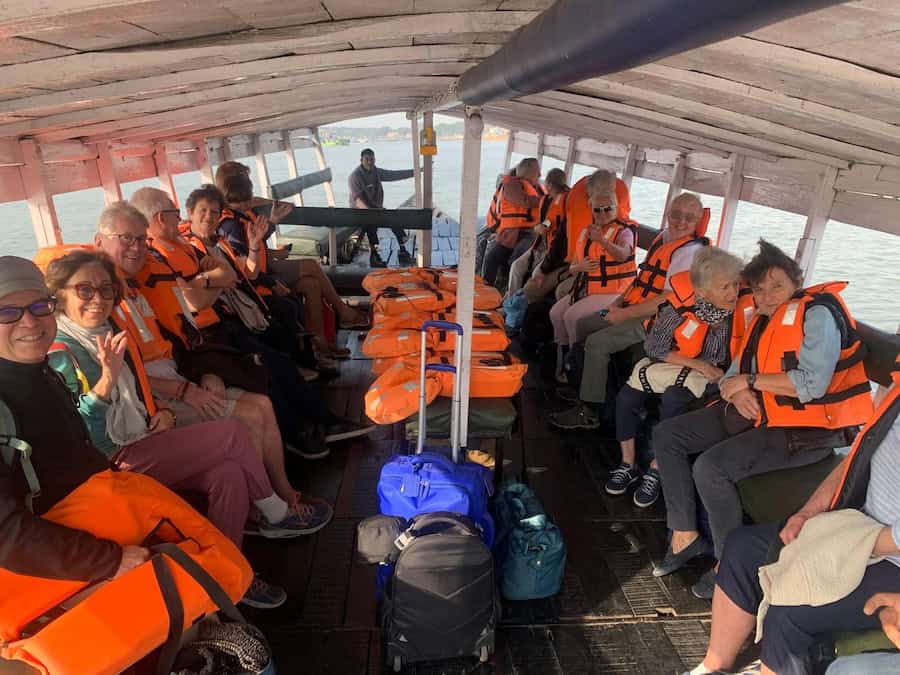
Passengers seated in Raj Mahal's tender boat. * Photo: Heidi Sarna
VIDEO: Below, a look at the handsome Raj Mahal from the tender boat.
One morning we set off through the narrow lanes of a small town, dodging bicycle carts and goats, until we reached the breathtaking Shiva temple in Kalna, its many shrines to Lord Shiva arranged in perfect concentric circles.
VIDEO: Below, the beautiful Shiva temple in Kalna.
By midday, we were back on board for a leisurely buffet lunch — curries, vegetables, and fresh naan — before stretching out on the sun deck to watch the scenery float by. In the afternoon, another excursion awaited. We walked through a village where artisans hammered brass, wove shawls on handlooms, and worked glass the old-fashioned way. I bought a brass plate engraved with flowers, while others picked up colorful scarves.
After a dusty walk back, it was a delight to be welcomed at the gangway with fragrant hand towels, fresh juice, and a place to leave our shoes for cleaning. Evening brought a talk by our guides, followed by dinner in the dining room and a lively performance of traditional music and dance. By the time I returned to my cabin, the cookie jar had been replenished, and the river flowed silently outside my sliding-glass doors.
Life Aboard Raj Mahal
When not out exploring, the Raj Mahal riverboat was our comfortable “mother ship,” a welcome respite to refuel, relax, and step away from the fray of bustling India. The antithesis of the noise and dust on shore, the riverboat offered a cocoon-like calm as it glided past farmland, fishermen casting nets, and children waving from villages.
Cabins on the Raj Mahal Riverboat
The 2014-built vessel has 18 roomy doubles and four single-occupancy cabins with floor-to-ceiling glass doors, hardwood finishes, Indian hand-block fabrics, and thoughtful touches like a coffee/tea setup with real tea leaves and addictive butter biscuits replenished daily. Cabins were elegant yet understated; I greatly appreciated that the décor reflected traditional Indian materials and artisans. Bathrooms and storage were generous, and river views were a constant companion.
VIDEO: Below, a quick look at our double cabin.
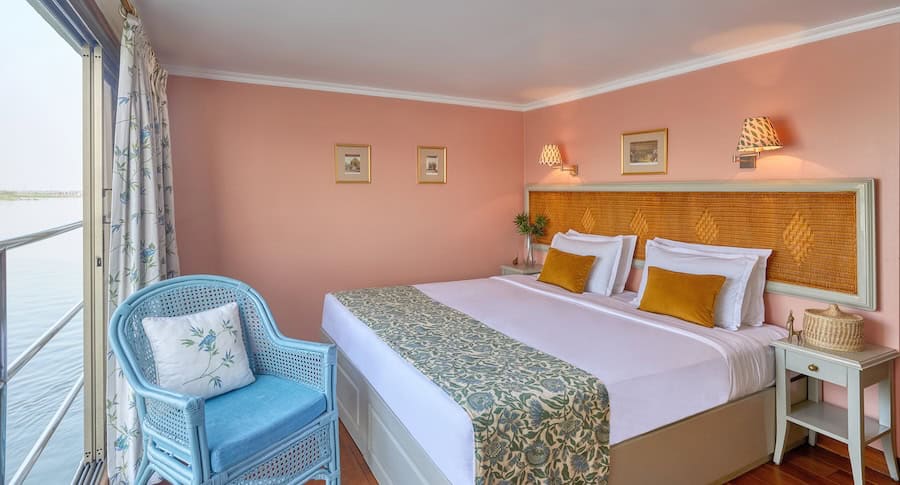
One of the 16 double rooms, all in a soft pastel with Indian hardwoods and block prints. * Photo: ABN
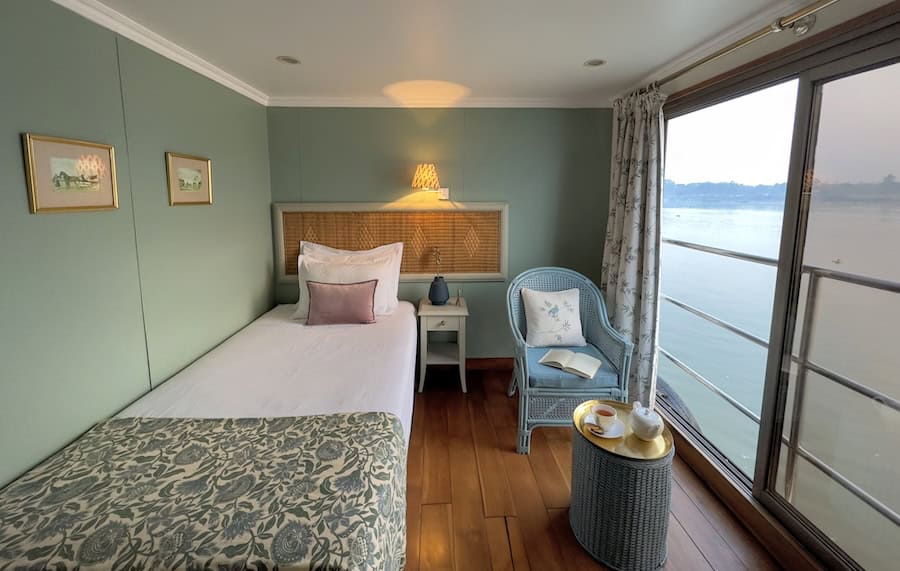
One of four single cabin s on Raj Mahal. * Photo: ABN
Dining on the Raj Mahal
Meals aboard the Raj Mahal were a highlight of the entire trip. Buffet-style breakfasts and lunches were paired with sit-down dinners featuring several choices each night.
While reliable Western staples were always available (such as eggs, bacon and toast at breakfast, to meat cutlets and pasta for lunch and dinner), the stars of the show were the Indian dishes — dals (lentils), smokey tandoori meats (lamb and chicken), breads (flakey, crispy and fried), and vegetables (both curried and fried) bursting with flavor. Oh and we loved the delicious dosas, thin crepes made from rice and lentil flour.
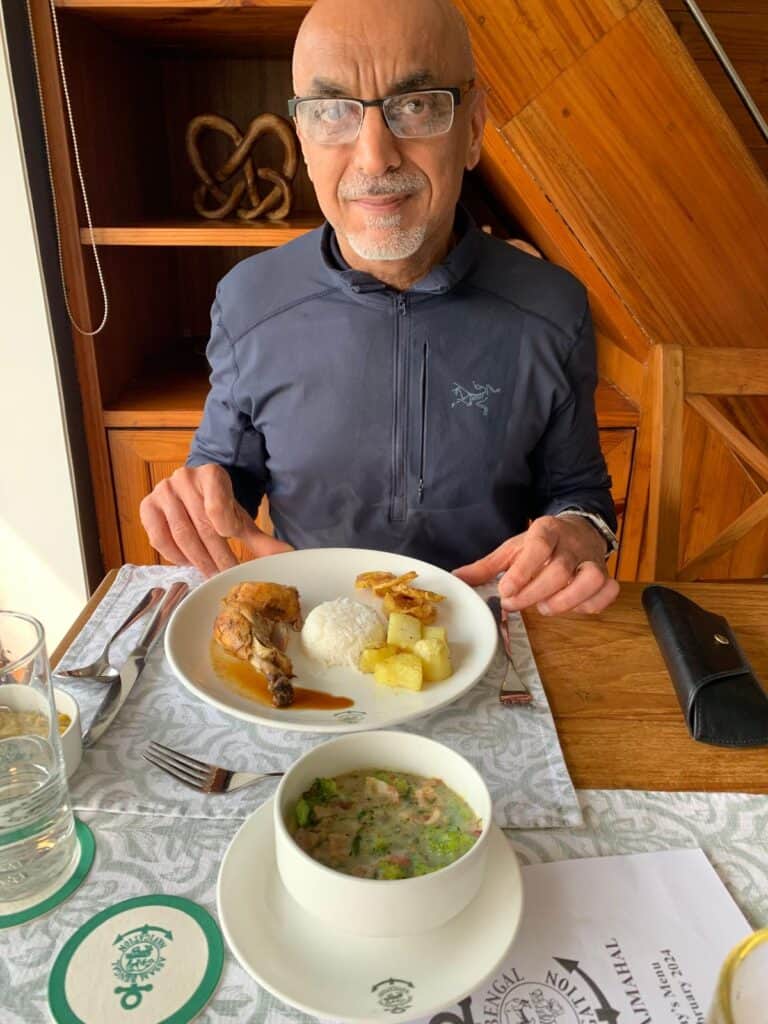
Mealtime was a highlight! * Photo: Heidi Sarna
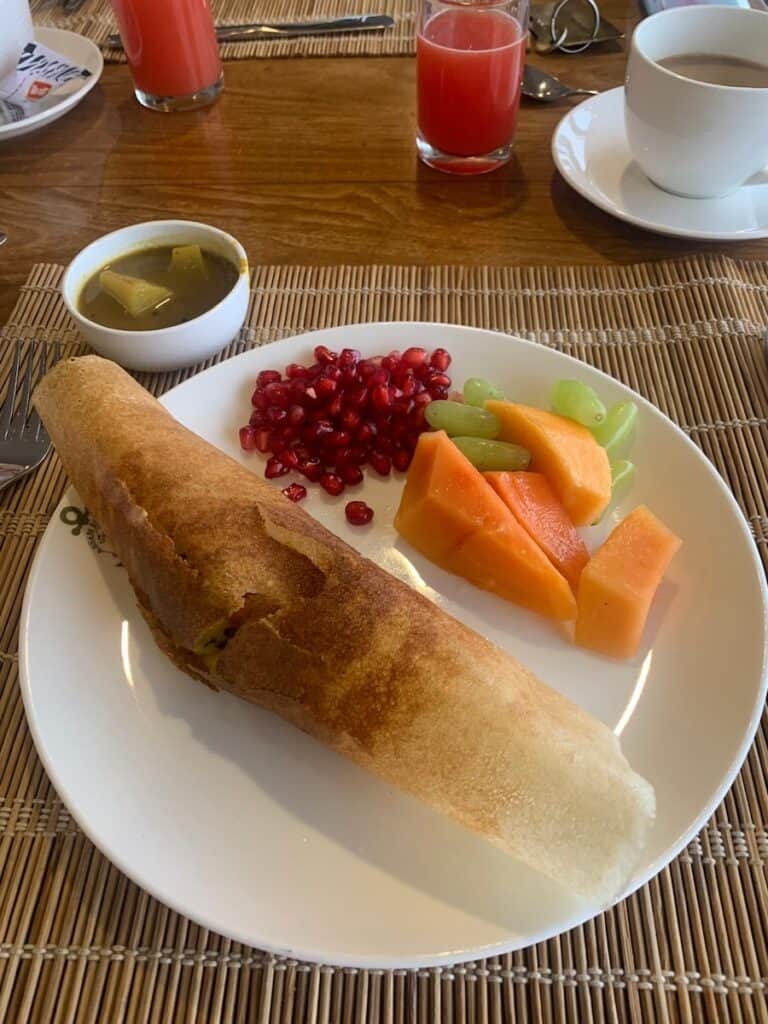
Delicious dosas served at breakfast aboard Raj Mahal. * Photo: Heidi Sarna
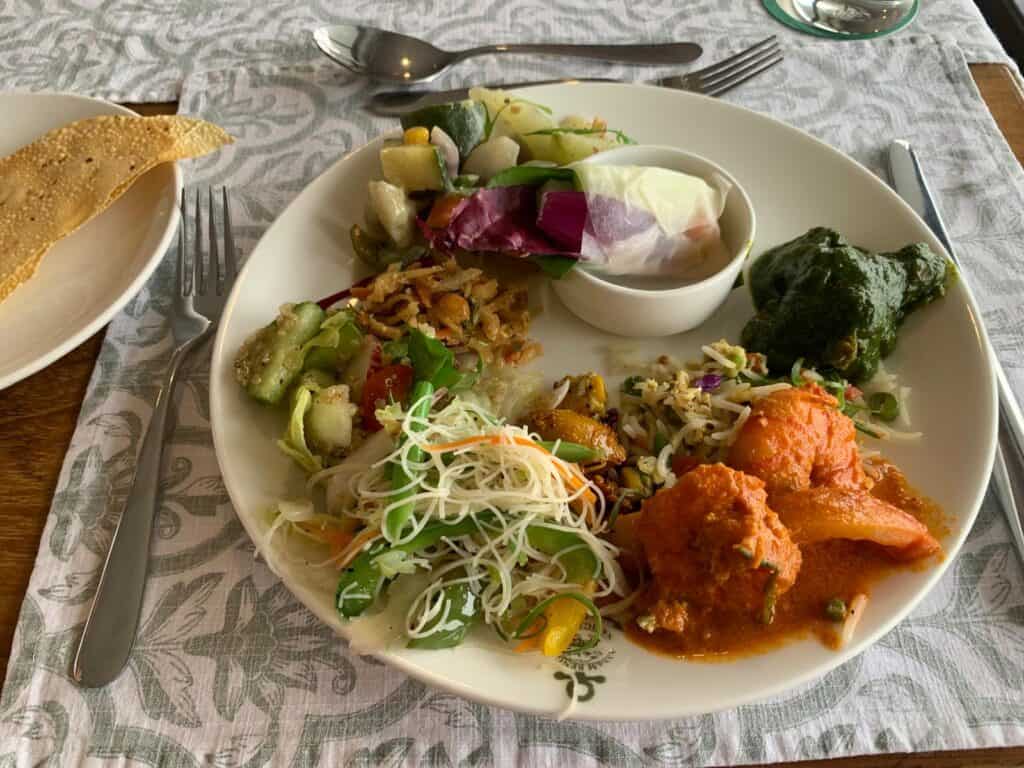
The lunch buffets were feasts for the senses (especially the taste buds!). * Photo: Heidi Sarna
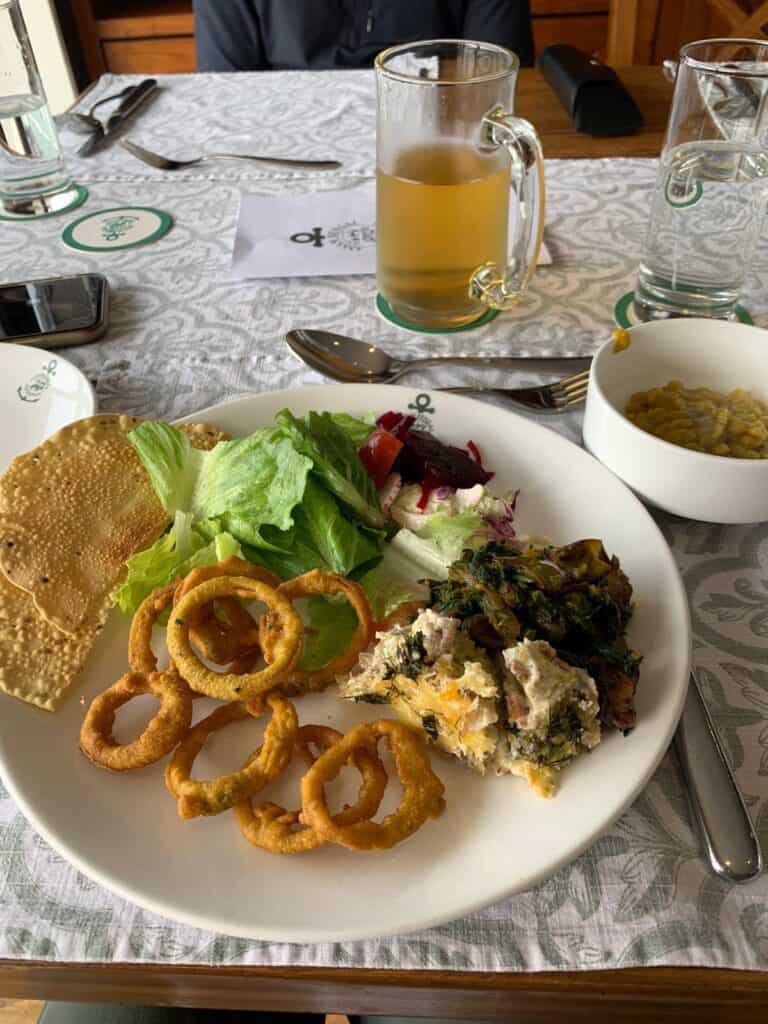
Excellent vegetable dishes on Raj Mahal! (And meats too, don't worry!) * Photo: Heidi Sarna
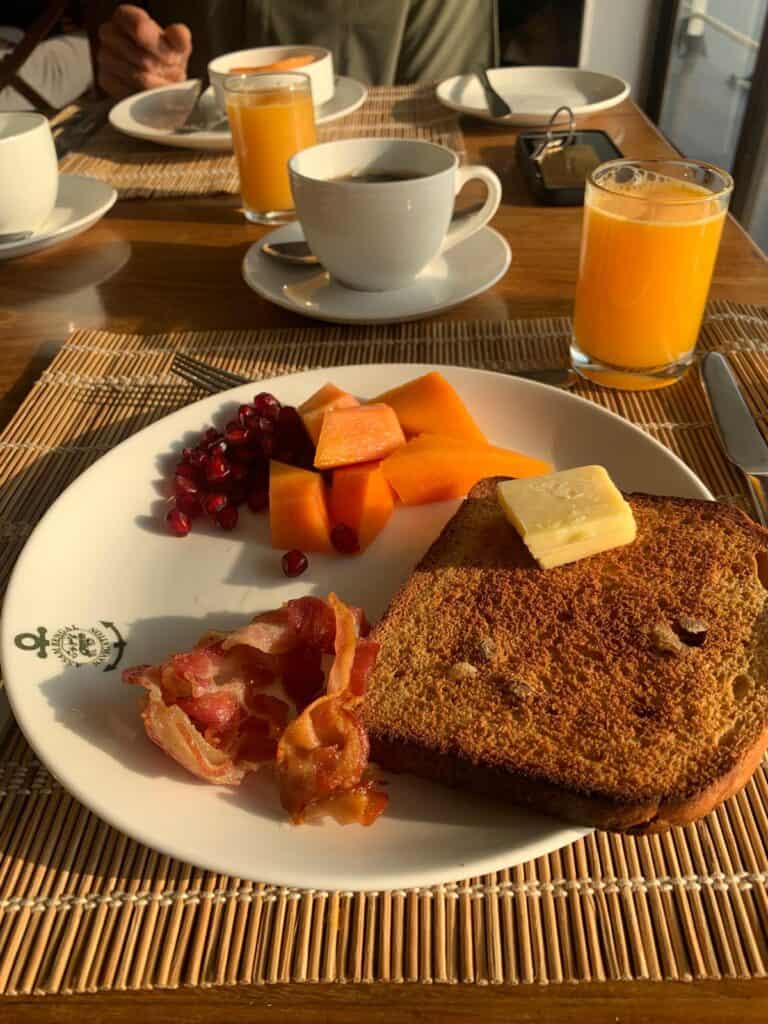
Of course you could always choose Continental staples like toast and bacon! With local fruits like mango. * Photo: Heidi Sarna
One evening, dinner was served up on deck; a large clay tandoor oven brought on deck to prepare fresh breads and tandoori meats. It was a festive affair with lots of delicious fare to sample.
The food was so good I gained several pounds by the end of the week, helped along by those irresistible biscuits at the bar and in the cabins. Dining service was excellent as well, with staff making sure drinks were flowing (water, beer or whatever your passion was; note, alcoholic drinks are not included in the fares) and plates were cleared, so one could make multiple visits to the enticing goodies on the buffet line.
Seating is open at tables mostly for four and six, so it's easy to meet your fellow cruise mates.
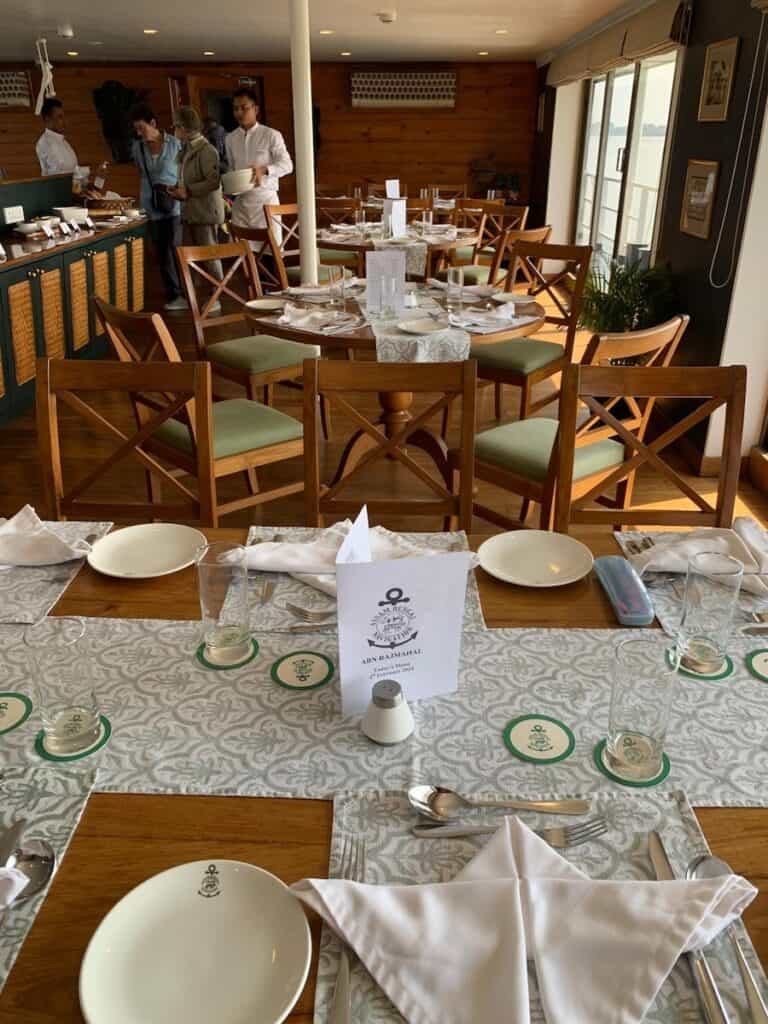
Raj Mahal's pleasant dining room. * Photo: Heidi Sarna
VIDEO: Here's a quick video look at Raj Mahal's windowed dining room, below.
Raj Mahal's Public Areas
The sweeping sun deck was perfect for watching river life unfold, reclining on the comfy padded traditional-style wooden deck chairs facing out toward the shoreline. The tableau ranged from farmland and humble villages to industry like shipbuilding and jute mills, to sights like the white marble Gandhi Ghat memorial in Barrackpore, which is visible rising up through a thicket of trees.
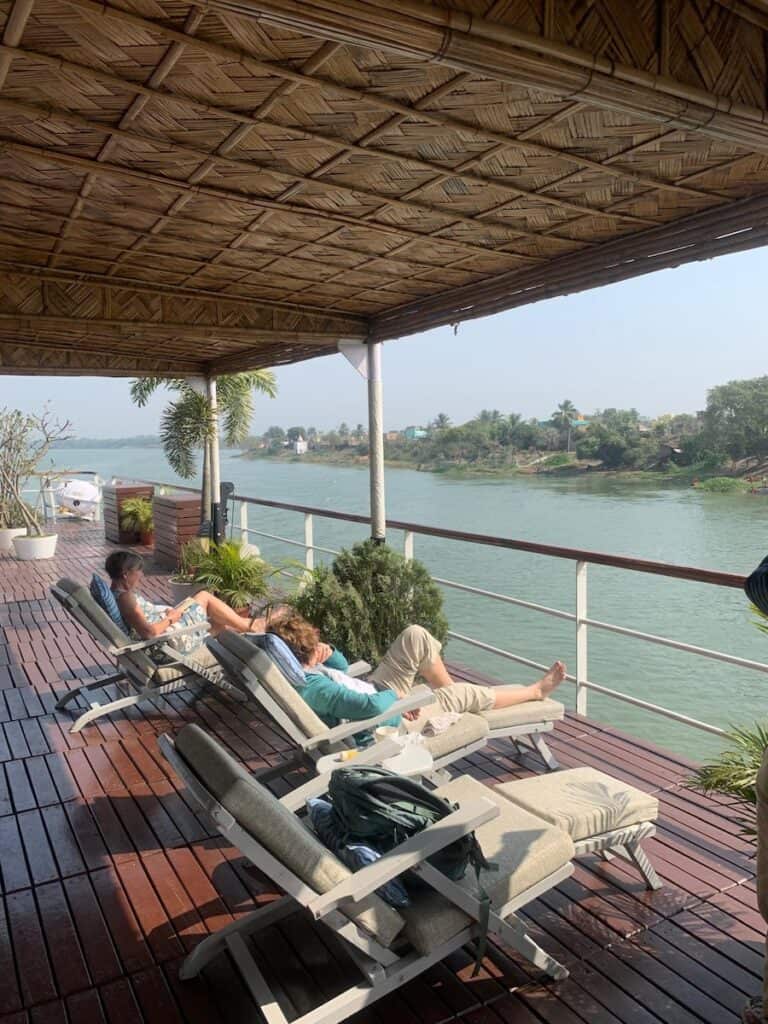
Taking in the sites along the Hooghly, from Raj Mahal's sun deck. * Photo: Heidi Sarna
While some of us were drawn to watch the fascinating video of Indian life on shore, others passengers spent time on deck to snooze, read, mingle and a few, to smoke.
Below decks, the dining room doubled as a social hub, where guests mingled and sat with one another at the open-seating tables for four to eight. Meanwhile, the lounge hosted happy hour drinks (I always looked forward to a gin and tonic at the end of a long and wonderful day of touring) and a chance to chat with fellow ships mates. Drinks at the bar were not included in the fare, but service was warm and attentive.
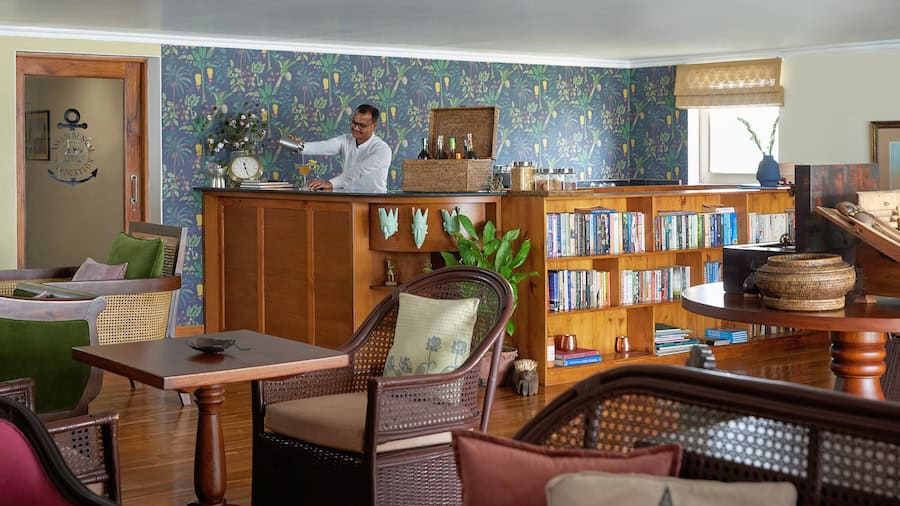
Here, the Raj Mahal's all-purpose lounge. * Photo: ABN
The lounge was also the venue for pre- and post-dinner talks by our engaging guides (one of whom shared details about his Mt Everest climb) and engaging films and documentaries about India, including a BBC program about the Ganges River that injected vivid context and flavor to our river cruise. At different times of the day, depending on our excursion schedule, there were also sari and turban-tying demonstrations, which guests loved, and a cooking class where we helped make chicken curry before sampling the results. And, while there's no fitness equipment, the Raj Mahal does have a small spa for massages.
Several evenings there were traditional dance and musical performances by locals who came on board to dazzle us with their skill and enthusiasm.
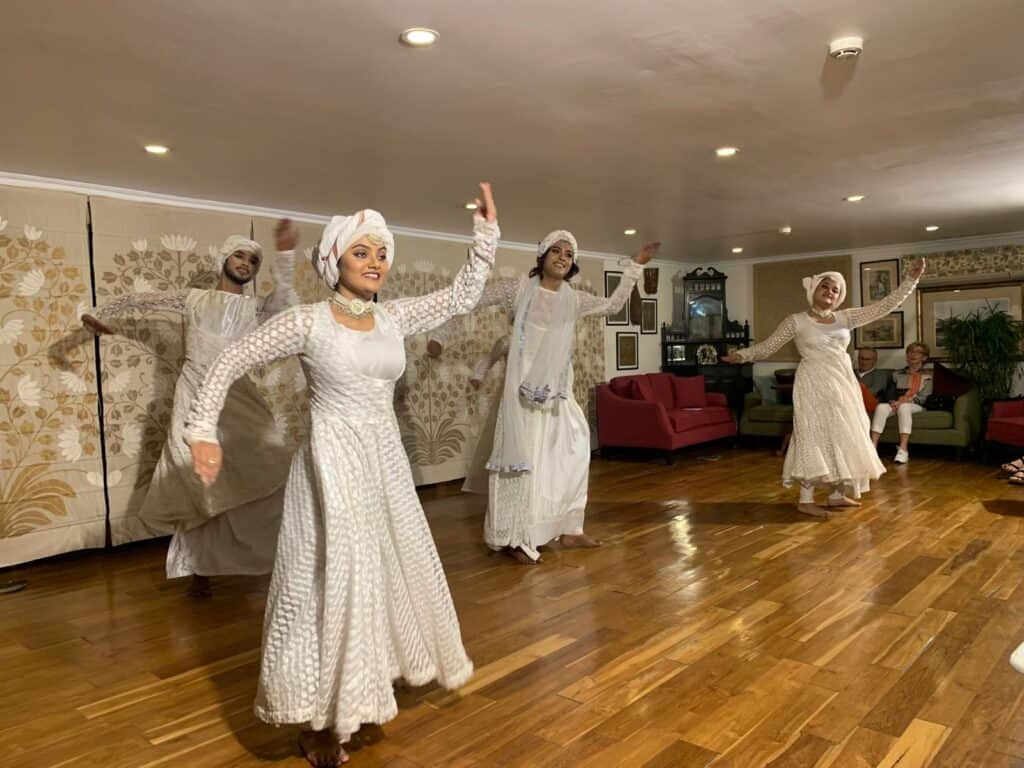
The onboard dance performances were quite good. * Photo: Heidi Sarna
VIDEO: Below, is a look at Raj Mahal's lounge.
Why Cruise India by River?
I’ve traveled to India dozens of times by car, train, and plane, from the Brahmaputra River in Assam to Kerala’s backwaters. No matter the route, India is endlessly fascinating but also exhausting.
A India river cruise offers the perfect combination of touring, learning, and relaxing — pampered, safe, and convenient, yet still deeply immersive. From the relative calm of a luxury boat, you can step into the full intensity of India’s streets and villages, then retreat back to comfort and quiet.
Most passengers on our ABN Hooghly River cruise were from the UK, which is typical, with a few others from Europe (including France) and North America. Most were spending several weeks traveling around India.
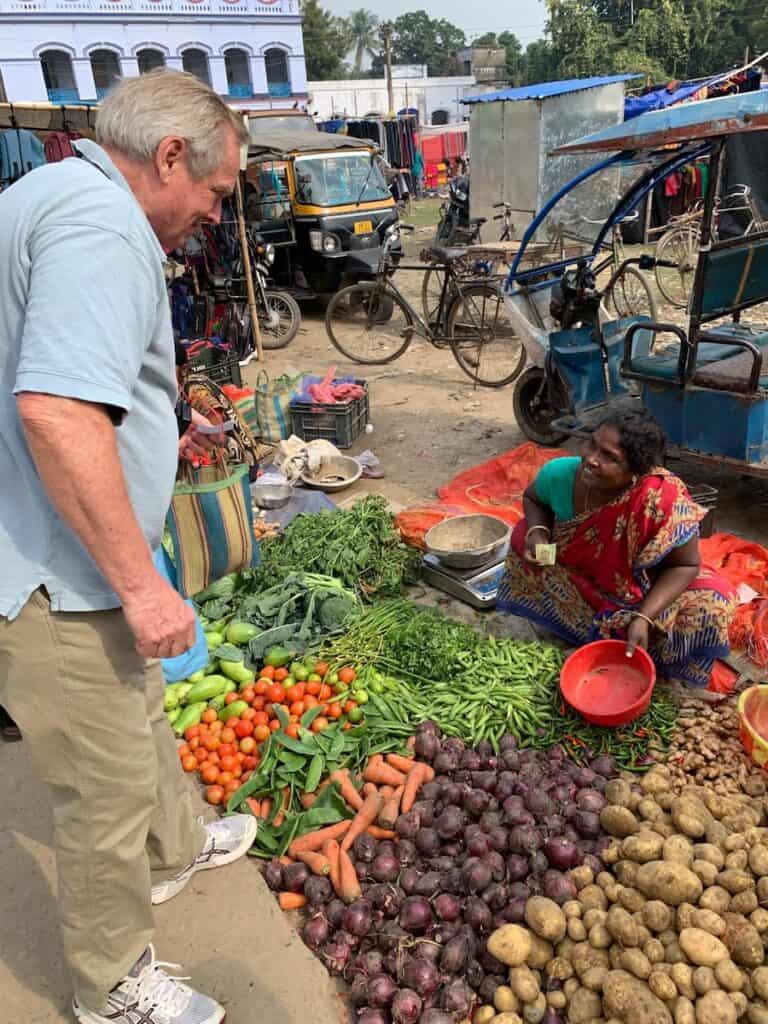
Many of the British passengers had a deep personal connection to India, often a family member had lived there during the British Raj years. * Photo: Heidi Sarna
A Few Days in Kolkata
We stayed a few days in fascinating Kolkata before our Hooghly River cruise, staying at the wonderfully quirky and historical Elgin Fair Lawn Hotel, which dates back to 1783.
We also did an excellent Kolkata city tour with Navpreet from Fun On Street, who I highly recommend. She took us all over the city, from the potter's colony Kumartuli, where Indian deities are made from clay and straw, to palaces, bazaars, grand colonial-era buildings, and sites like the Black Hole of Calcutta.
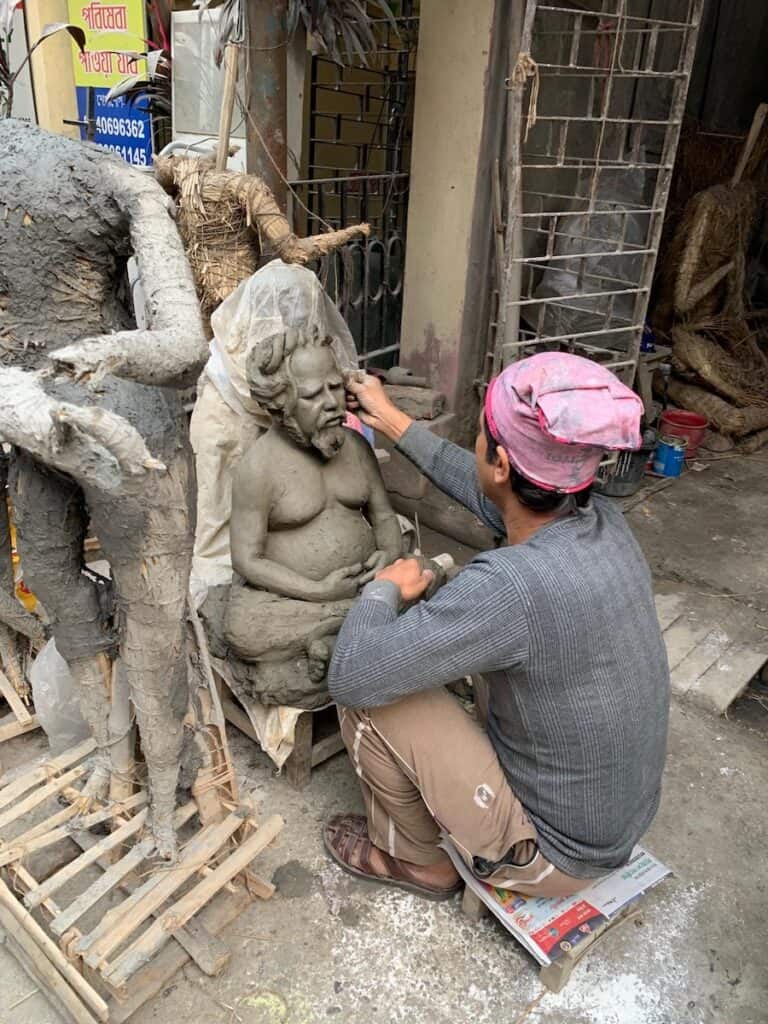
A potter at work in the Kumartuli colony. * Photo: Heidi Sarna
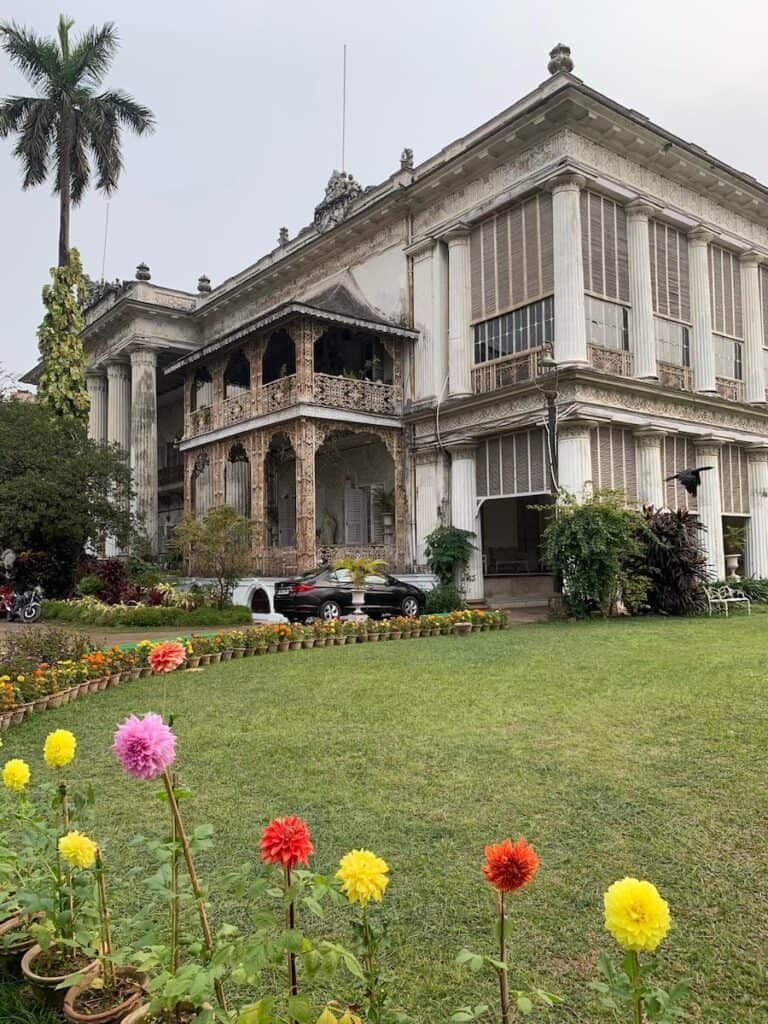
One of the Palladian mansions of Kolkata. * Photo: Heidi Sarna
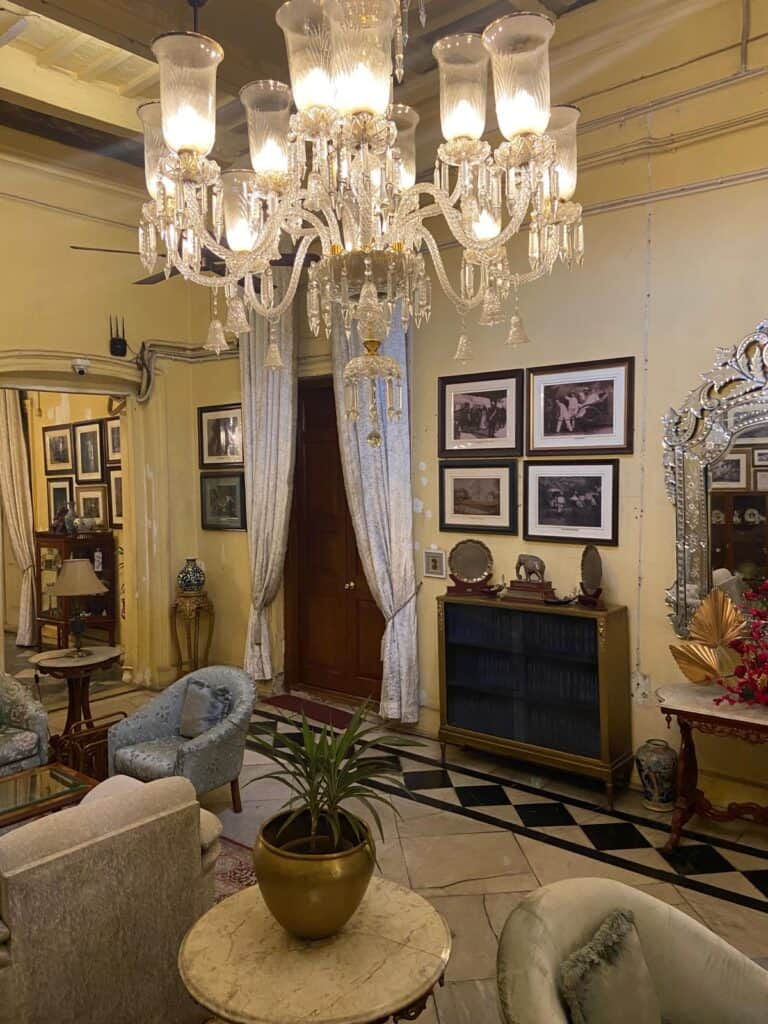
Kolkata's Fair Lawn hotel. * Photo: Heidi Sarna
Kolkata is a fascinating city steeped in history, much of centered around the city as a major trading port, being on the Hooghly River. In his colorful and unyielding way, English writer Rudyard Kipling was born in India and wrote about the country extensively, including in a 1888 article, here.
Many travelers fly to other parts of the country, from the beaches of Goa and the holy ghats of Varanasi, to the historic cities of the Golden Triangle — Delhi, Jaipur and Agra to lay eyes on the breathtaking Taj Mahal.
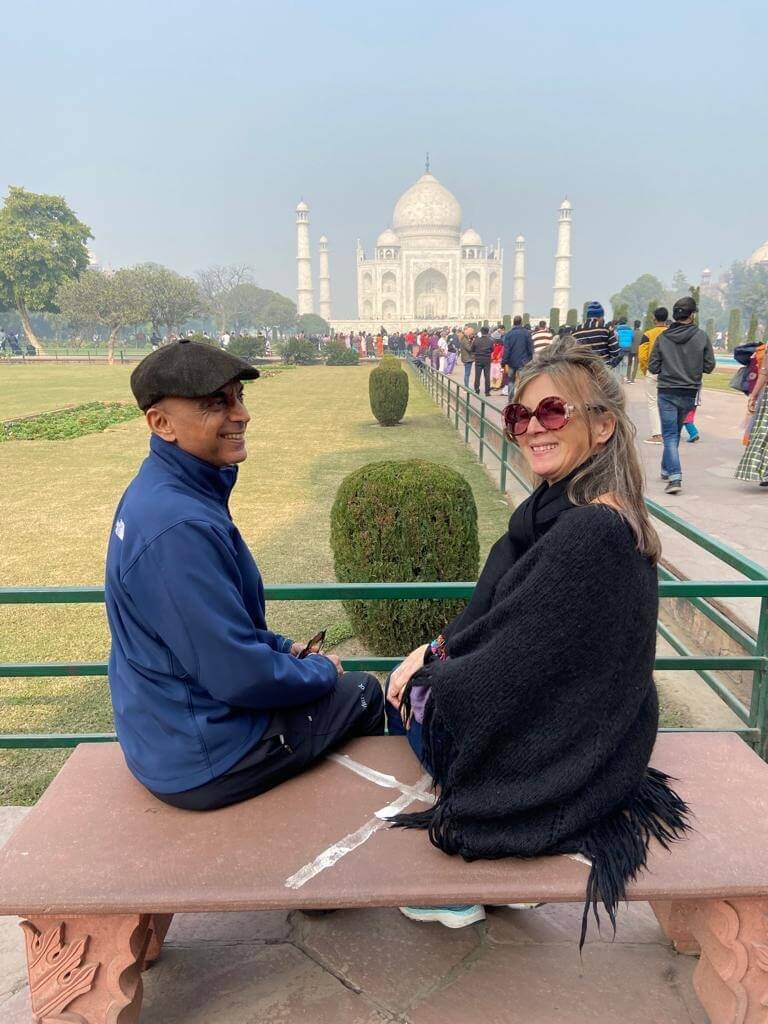
Heidi.& hubby at the Taj Mahal. * Photo: Heidi Sarna
Practical Matters to Consider: Hooghly River Cruise Tips
Season: September – April; best weather is October through February (50s °F mornings, 80s °F daytime). Dress in layers.
Travel logistics: Cruises include one-way train travel between Kolkata and Farakka, plus all excursions, meals, guides, and transfers. (Alcoholic beverages are extra.)
Water: Bottled water is provided in reusable eco-friendly bottles, safe to drink and refilled daily.
Clothing: Dress modestly for temples and mosques. Women should cover shoulders and avoid shorts. Thin socks help when removing shoes.
Fitness: Tours involve walking on uneven ground, tuk-tuk rides, and often dusty conditions. A reasonable degree of fitness is required.
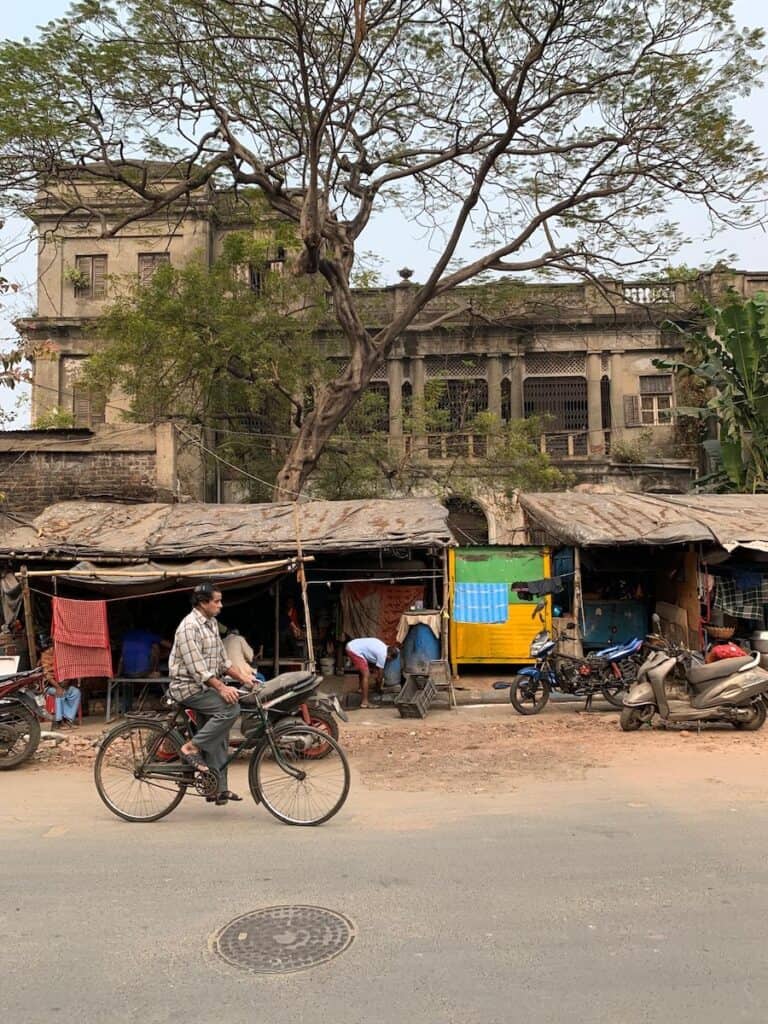
A degree of fitness and an easy going attitude are necessary ingredients to truly enjoying an India river cruise experience. * Photo: Heidi Sarna
Other Rivers of India
While the Hooghly River cruise could be considered the most accessible, given its proximity to Kolkata, India’s other rivers also offer rich itineraries.
- Upper Ganges River. India's most sacred river rises in the Himalayas, flowing down into the plains before reaching the Bay of Bengal. Ganges River cruise highlights include holy ghats, Buddhist sites, and 16th to 18th-century mosques and temples. Cruises on the Upper Ganges are offered during a short window at the end of the summer monsoon season, with a few combinations sailing between Kolkata and Varanasi.
- Brahmaputra River. Further east, ABN also operates on the wild Brahmaputra in Assam, where jungles, tea plantations, and tribal cultures replace the towns and palaces of Bengal. On a Brahmaputra River cruise, you'll have the opportunity to see the Great one-horned rhino at Kaziranga National Park.
- Kerala's Backwaters. In the south, Kerala’s lush maze of waterways offer yet another riverine perspective, focused on natural beauty, birdlife and south India's colorful and ornate Hindu temples.
While India can be an overwhelming place to travel, river cruising makes it convenient, safe, and luxurious — an endlessly fascinating way to see the country from the water.
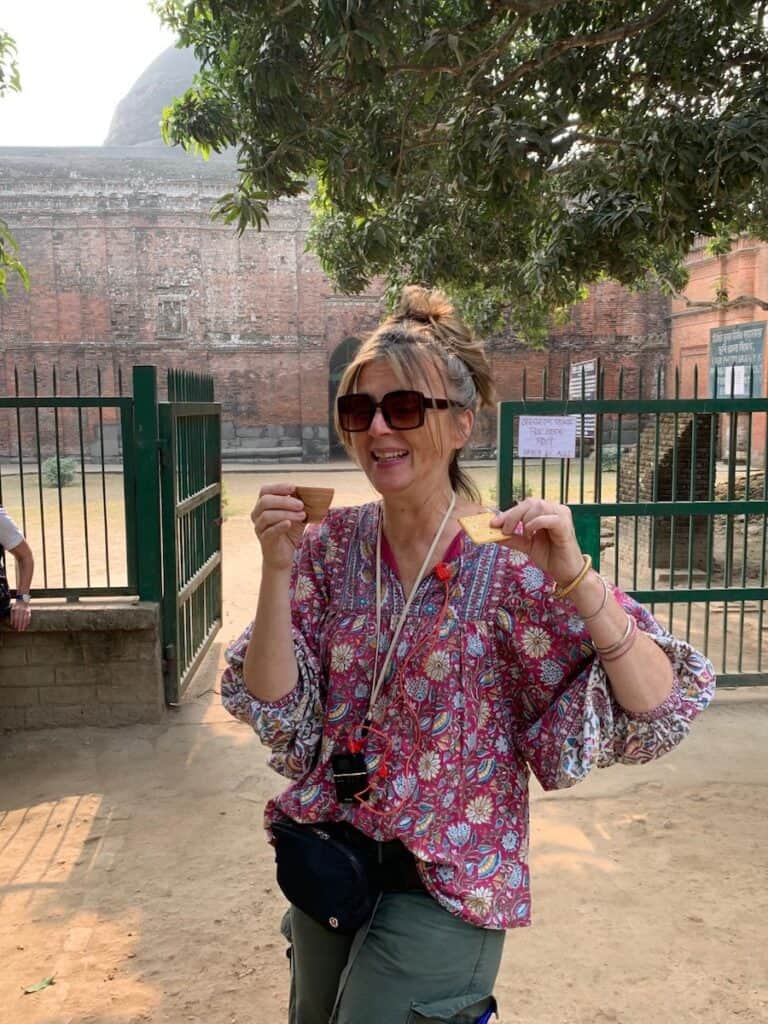
River cruising is a great way to see India, where you can enjoy special little touches like chai and biscuits the crew brings on shore excursions! * Photo: Arun Sarna
Interested in this Hooghly River Cruise Aboard ABN’s Raj Mahal?
I’ve sampled three river cruises in India so far and enjoyed them all, making it hard to choose a favorite. While the Brahmaputra and Kerala quirky cruises I've taken explored rural areas and wildlife, the Hooghly River itinerary, being closer to the major city of Kolkata, highlights eastern India’s English ghost towns. These once-thriving ports reflect two centuries of British control. What began in the early 17th century as trading between European merchants and India’s many kingdoms devolved into exploitation under the East India Company (1757–1858) and, later, the British Raj (1858–1947).
For travelers drawn to India’s layers of history — from the Bengali Sultanate and the Mughals to the British Empire — ABN’s Hooghly River cruise offers a fascinating journey back in time, with the comfort of the Raj Mahal as your base.
Fares start at $2,765 USD per person and include all meals, non-alcoholic drinks, daily excursions and entrance fees, and transfers to/from Kolkata.
Drop me a line at [email protected] if you have any questions. I've been to India many times and look forwarding to sharing my insights.

Don’t miss a post about small-ship cruising, subscribe to QuirkyCruise.com for monthly updates & special offers!
© This article is protected by copyright, no part may be reproduced by any process without written permission from the author. All Rights Reserved. QuirkyCruise.com.









 HEIDI SARNA