Maple Leaf Adventures British Columbia Cruise Review
By Robin McKelvie
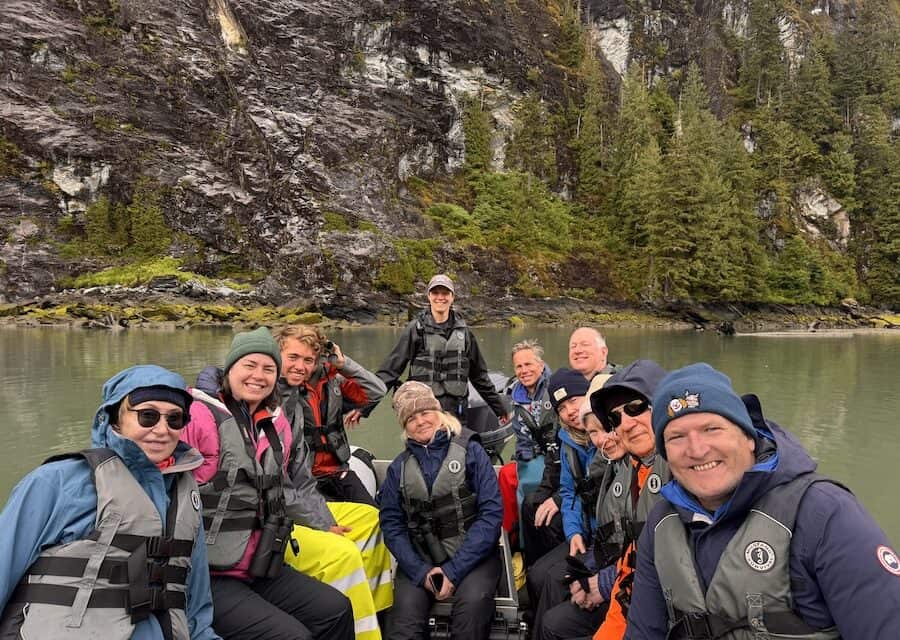
As the tender boat (a RIB, or rigid inflatable boat) edges deeper into First Nations territory — and further and further from the stresses and strains of the modern world — we enter a space where mankind plays second fiddle to nature. Hulking eagles soar above, massive brown bears patrol the shores and killer whales break the milky blue waters, soaring the spirits of all aboard.
Welcome to British Columbia’s Kitlope and the Great Bear Rainforest, a life-affirming wild-scape best explored from the comfort of a boutique expedition cruise.
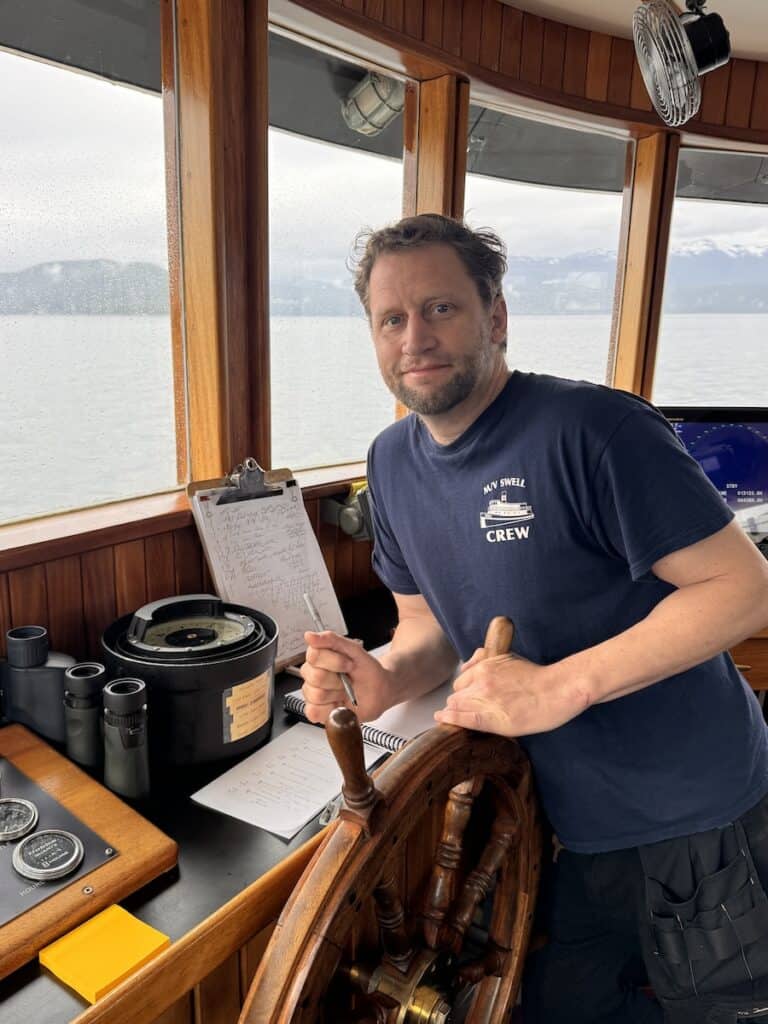
Captain Matt Whelan welcomes me aboard with a description of the unique Canadian voyage we're about to embark on:
“This week we will experience untouched nature, a world few vessels see on one of our most adventurous trips. The cultural aspect is a huge part of the experience. It’s a real privilege to explore First Nations lands and culture. It’s an exciting cruise that the crew all look forward to — you never know what we’re going to get in the Kitlope. We really don’t know until we see the remote river whether we will even make it to Kitlope Lake.”
MV Swell — A Comfortable Small Cruise Ship
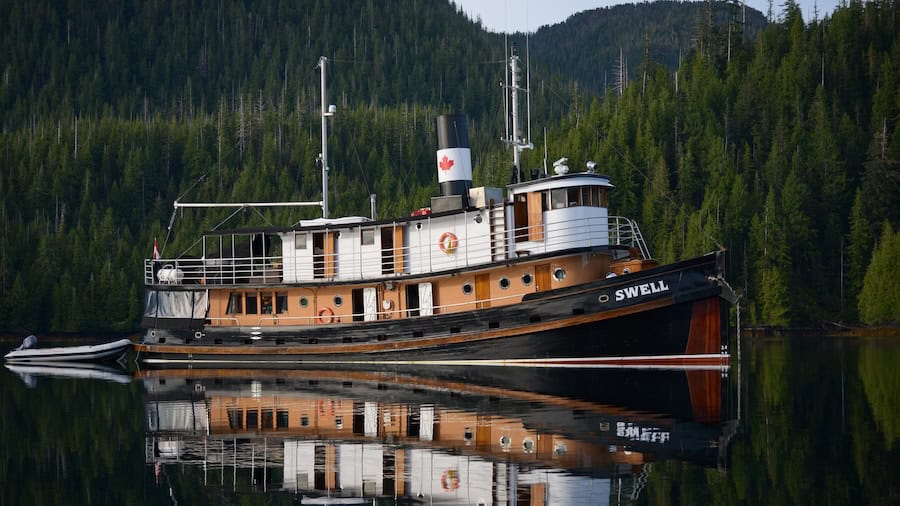
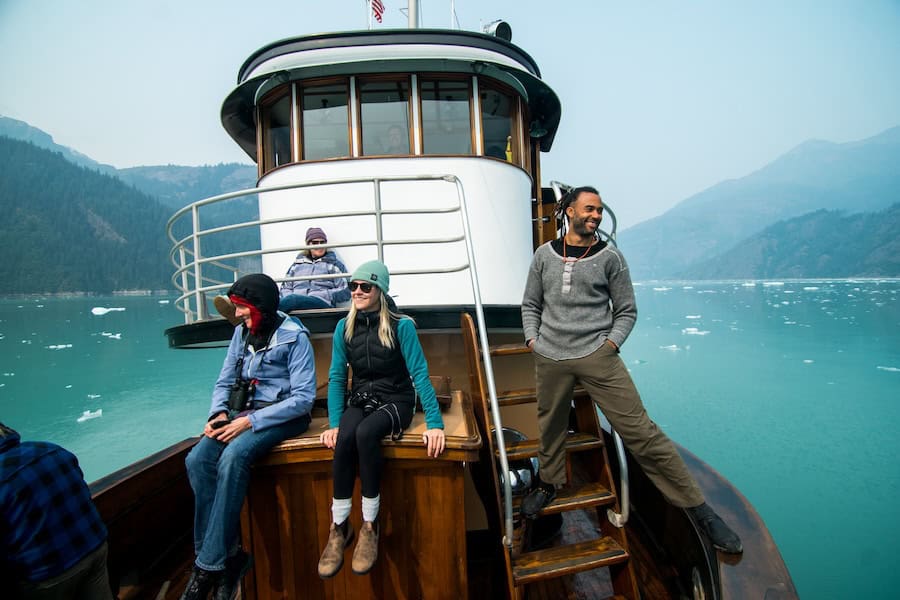
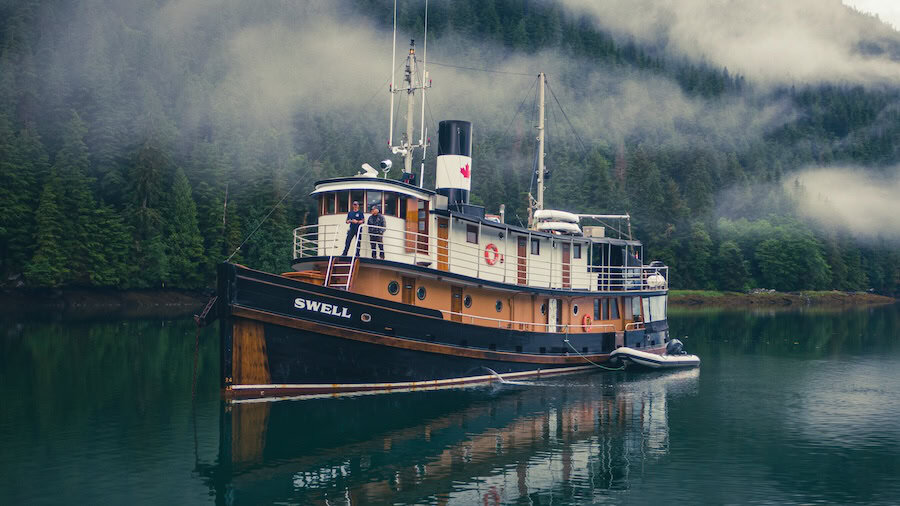
Our Maple Leaf Adventures 88-foot-long small ship is seriously comfortable. Sleeping just a dozen guests, the MV Swell is the perfect platform for adventure in this part of Western Canada. She was built as a working boat back in 1912 and has enjoyed an illustrious career serving swathes of British Columbia as a tugboat.
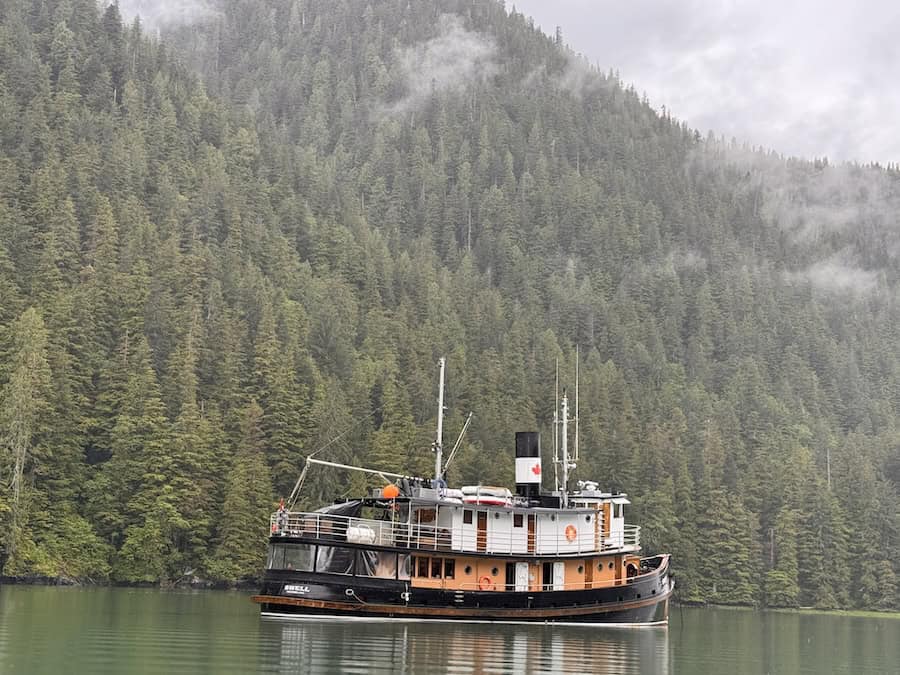
In 2015 a major revamp reinvented the Swell as the ideal small cruise ship for pioneering adventures around Alaska, British Columbia and into the latter’s Great Bear Rainforest and the little-cruised Kitlope.
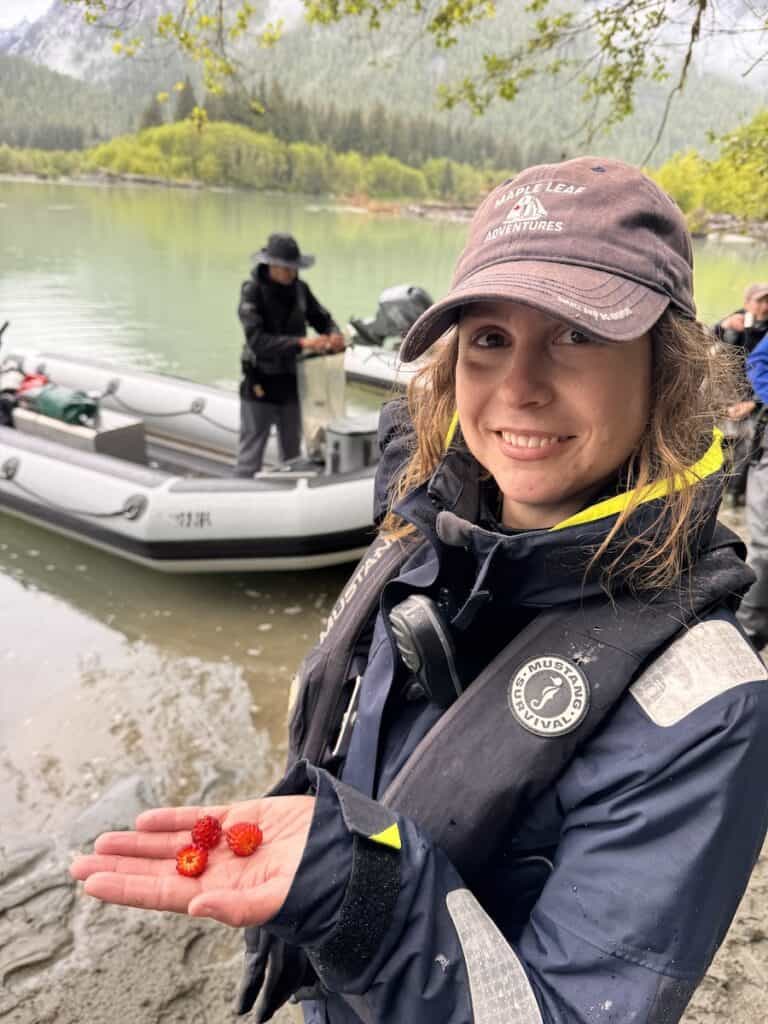
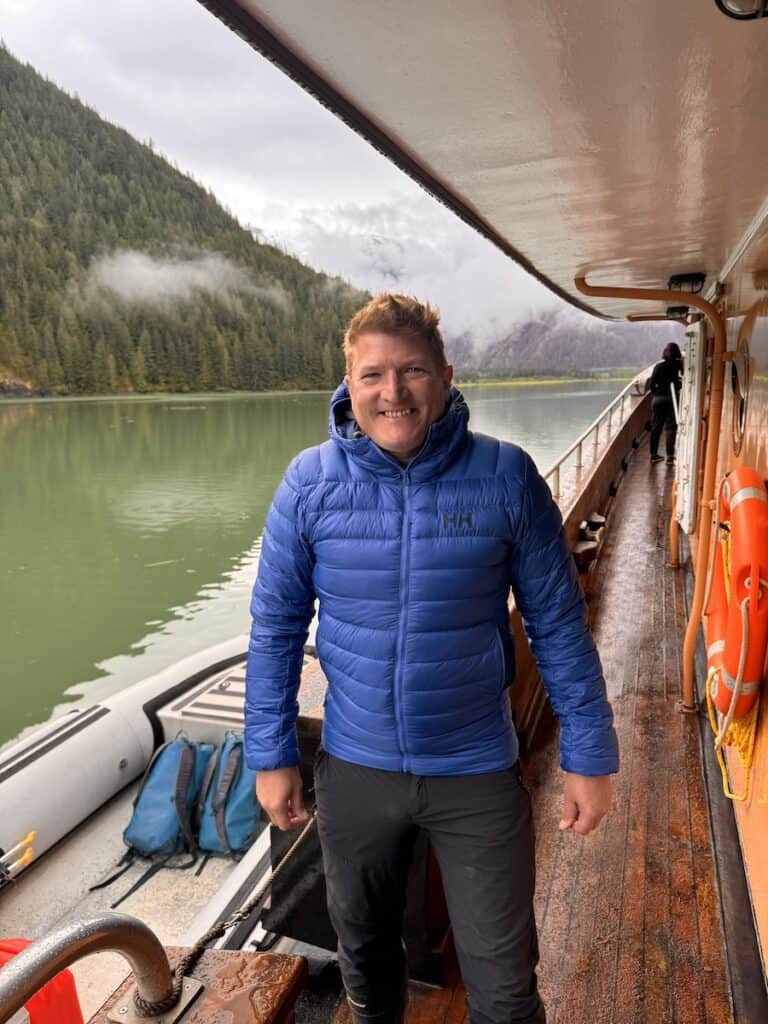
Our excellent crew is all Canadian, bar our capable English captain. There is mate Carmen Pendleton, chef Michael Hassall, naturalist Ethan Browne and deckhands Emily Hardardt and Sierra Schuler.
- 1912: The Swell is born
- 1912 to 1954: Operated as a coal-fired steam tug working the coast
- 1954 to 2004: Working as a diesel tug and TV star
- 2004 to Present: Swell is reborn as a passenger vessel
Life Aboard the MV Swell
The epic scenery in this magical oasis really affects you; forces you to slow down. To stop. To feel. To savour. Life aboard is, then, fittingly languorous. There is always fresh coffee just a click of a button away for early risers, then a cold breakfast at 7am, followed by a cooked treat an hour later.
Lunches are a delicious one course affair, such as local tuna perfectly seared in a salad with rice and edamame beans, or freshly made felafel with homemade hummus.
Dinner is the highlight: a decadent three-course feast. Think the likes of beetroot and goat’s cheese salad with a bit of a nut crunch, or a balsamic and basil-bathed tomato salad to start.
Mains on our week included pork tenderloin cooked perfectly pink and local Coho salmon, a delicious cousin of the ubiquitous farmed Atlantic salmon. Desserts are spot-on too, sweeping from Earl Grey creme brulée through to lemon curd pavlova. Wines at dinner are well-chosen, with British Columbia featuring strongly.
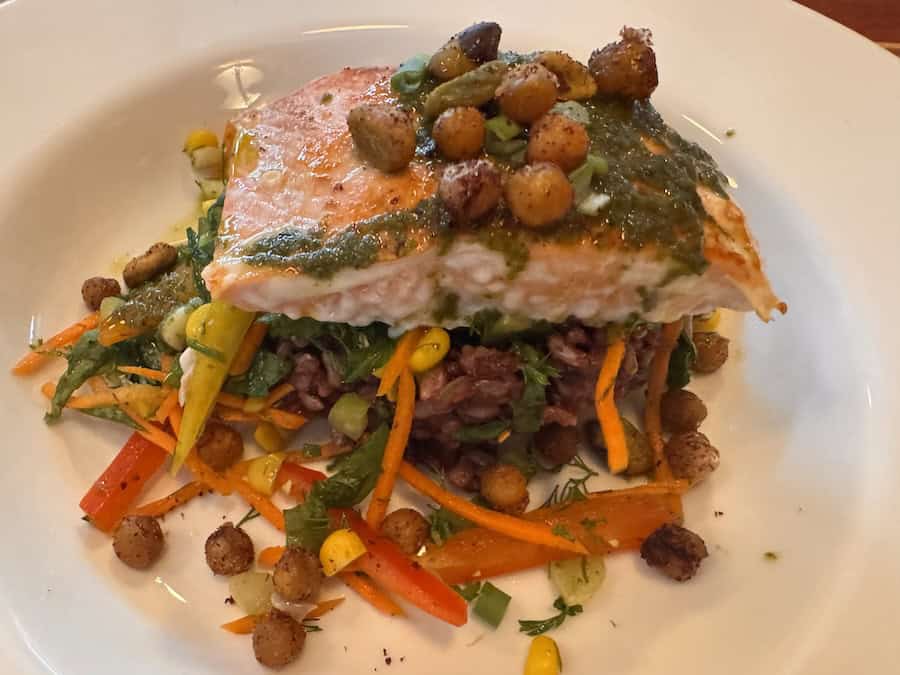
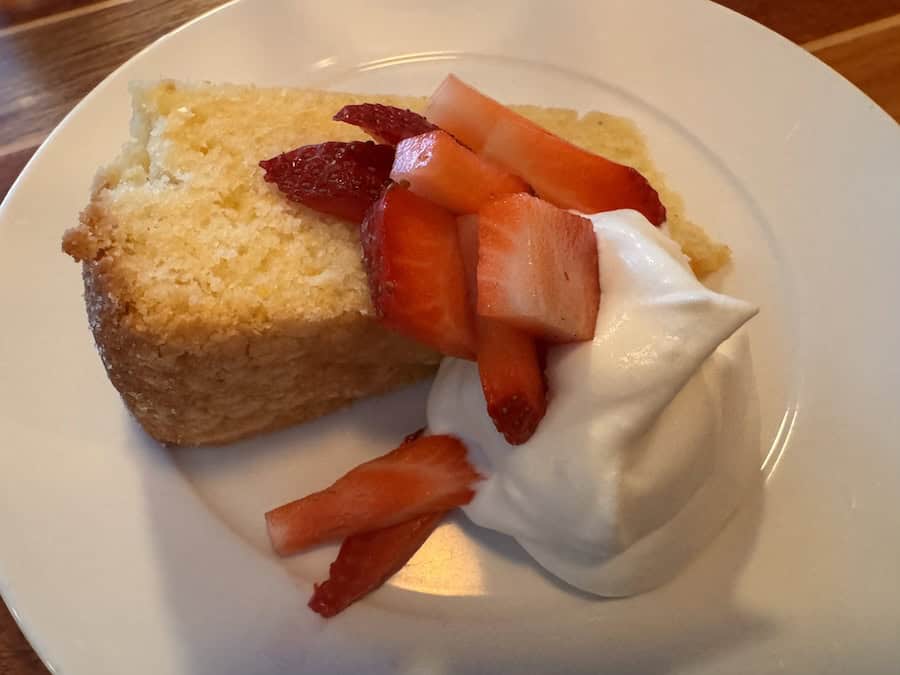
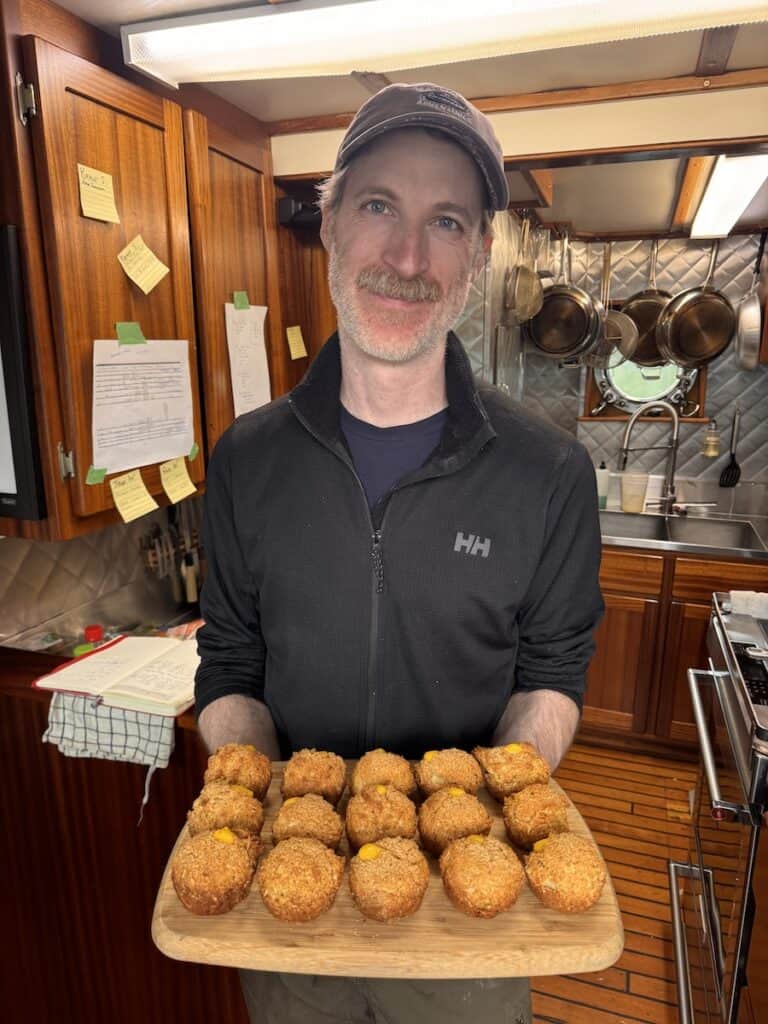
Chef Michael is clearly proud of the local produce he procures. All the seafood on our week, for example, is sustainably sourced from British Columbia. Michael works wonders with the produce on the plate. And in the glass, with those well-chosen British Columbia wines.
Swell Cabins
The two-deck Swell has four cabins on the upper deck and two lower; they are comfortable rather than luxurious given the obvious space constraints. They make the available area work, with lots of little storage nooks and crannies; the bathroom has a normal flush toilet and shower.
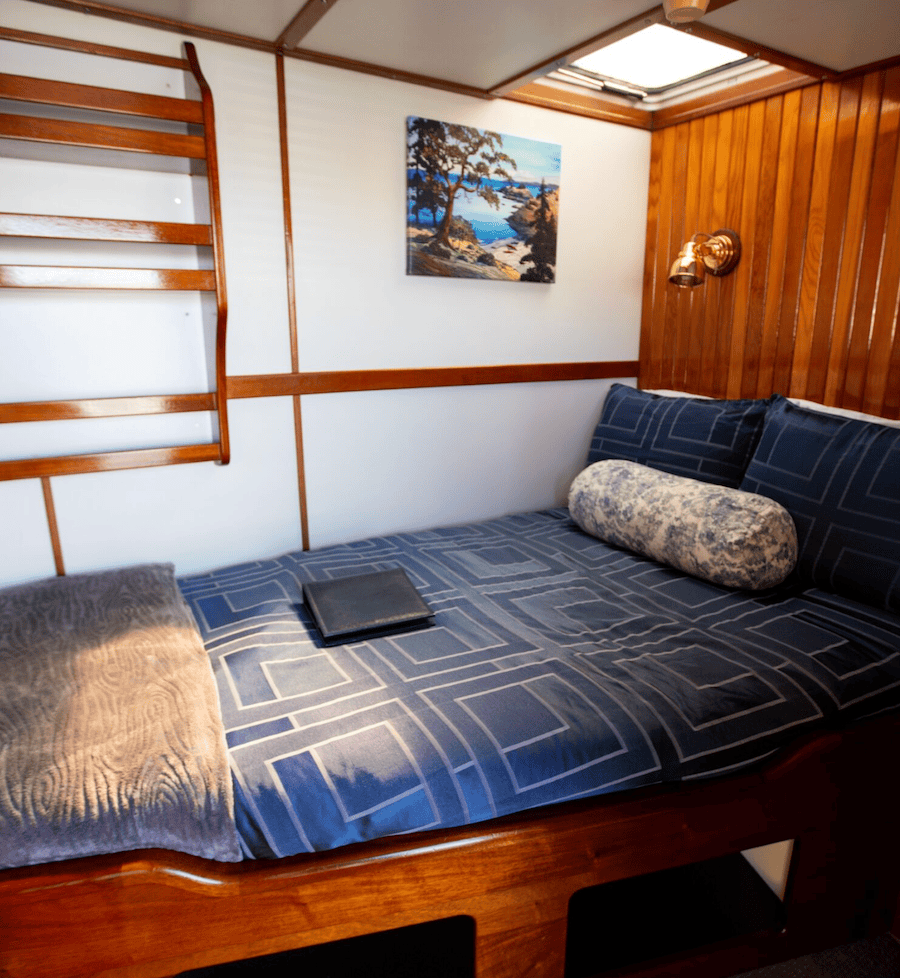
Two of the cabins have bunk beds, so do bear this in mind if you struggle to ascend to an upper bunk. I had one of these cabins; it was the smallest cabin onboard, Red Alder. It was fine for one person, but it might test a friendship.
VIDEO: It doesn't take long for Robin to show you around his cozy cabin, below.
Top Deck
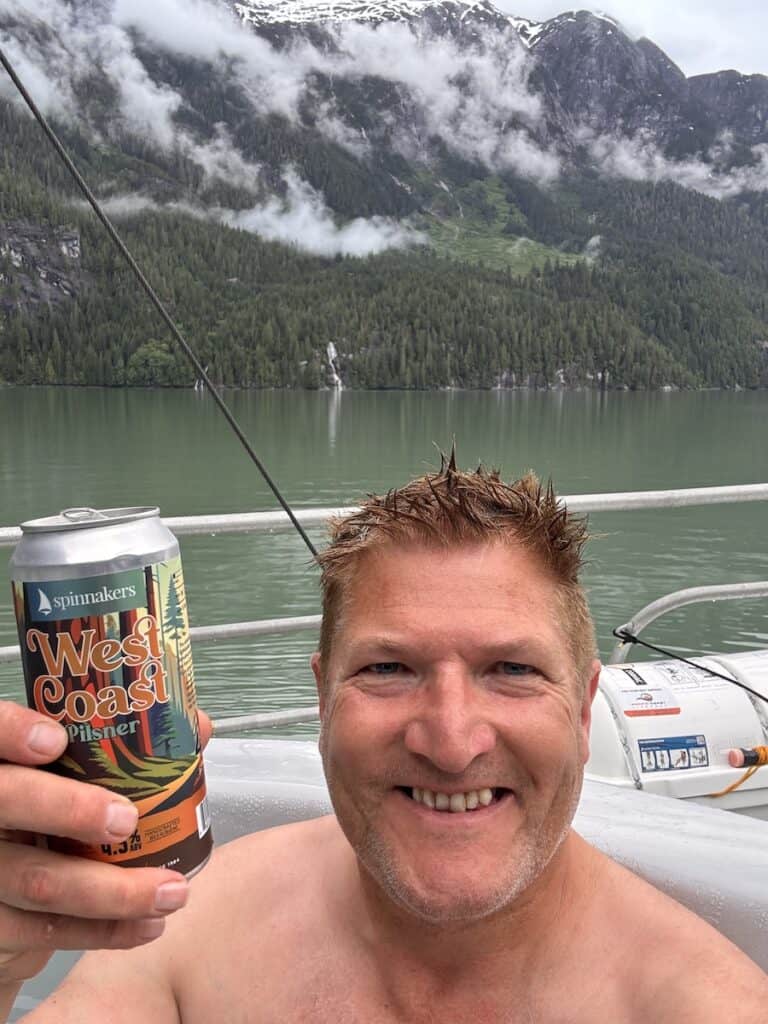
A decadent touch on the upper deck is an always-available outdoor hot tub. There are plenty of comfortable outdoor spaces, with soft furnishings protected from the rain.
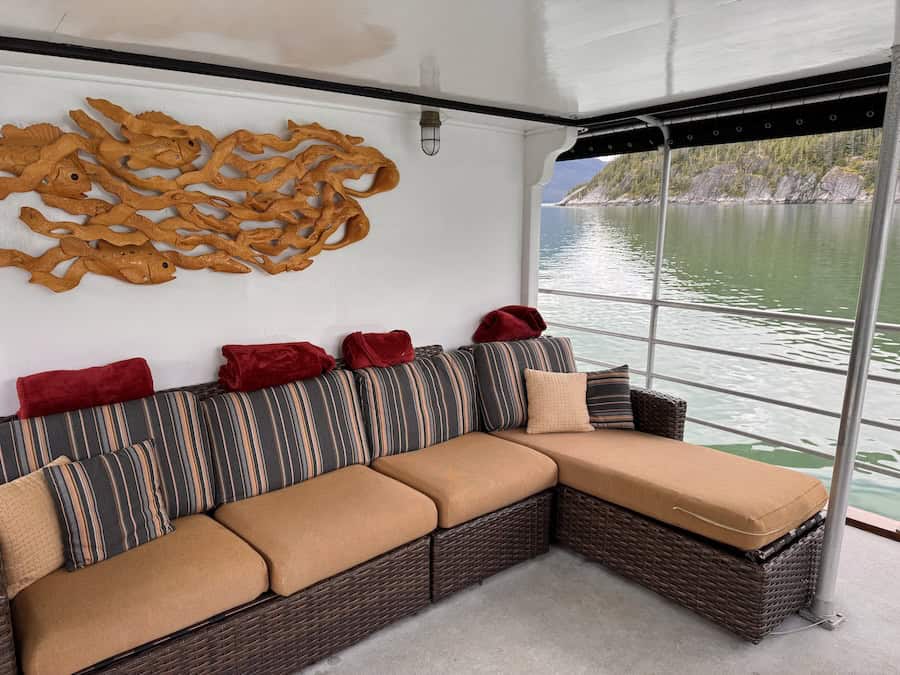
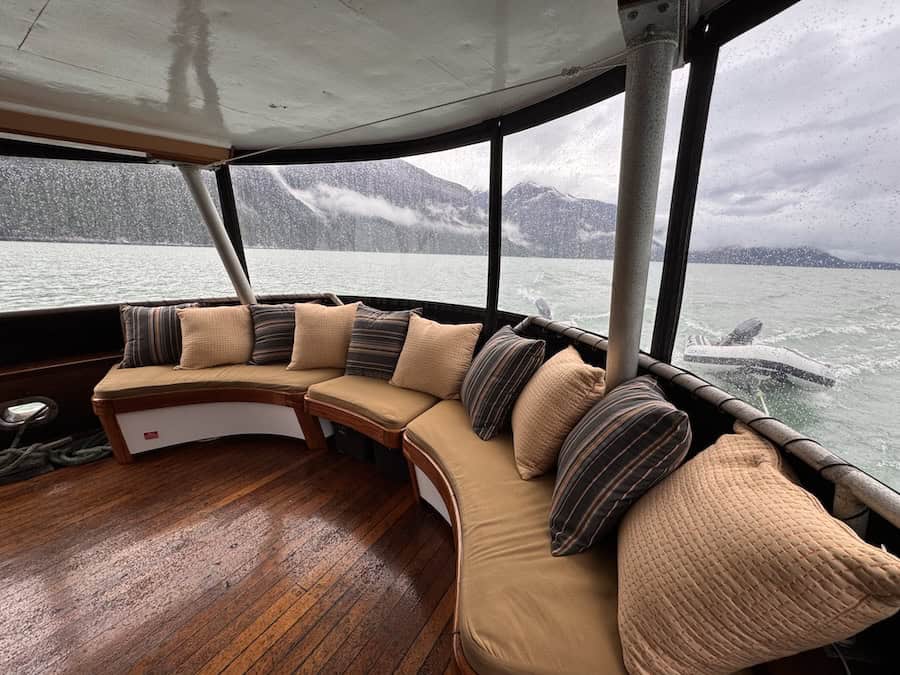
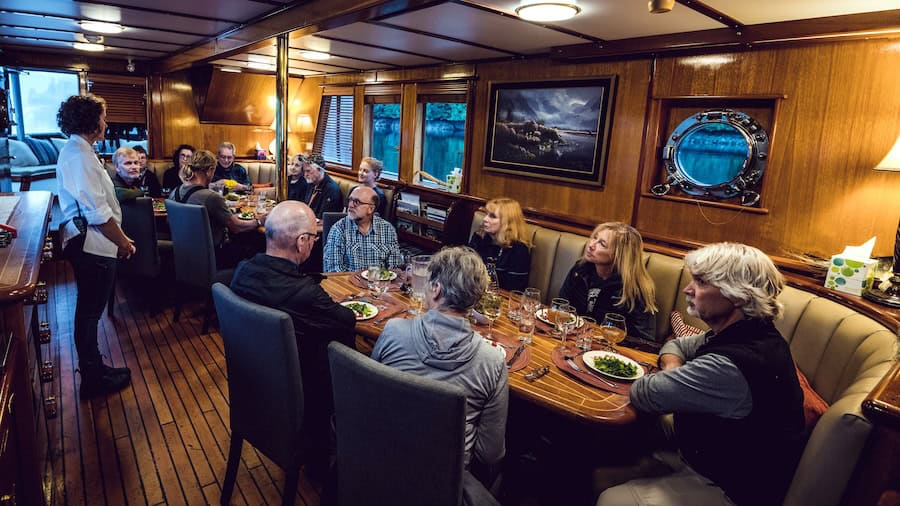
The main saloon — where all meals are served — is spacious too with two hardwood tables and always-available tea, coffee and soft drinks.
Why Cruise the Great Bear Forest and the Kitlope?
The guests on our trip include half a dozen Americans, two Canadians, two Germans and this solitary Scot. The age demographic is younger than I’ve experienced on many cruises. Captain Matt said the average age this time is 57, the Kitlope and Great Bear Rainforest seeming to attract more adventurous and able-bodied cruisers.
Some of our party have cruised in Alaska before and are coming to the Kitlope and the Great Bear Rainforest “in search of something different.” And they are not disappointed on a voyage where we are the only cruise ship around all week.
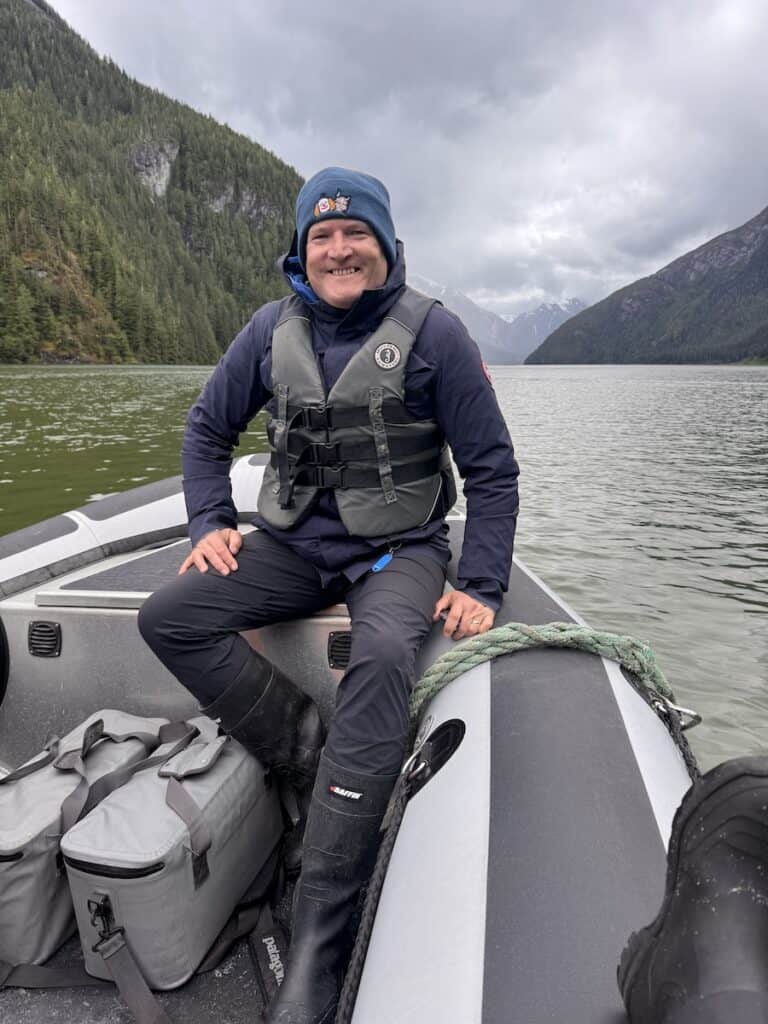
If you want to spend a week bathed in glaciers, Alaska trumps this cruise. However, if you want to enjoy a real sense of adventure, seek out bears (including Spirit bears, white-ish bears that British Columbia has, but not Alaska), experience a window into First Nations culture and enjoy a cruise without another cruise ship in sight the Kitlope and Great Bear Rainforest is for you.
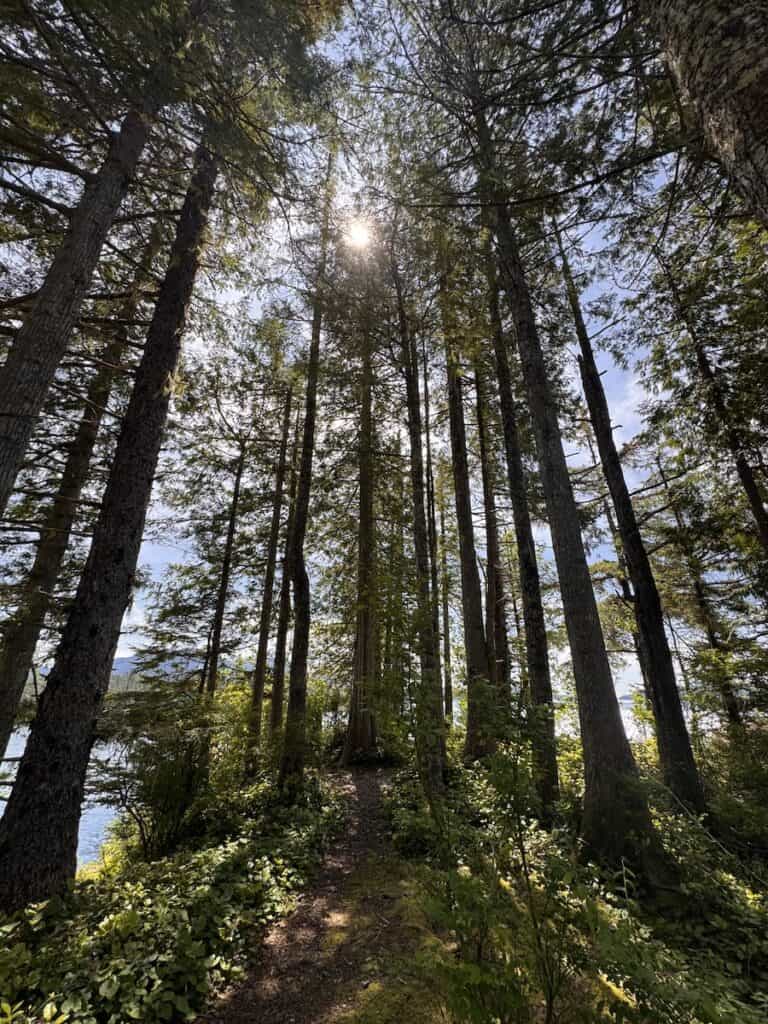
On a practical level these waters are generally more sheltered than those in Alaska too and at their most benign in the summer cruising season. They are gloriously pollution and rubbish-free too — I don’t see as much as a single floating soda can all week.
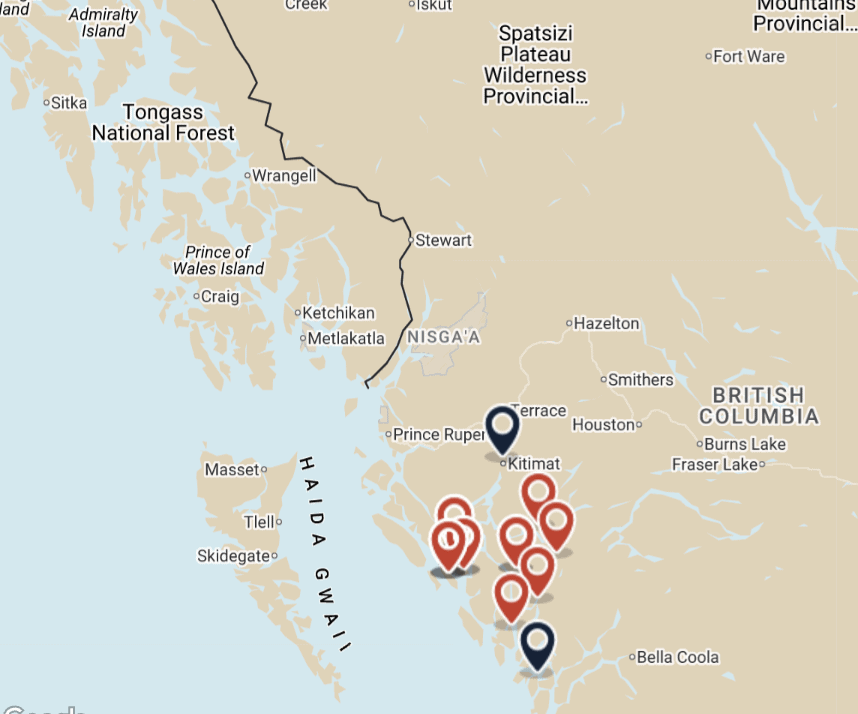
Here’s a look at our week:
Day One
A bald eagle soaring high above sends us off from sleepy Kitimat as we search for our first mooring. The water is calm and ideal for spotting seabirds and cetaceans, but then a quick squall sweeps in with ferocious winds to remind us we are in a wild — as well as wildly beautiful — part of the world.
Overnight is in Clio Bay, named after the government gunboat that used to keep an eye on the First Nations communities of this region.
Day Two
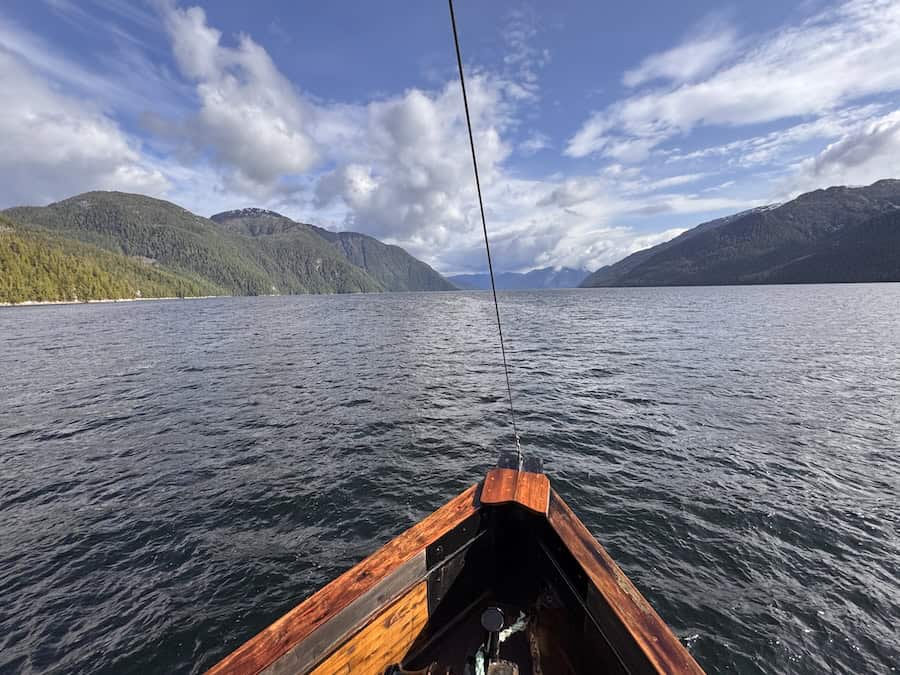
Our first morning brings a scenic sail down the dramatically named Devastation Channel. As we pass Crab Lake, Ethan conducts a short ceremony showing respect as we leave Haisla lands and venture into the world of the Xenaksiala, two First Nation communities that share a language. And so much more.
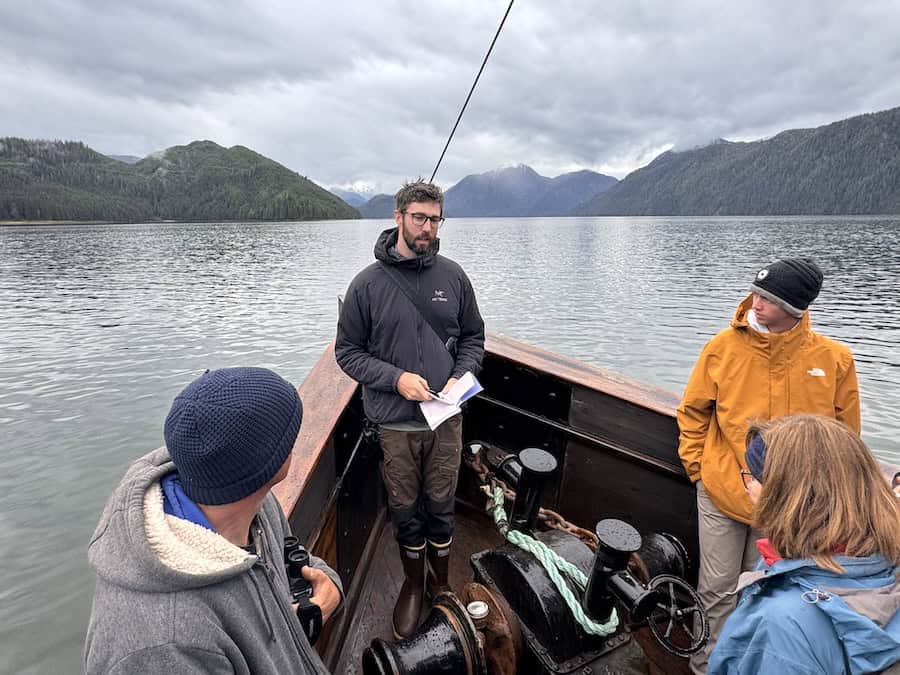
We enter the Gardner Canal, which is a 90-km stretch of the wider Douglas Channel, one of the world’s largest fjord systems, which stretches from Kitimat to the Pacific Ocean proper.
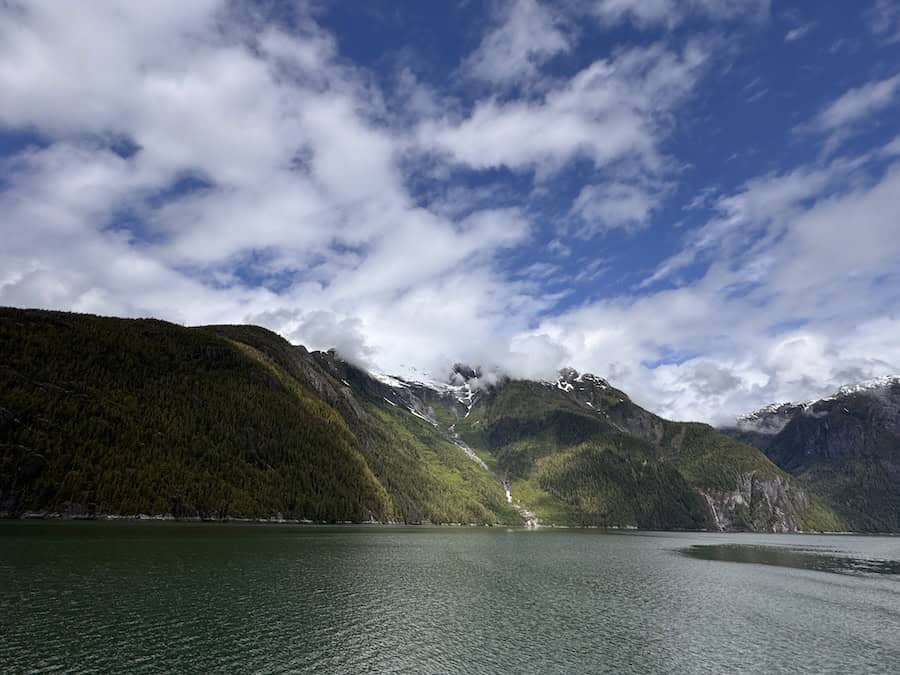
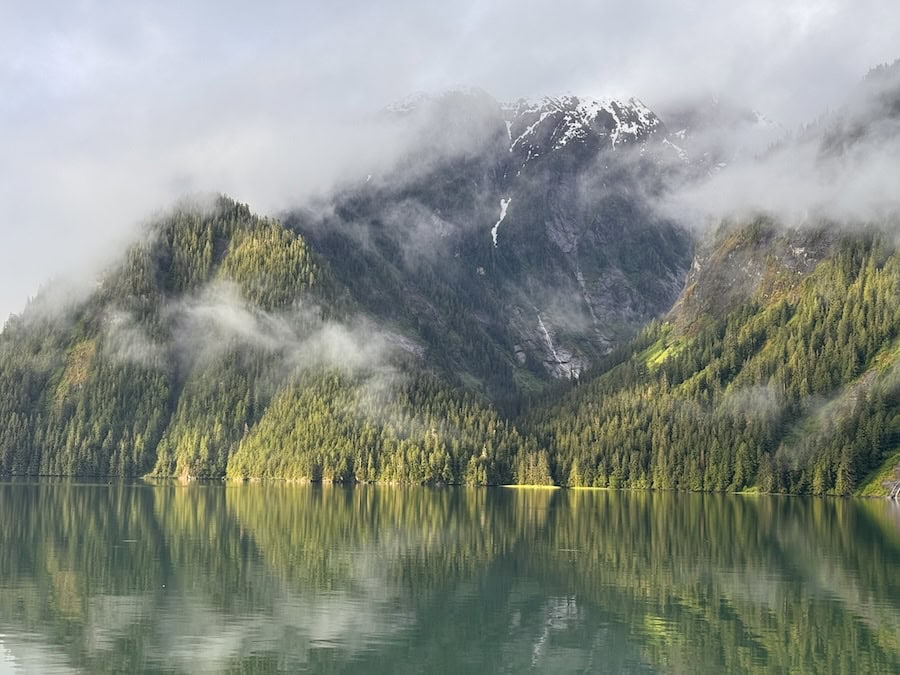
Emerald mountains lush with trees and myriad other flora bloom on both flanks, waterfalls tumble and the famously milky green waters of the Kitlope spread all around in a scene straight out of Jurassic Park.
It’s time to delve deeper, with our party splitting into two RIBs to eke further upstream to explore the Kiltuish Inlet, a little-explored offshoot of the Gardner.
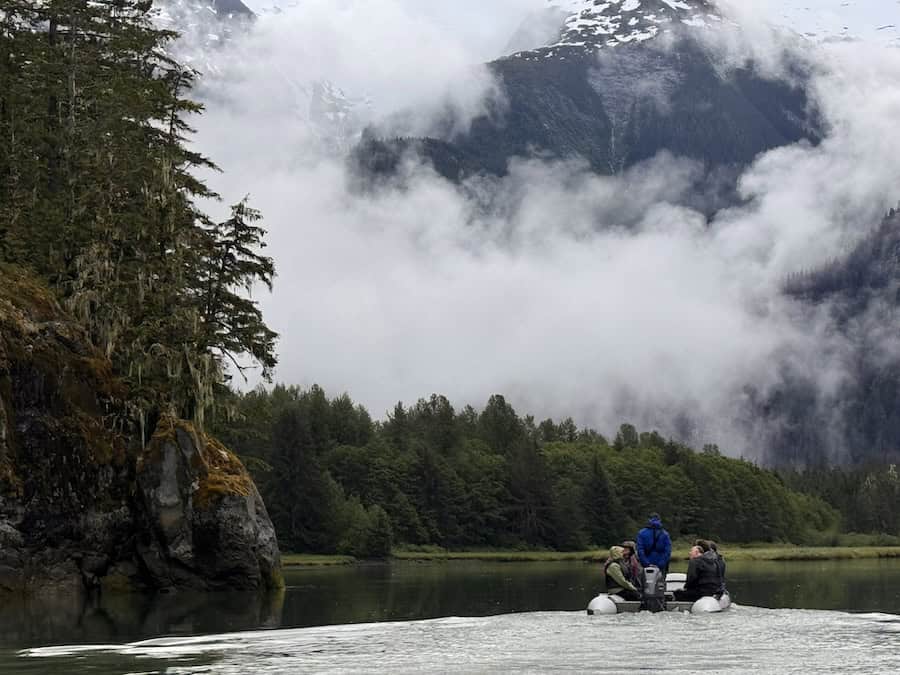
The hills start to close in around us as we splash along further away from the modern world. And then we see him.
A large adult grizzly bear patrols the beach right in front of us, eliciting quiet gasps — we are keen not to spook him. The three-hour Zodiac trip brings more bears, eagles and herons on a cruise that instantly delivers on the wildlife front.
Dinner is at anchor at the mouth of Kiltuish.
VIDEO: Below, one of the bears we saw close-up during our week aboard the MV Swell.
Day Three
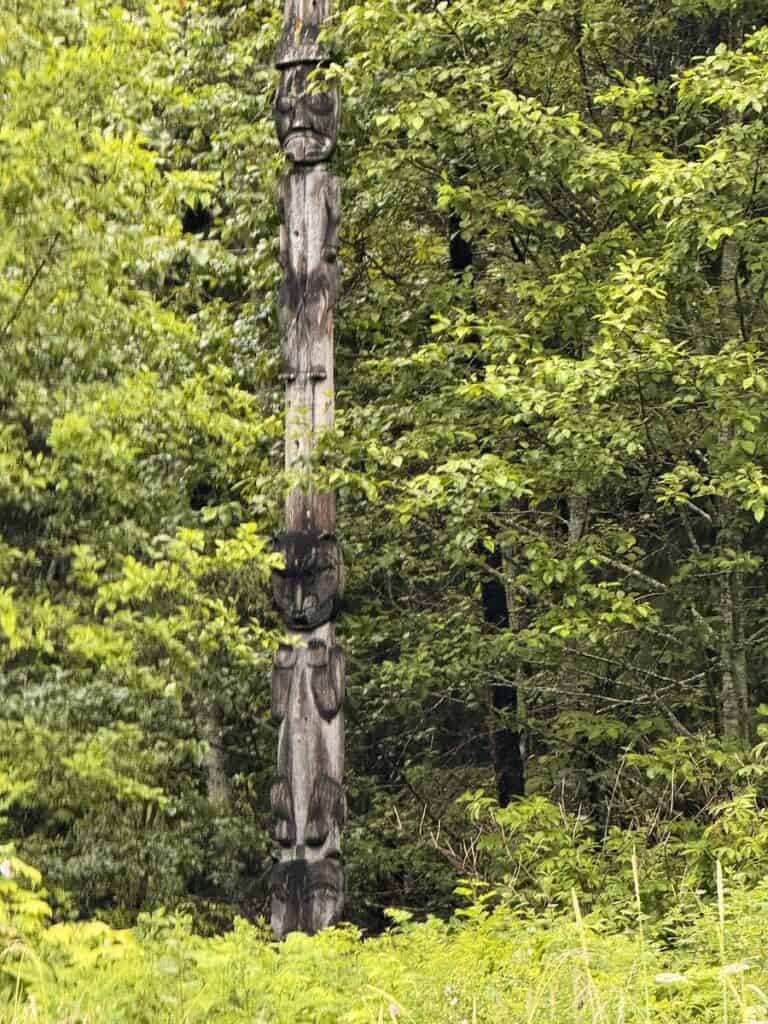
Our exploration of the wildly beautiful Gardner Canal continues. A morning highlight is a sail-by to view a totem pole that guards a First Nations burial ground. Two hulking bald eagles in turn are keeping a watchful eye over the totem pole. The crew stress the importance of being respectful of the First Nations peoples and have asked me not to name its location in this article.
We continue through the emerald waters as steep granite mountain sides close in, tighter still as we detour for our first shore excursion in Chief Matthews Bay. Ethan ventures ashore first from his RIB to check for bears. A tense silence stretches on before he returns with the good news we can proceed, Ethan leading with bear spray in hand. It’s a thrilling experience eking through the waist-high sedge grass knowing a grizzly bear could be hiding anywhere.
We return to the Swell unscathed and motor on to reach the highlight of the trip as we finally make it to the Kitlope Conservancy. We moor at the mouth of the river in a vast natural amphitheatre of vaulting mountains, tree-shrouded slopes and roaring waterfalls. Sublime.
VIDEO: Robin surveys the vast beauty of The Kitlope, below.
Day Four
Today is the big day when we try to forge up the fast-flowing Kitlope River in search of the semi-mythical Kitlope Lake. No other cruise company attempts this and — as it’s an almost impossible place to hike to — this is pretty much your only way in.
Our twin RIBs spend hours battling through the strong currents, dodging logs and navigating through shallow waters that at one point dip below two feet. This is proper expedition cruising. And it’s both thrilling and life-affirming.
At several points I fear we won’t make it as the radio crackles into life and Carmen and Ethan try to work out a way through the seemingly impossible natural barriers. But they work together and our collective hope helps heave us on.
Six hours later we finally get to the magical lake. The effort proves worth it — this lake is every bit as spectacular as New Zealand’s Milford Sound and up there with Scotland’s Great Glen too.
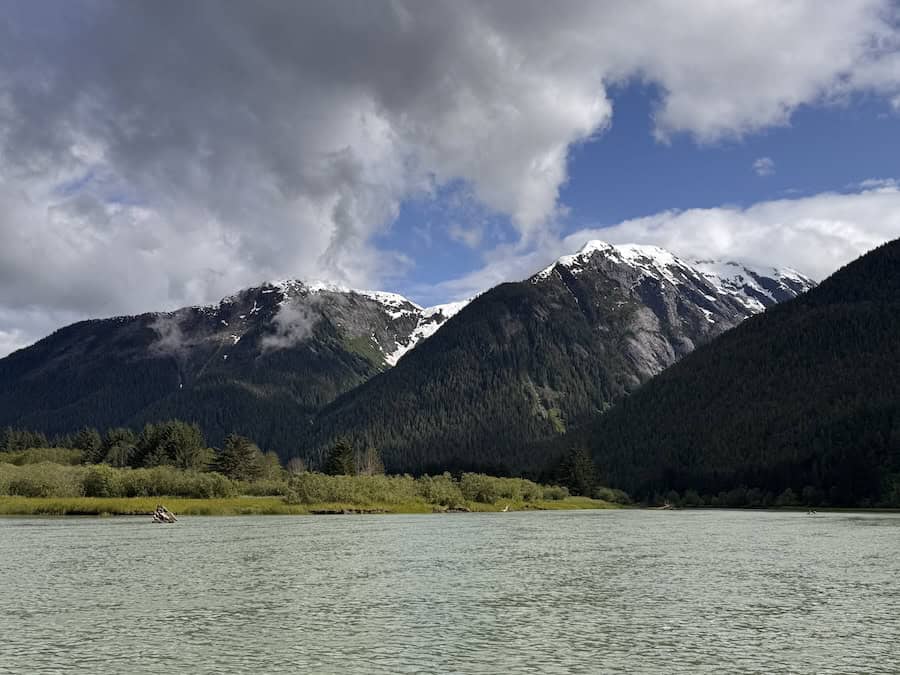
The mountains create an impressive natural arena as tree-shrouded slopes ravage down to the ice-cold waters.
Ethan reads a passage from Cecil Paul’s “Stories from the Magic Canoe” (details in our Quick Facts section below) and we then pay our own silent tributes to the First Nations people and what this magical lake means to all of us. Cecil Paul believed no one leaves the Kitlope unchanged and we all feel this power in our own ways. A truly spiritual experience.
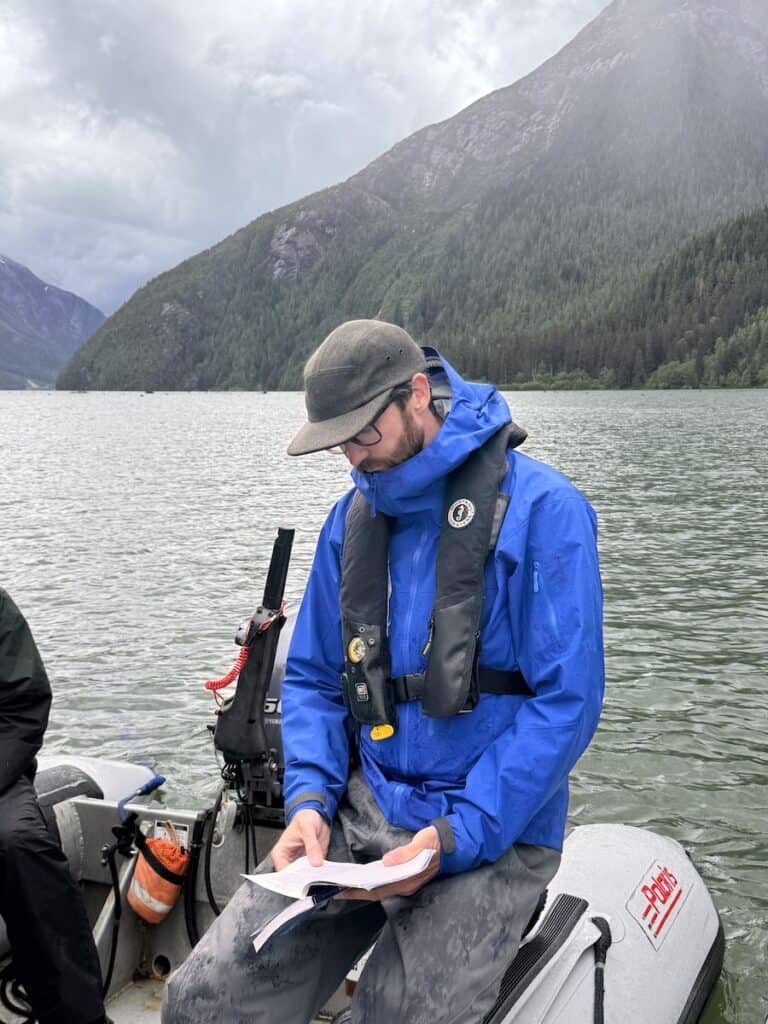
The full day up and down the Kitlope River also brings myriad wildlife, from a bald eagle being mobbed by gulls, through to a brown bear swimming across the river close by, and on to the wolf tracks we find in the sand when we stop to visit Cecil Paul’s birthplace.
This remarkable day is not done with us yet and just before we make it back to the ship, we spot a brown bear feasting on the carcass of a humpback whale. The crew seems as surprised as us.
In this spectacular part of the planet wildlife experiences are raw and real, not verging on the performative as they can feel on some cruises.
Day Five
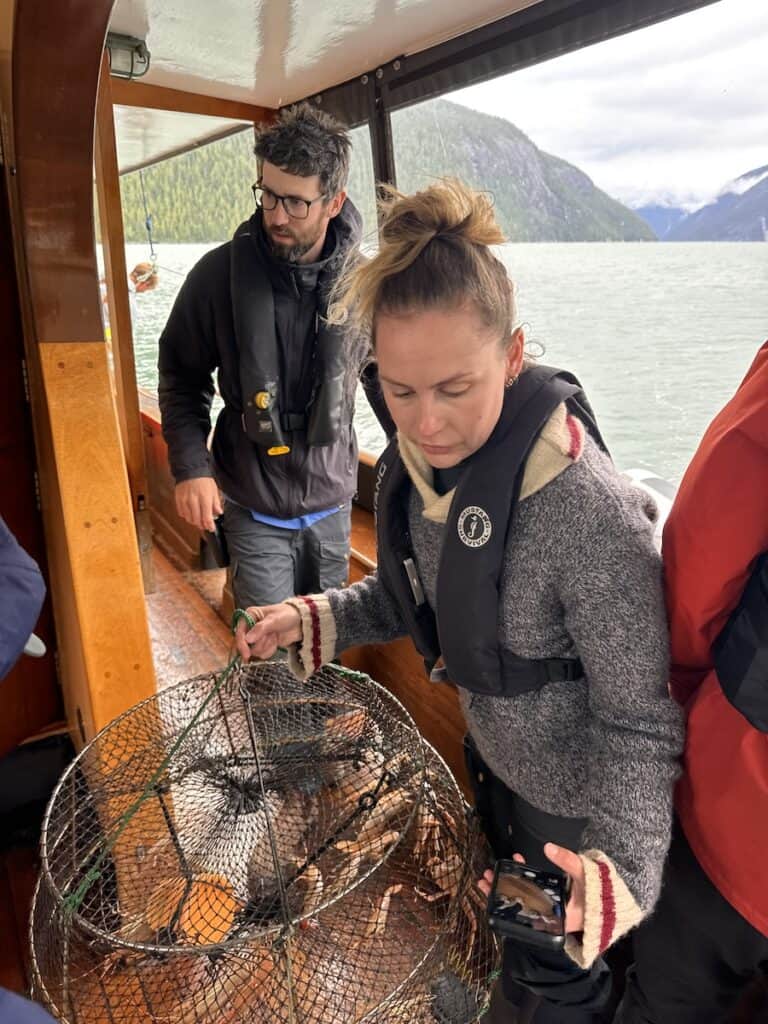
Reluctantly we leave the glorious Kitlope behind and head back down the 90-km-long Gardner Canal, hauling up the prawn pots we’d left on a shelf here. Chef Michael is delighted at our haul of tiger prawns and spot prawns, which he wastes no time in cooking up as a delicious pre-lunch snack to accompany the fascinating bear talk that Ethan gives in the saloon. His lecture finishes just in time to spot a feeding humpback whale to starboard, followed by a pod of splashing Dawe’s porpoise.
We make landfall in Bishop Bay-Monkey Beach. A short boardwalk adventure brings signs of First Nations historic use of the local cedar trees, before we immerse ourselves in the warming natural hot springs, a rejuvenating experience for our group, who by now feel like old friends.
Day Six
We push closer to the open ocean today, meaning more frequent cetacean sightings. I count half a dozen humpbacks over the day, one as close as just a few feet away.
VIDEO: One of the humpbacks Robin and shipmates spot, below.
We learn more about our marine mammal cousins with a stop at Gill Island’s Cetacealab at Whale Point on the southern end of the Whale Channel. Its German founder, Hermann Meuter, tells us tales of transient killer whales surging in to take a fin whale calf in front of its distraught mother and then of other fin whales visiting the bay here to seemingly pay their respects to the lost calf afterwards.
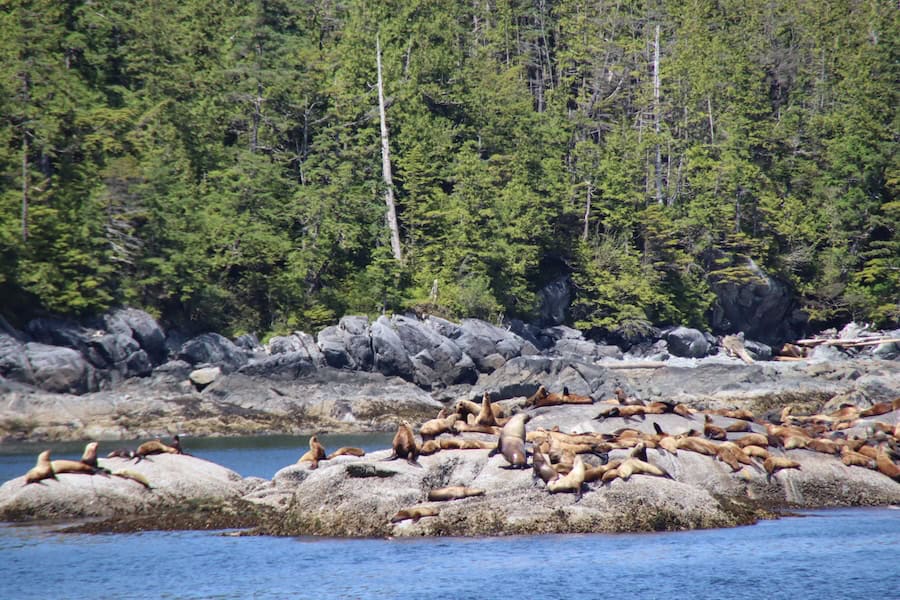
Then we round the southern tip of Gill Island, where the smell tells me we’re approaching a sea lion colony. There are dozens of male sea lions of all ages who battle for territory, hurl themselves off the rocks into the water and splash around in the waves. It’s one of the wildlife highlights of a trip alive with wildlife highlights.
During our week Ethan has chalked around 50 distinct species on the daily sightings chart.
Day Seven
We putter to the trip’s end — after the “famous Maple Leaf Adventures brunch” as Michael calls it — where we began in Kitimat. I set out on this adventure unsure what this little-explored part of British Columbia would bring.
If anything, it has thrillingly overdelivered in terms of scenery, First Nations culture, local produce and variety of wildlife. All of these experiences have been enjoyed aboard a very comfortable vessel with a reassuringly professional and engaging crew.
You cannot ask much more from a small ship expedition cruise.
RELATED: 8 Alaska Small Ship Cruise Lines to Consider (Including Maple Leaf Adventures!).
Quick Facts to Prepare You for a Maple Leaf Adventures British Columbia Cruise
Itineraries & Fares
The Swell's 6-night “Great Bear Rainforest and Kitlope” cruises mentioned here starts at $7,450 CAN per person, including all meals, wine with dinner and excursions. If Swell is booked her sister ships, Maple Leaf and Cascadia, also offer Kitlope sailings. However, the Kitlope cruises aboard the Swell offer the best chance of getting to Kitlope Lake, due to the Swell's use of their pair of RIBs, which handle the shallow waters well.
Note that people often book cabins well in advance for all the Kitlope trips, so best book early to avoid disappointment.
Getting There
There are direct flights from Vancouver and Calgary to the small airport in Terrace with Air Canada. Maple Leaf Adventures meet guests in arrivals for the 45-minute transfer to the ship, which is moored in Kitimat, the main community of the Haisla Nation.
Reading Suggestion
Cecil Paul’s “Stories from the Magic Canoe of Wa’xaid” (as told to Briony Penn) is an essential companion book to the Kitlope adventure. It provides a unique First Nations perspective to the Kitlope, its people and its often harrowing past. A moving read, it will have you yearning to join Cecil on his metaphorical canoe for a sail deep into the Kitlope.
Packing
Thick socks are an essential for the sometimes long Zodiac rides, which can get chilly if you skimp on socks. Everyone wears the Wellington boots provided by the crew so you really need long warm socks to wear inside the boots.
Weather
You are sailing through a rainforest so there is a high chance of rainfall whenever you sail, so pack accordingly. Make sure your raincoat has a hood. Check out Heidi's packing tips for sporty small-ship Alaska and Western Canada cruises.
Money Matters
The Canadian Dollar is the official currency. Credit cards and cash accepted at Kitimat airport, but there is nowhere else during the week you will need money unless you want to buy a Maple Leaf Adventurers souvenir onboard.
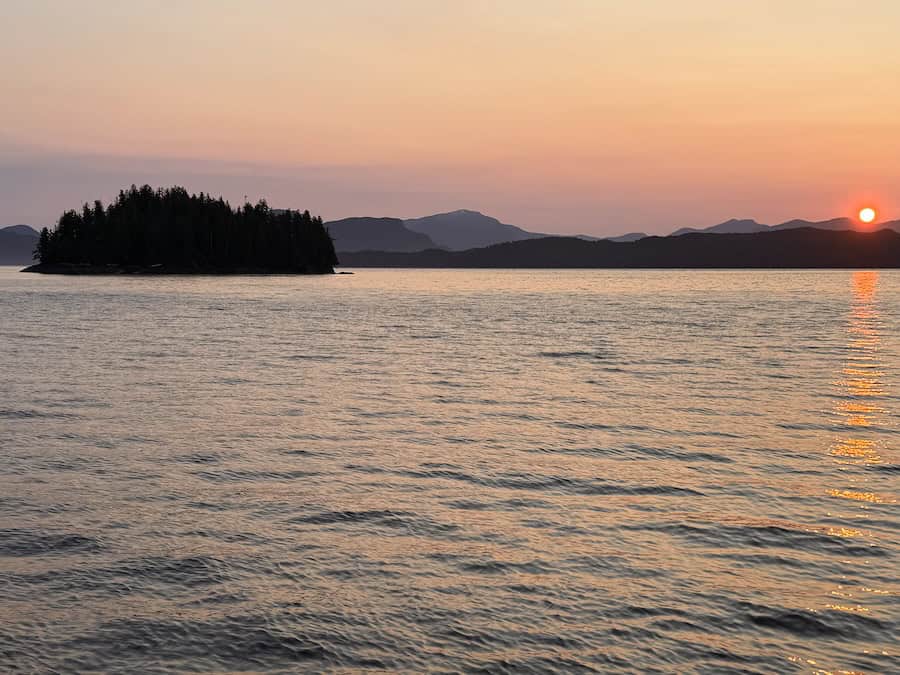
Hope You Enjoyed My Maple Leaf Adventures British Columbia Cruise Review?
For more information on cruising with Maple Leaf Adventures aboard the MV Swell or their other two ships, check out www.mapleleafadventures.com. If you’d like help navigating the choices, we’d love to help you. Kindly show your interest in the form below.

Interested in This Cruise?
I'm passionate about small-ship cruising and have taken more than 125 cruises all over the world, from Europe to North America, Southeast Asia and India. Many have been on small ships — river boats, barges, tall ships and coastal cruisers — carrying just a few hundred passengers, often less than 50. Happy to answer questions you may have about this Maple Leaf Adventures' cruise or any other small-ship cruise for that matter; and if you're ready to book, I will connect you with one of our favorite and trusted travel advisors.
* Your personal information will be used solely for purposes of responding to your request.
Don’t miss a post about small-ship cruising, subscribe to QuirkyCruise.com for monthly updates & special offers!
© This article is protected by copyright, no part may be reproduced by any process without written permission from the author. All Rights Reserved. QuirkyCruise.com.



 HEIDI SARNA